China’s Space Station Cools Atoms to a Record-Low 9.7 Trillionths of a Degree Above Absolute Zero
Learn how a lab packed into a space station cabinet cooled 20,000 atoms to a record low and opened new possibilities for studying gravity and dark matter.
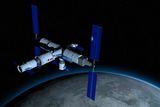
In 2018, China's space station set a new record for cooling atoms to an unprecedented low temperature of just 9.7 trillionths of a degree above absolute zero. This groundbreaking achievement took scientists about 15 years to accomplish, with equipment squeezed into a cabinet aboard the orbital laboratory. Utilizing rubidium atoms trapped with laser light, the team created and observed a Bose-Einstein condensate – a state where atoms share a collective quantum state, enabling observation of effects typically seen in individual particles.
The experiment, which lasted seven seconds and was conducted in a weightless environment, marked a significant milestone in the precise manipulation of ultracold atoms. Cooling atoms slows their motion, making them easier to study and investigate quantum physics. By reaching a record-low temperature and allowing the cloud to expand freely, researchers gained insights into how these atoms behave under near-weightless conditions.
This innovation could pave the way for more precise instruments for navigation, measuring Earth's gravitational field, and exploring quantum simulation and dark matter.
Written by urgent.news from Discover Magazine's reporting — not their text. Machine-written — may contain errors; check the original before relying on it.