British writer M. John Harrison wins Booker for AI-tinged apocalyptic novel
'The End of Everything,' the 13th novel by the veteran of British science fiction, follows beachcomber Phillip Tennent and his dementia-stricken, free-spirited aunt Marnie. It's set in the near future on the windswept English coast, invaded by mysterious objects known as the iGhetti.
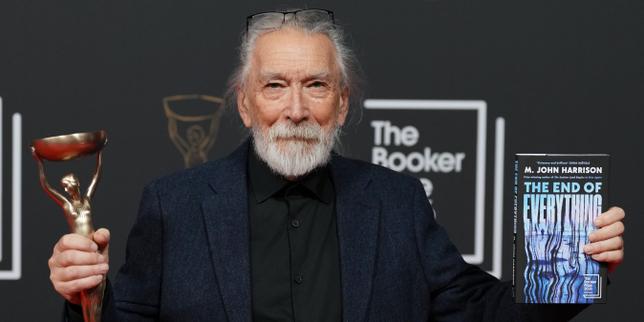
London — Renowned UK writer M. John Harrison secured the prestigious Booker Prize on Monday for his thought-provoking novel, The End of Everything. This enigmatic work paints a bleak, satirical picture of post-apocalyptic Britain, delving into concerns surrounding artificial intelligence. At 81 years young, Harrison claimed the title of the oldest recipient of the award, which comes with a £50,000 ($67,000) prize and a significant boost in the author's sales and public recognition.
A long-standing figure in the British science fiction literary landscape, this marked Harrison's inaugural appearance on the shortlist for the revered prize, a recognition that critics deemed long overdue. Outshining competitors Marlon James, Douglas Stuart, Elizabeth Strout, Luke Kennard, and Rebecca Perry, whose works ranged from a queer narrative set in 1980s Kingston to a campus satire in contemporary London, Harrison's novel The End of Everything proved itself superior in both the caliber of its writing and its grand ambition.
Mary Beard, chair of the judges, lauded Harrison's 13th novel during a press conference, highlighting its exceptional craftsmanship and wide-ranging scope as it follows the journey of beachcomber Phillip Tennent and his dementia-stricken, free-spirited aunt Marnie against the backdrop of a near-future England.
Written by urgent.news from The Korea Times's reporting — not their text. Machine-written — may contain errors; check the original before relying on it.
This story
This is one outlet's version. Read the fullest account.