Beyond assumptions: IMAN Research’s journey into the lives of Chinese youths
KUALA LUMPUR, Nov 10 — When Violet Lee Zi Yi began researching Malaysian Chinese youths, she admitted she initiall...
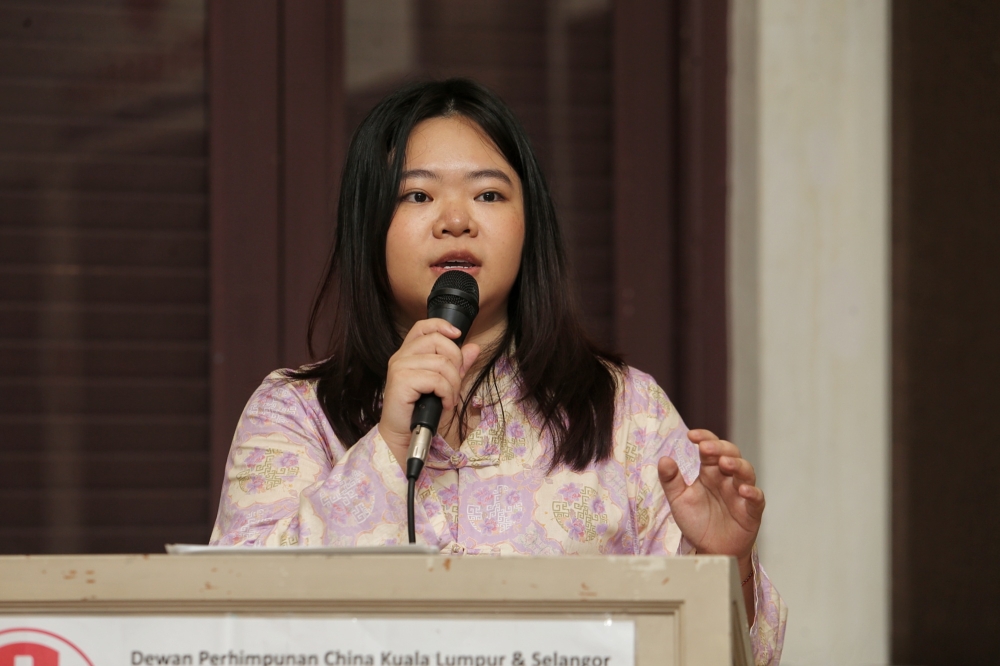
KUALA LUMPUR, Nov 10 — Upon embarking on research about Malaysian Chinese youths, Violet Lee Zi Yi had initially formulated assumptions about the community's economic advantages and opportunities. However, her interviews revealed a far more intricate reality. Lee detailed the differences in the lives of Malaysian Chinese youths aged 18 to 35 in IMAN Research's report, Kami Orang Sini Juga.
The study, co-authored by Liew Liang Hong, provides insights into the youths' understanding of their identity, navigating opportunities and inequality, and their relationship with politics and public institutions. Rather than viewing Malaysian Chinese youths as a homogeneous group, the research highlighted that their experiences were shaped by factors such as family history, language, schooling, religion, socioeconomic background, and place of residence.
Initially, Lee approached the research with the mindset of questioning what else the Chinese wanted in Malaysia. However, as she delved deeper into the interviews, she was struck by the diversity of experiences among the participants. Family history, for example, played a significant role in shaping individual identities, with third-generation Malaysian Chinese exhibiting different perspectives compared to fourth-generation youth, depending on their grandparents' and great-grandparents' views on China and their family's history.
The report also found that national identity did not always come at the expense of Chinese cultural identity, as some participants identified more closely with being Malaysian, while others emphasized their state or hometown roots.
One key finding highlighted the phenomenon of "self-cornering," whereby young people sought private solutions to perceived problems instead of confronting the institutions responsible for them. While this approach could help individuals secure their futures, it also perpetuated the status quo, leaving those without the means to find alternatives with fewer options.
The report cautioned against conflating everyday interactions and shared experiences with a deeper understanding of shared Malaysian identity, as cordial relationships did not necessarily translate into improved institutional fairness.
Moreover, the research noted the disconnect between young people and organizations expected to represent their interests. Despite being asked to participate, only a small percentage of interviewees were active in community organizations or political circles. Established leaders sometimes failed to provide meaningful opportunities for younger individuals, perpetuating a lack of representation and decision-making power among Malaysian Chinese youths.
Written by urgent.news from Malay Mail's reporting — not their text. Machine-written — may contain errors; check the original before relying on it.
This story
This is one outlet's version. Read the fullest account.