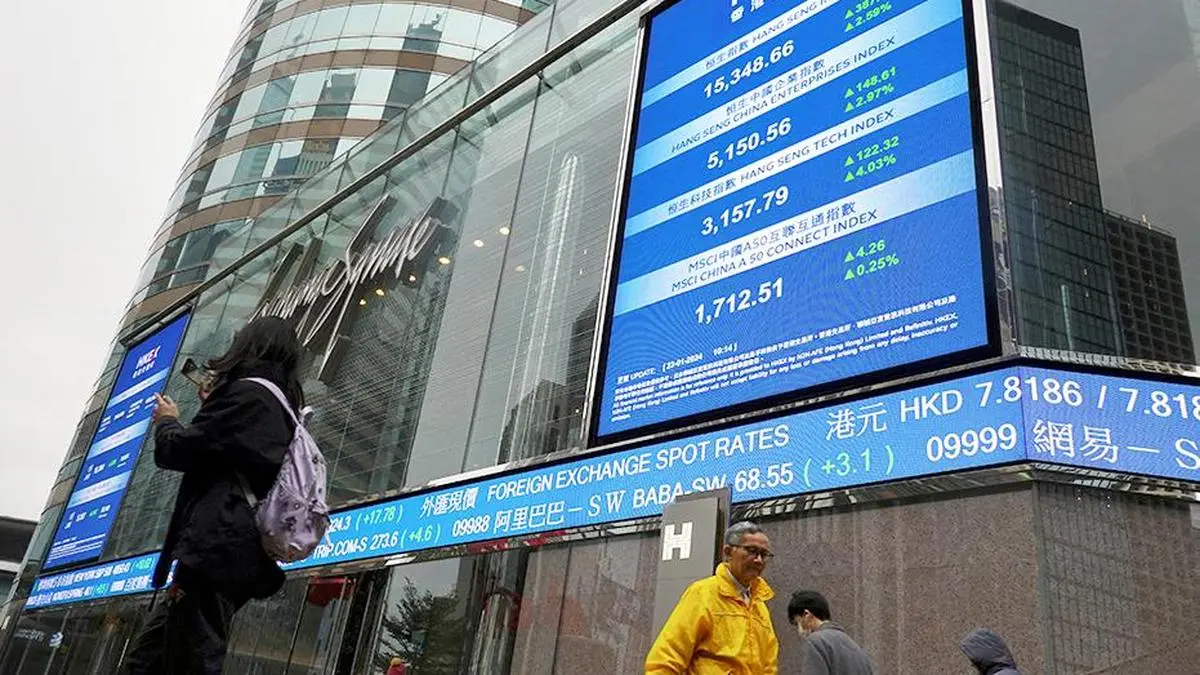
Asia stocks rally sharply amid tech surge and Iran jitters, ahead of US CPI
Asian stock markets rally sharply on Tuesday, tracking Wall Street’s biggest rally in about seven months the previous day, with South Korea and Japan leading regional gains.

Asian equity markets surged strongly on Tuesday, mirroring the significant rally witnessed on Wall Street the previous day, marking the biggest gain in about seven months. South Korea and Japan led the regional surge, with Japan's Nikkei up around 2.5% and South Korea's KOSPI advancing nearly 4%. The rally was primarily driven by a surge in technology and semiconductor shares.
In a move seen as a positive development for easing geopolitical tensions, US President Donald Trump suggested that there was positive momentum towards ending the war in Iran and that fresh strikes were unlikely, effectively declaring the conflict over. This development kept crude oil prices depressed near a two-month low, which further bolstered investor sentiment towards riskier assets.
However, Iran's Supreme National Security Council Chief, Mohsen Rezaei, dismissed reports of active negotiations as misinformation, reiterating that Washington must accept Tehran's seven conditions for a resolution. This kept geopolitical risk premiums in play, potentially dampening the overall optimism despite the tech-driven surge.
The looming US inflation report, specifically the Consumer Price Index (CPI) due to be published later during the North American session, kept investors cautious. The US Federal Reserve's policy outlook was expected to be significantly influenced by this CPI data, which, combined with incoming geopolitical headlines, might inject volatility in the markets.
Asia accounts for about 70% of global economic growth and is home to several key stock market indices. Japan's Nikkei, representing 225 companies on the Tokyo stock exchange, and South Korea's KOSPI are notable among the region's developed economies. China's influence is evident through its three major indices: the Hong Kong Hang Seng, the Shanghai Composite, and the Shenzhen Composite.
India's equities are also gaining attention, with the Sensex and Nifty indices being closely watched. The performance of Asian stock markets is driven by the collective results of component companies, as revealed in their quarterly and annual earnings reports. Key factors impacting their performance include economic fundamentals, central bank decisions, fiscal policies, political stability, technological progress, and the rule of law.
The US equity indices also play a crucial role, as Asian markets often follow the lead set by Wall Street stocks overnight. The broader risk sentiment in markets and regional-specific risks, such as political systems, geopolitical events, natural disasters, and currency fluctuations, were also considered factors influencing the Asian stock market performance.
Written by urgent.news from FXStreet's reporting — not their text. Machine-written — may contain errors; check the original before relying on it.
This story
This is one outlet's version. Read the fullest account.