A year after a wastewater spill in the Philippines, communities fight to save a dying sea
MANJUYOD, Philippines — For years, Jonalyn Rentuaya, president of Alangilanan United Seaweed Growers Association, began her mornings the same way. By 6:00 a.m., she and other seaweed growers in the Alangilanan neighborhood of Manjuyod, would be wading in the shallows of Bais Bay, out on their lines, tending their crop. Then, on Oct. 26, 2025, […]
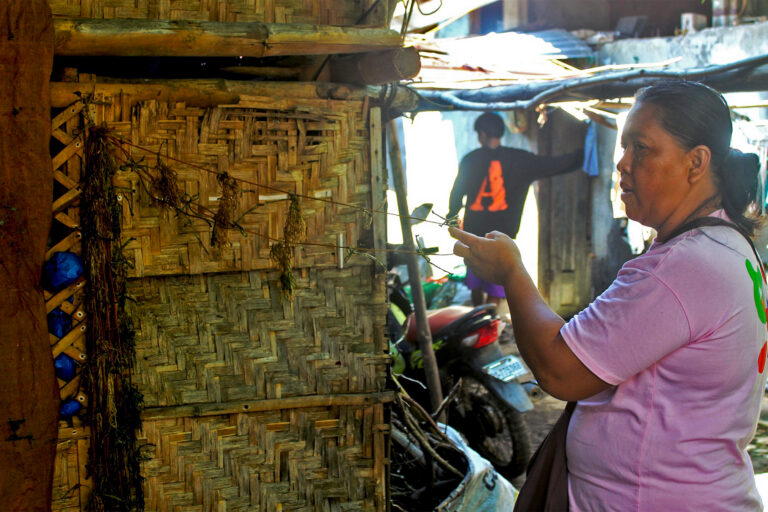
MANJUYOD, Philippines - In October 2025, Jonalyn Rentuaya, the president of Alangilanan United Seaweed Growers Association, started her day by wading into Bais Bay at 6:00 a.m. to attend to her seaweed crop. However, on October 26, 2025, the normally crystal-clear waters of the bay turned a murky shade of dark tea. This drastic change was caused by an overflow of waste from an ethanol plant located approximately one kilometer away, which breached an embankment containing 255 million liters (67.4 million gallons) of wastewater from Universal Robina Corporation’s (URC) ethanol distillery.
The wastewater, equivalent to around 100 Olympic-sized swimming pools of toxic sludge, surged into the bay, causing a dike to collapse and sending a rushing wave of pressure towards the shore. The residents quickly evacuated in the face of this environmental catastrophe.
The influx of bacteria in the contaminated water began to consume dissolved oxygen, which marine life required to survive. Consequently, the fish suffocated, and the seaweed on the lines died off, resulting in the loss of livelihood for coastal communities. This ecological disaster affected 17 coastal villages in Bais and Manjuyod, impacting a minimum of 3,000 fishers, fish pen operators, and seaweed growers, according to the Department of Environment and Natural Resources (DENR) on November 3, 2025, as reported by Mongabay.
The impact of the spill was further exacerbated by the bay’s crucial role in the region’s ecosystem, as Bais Bay opens into the Tañon Strait, a narrow channel separating Negros.
Written by urgent.news from Mongabay's reporting — not their text. Machine-written — may contain errors; check the original before relying on it.