While AI speeds up SMEs, delivery remains hard to automate
[The content of this article has been produced by our advertising partner.] SMEs across Asia and Latin America are increasingly using AI in their daily operations, but getting goods to customers remains difficult to automate, according to a survey by on-demand delivery platform Lalamove, which operates in 18 markets across Asia, the Americas and EMEA. The contrast matters for businesses trying to…
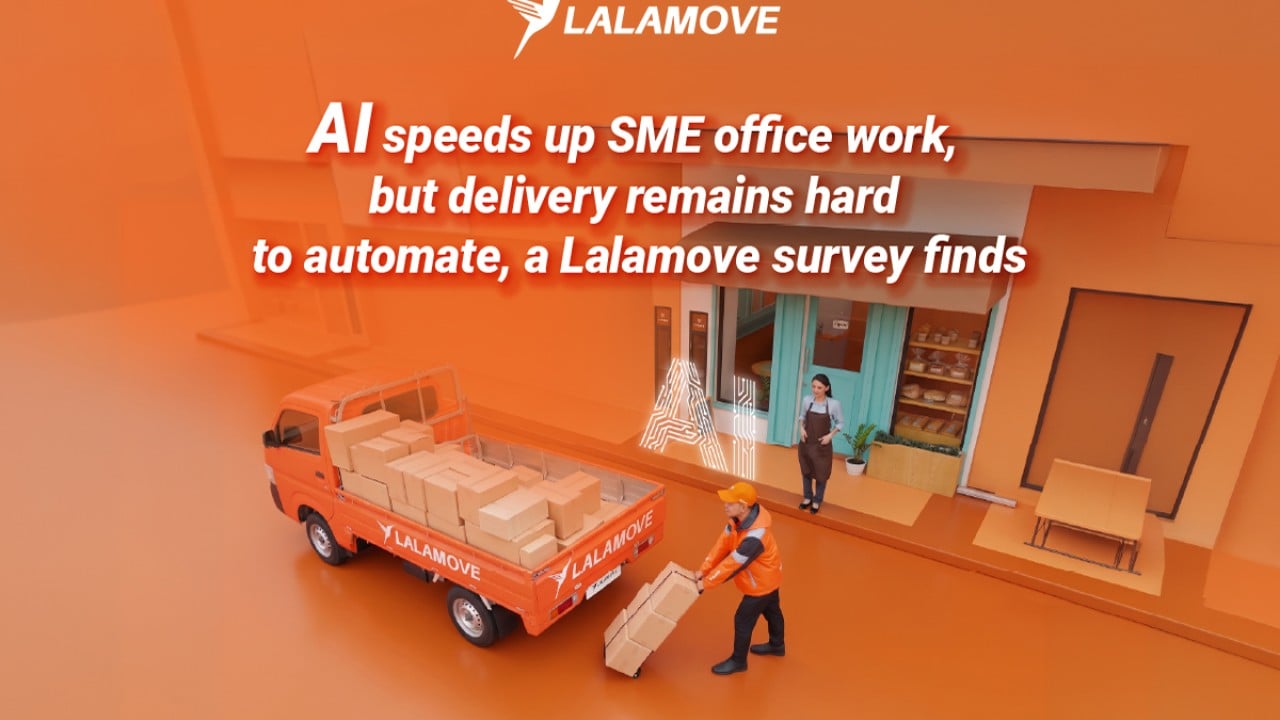
AI adoption is transforming small and medium-sized enterprises (SMEs) in Asia and Latin America, yet automating delivery remains a challenge, according to a Lalamove survey. The platform operates in 18 markets across the regions, highlighting the difficulty of scaling deliveries without adding more vehicles and drivers. Customer expectations are rising, and SMEs need flexible delivery options to manage fluctuating orders without incurring permanent overheads.
The survey, conducted in September 2026, targeted SMEs using Lalamove's services in Hong Kong, Singapore, Kuala Lumpur, Ho Chi Minh City, Manila, Bangkok, Jakarta, Taipei, and São Paulo. AI is predominantly employed for marketing, customer service, and administration, aiding businesses in handling repetitive tasks and responding to customer inquiries more efficiently.
Notably, the adoption rate varies across locations, with 62.4% of SMEs in Manila using AI, compared to 56% in Ho Chi Minh City, 52% in Taipei, and 51% in Hong Kong. Adoption is lower in Kuala Lumpur (39%) and Jakarta (36.8%).
While AI speeds up operations, getting goods to customers remains a manual process dependent on traffic, loading, vehicle availability, and the number and timing of stops. Logistics and delivery are among the least automated business functions, with AI adoption in these areas ranging from 7% in Kuala Lumpur to 24.1% in Manila.
On-demand logistics provides SMEs with greater flexibility to adapt to changing delivery requirements without the commitment of additional vehicles and drivers. The survey revealed that 60.7% of respondents in Jakarta, 56% in Ho Chi Minh City, and 50% in Hong Kong require multi-stop deliveries, while 43.3% in Jakarta, 31.7% in Bangkok, and 23.4% in Manila seek after-hours deliveries. Door-to-door moving assistance is in demand by 38.2% of respondents in Bangkok.
Lalamove connects businesses with driver-partners operating various vehicle types, offering scalable delivery capacity to help SMEs remain agile during peak periods without expanding their own fleets. The platform supports multi-stop and after-hours requests, subject to local service availability.
Looking ahead to 2027, Lalamove COO Paul Loo noted that SMEs expect logistics costs to either remain unchanged or rise, with affordability as a key concern. Confidence varies across markets, with Hong Kong respondents most optimistic (71%), followed by Jakarta (50.5%) and Manila (35.8%). Taipei (70%) and São Paulo (70.9%) showed a more cautious outlook, while Bangkok exhibited mixed sentiments (38.2% cautious).
Written by urgent.news from SCMP Business's reporting — not their text. Machine-written — may contain errors; check the original before relying on it.