When Your Brand Becomes Soan Papdi, It’s Time To Re-Evaluate It
“Happy Diwali.” Vermajee pushed a box of Soan Papdi towards me. I looked at the box, then at him. “Soan Papdi?” “Circulating and forwarding sweets with best wishes,” he said, straight-faced. I accepted it. Not because I particularly wanted Soan Papdi, but because refusing a box of sweets from Vermajee during Diwali requires an explanation. Especially when whisky is waiting and there exists a…
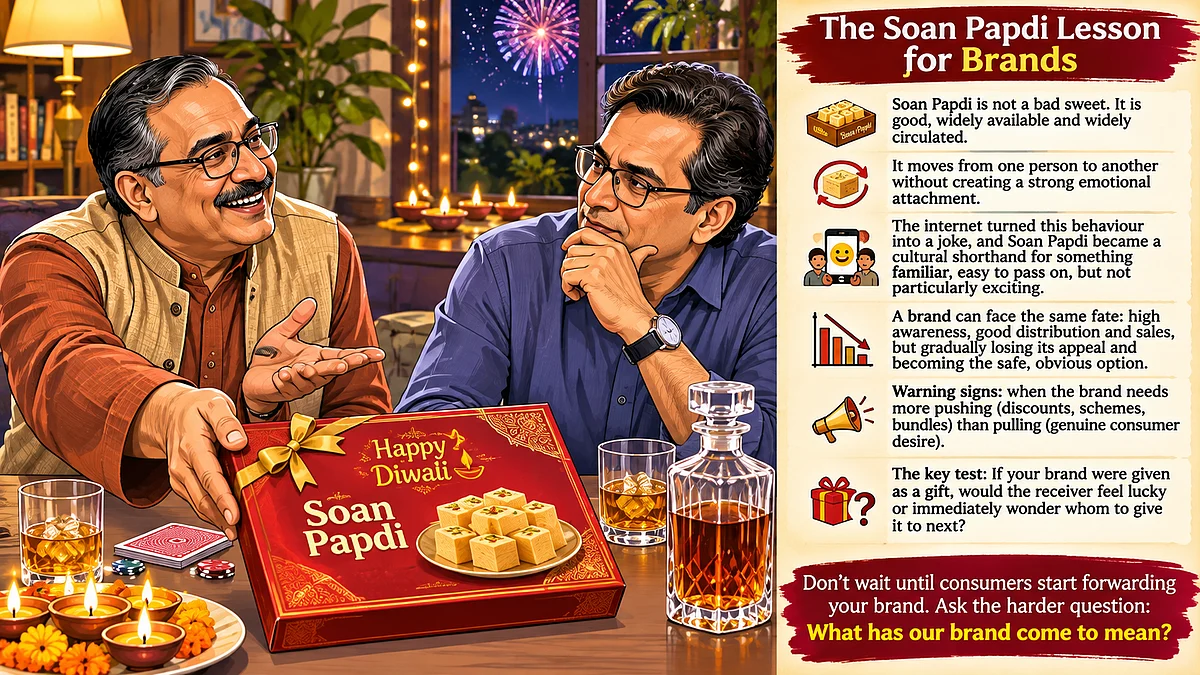
When a brand becomes synonymous with a product like Soan Papdi, it's a sign to reassess its strategy. Soan Papdi, a common sweet made of ghee and gram flour, once held respectable place in the Indian mithai universe. However, when gifted as part of festive celebrations, it became merely a moving object, circulated widely without creating emotional attachment.
The internet amplified this behavior, turning the forwarding ritual into a punchline. Brands can also become the Soan Papdi of their category, losing appeal due to excessive distribution, high awareness, and respectable sales. Consumers may recognize the brand, see it everywhere, and buy it, but it becomes an obvious, safe option rather than something actively sought or valued.
The warning signs include consumers no longer taking notice (pulling less) while the company keeps pushing with discounts, schemes, and promotions. If a brand is given as a gift and the recipient immediately wonders whom to give it to next, it indicates the brand has lost its emotional value and social currency. Brands should ask themselves what their brand has come to mean rather than relying solely on sales numbers or meme responses.
Written by urgent.news from Free Press Journal's reporting — not their text. Machine-written — may contain errors; check the original before relying on it.