Sculptor Naresh Kumar Kumawat On Preserving India's Heritage Through Monumental Art: 'Tradition Is A Foundation For Growth'
India's sculptures have long been powerful testaments to its history. Sculptor Naresh Kumar Kumawat is taking that tradition forward, both at home and abroad. His medallions depicting Sardar Vallabhbhai Patel and Dr BR Ambedkar are installed in the new Parliament building. This year, his statue of Swami Vivekananda was unveiled in Seattle, US. "A history book can explain events and provide…
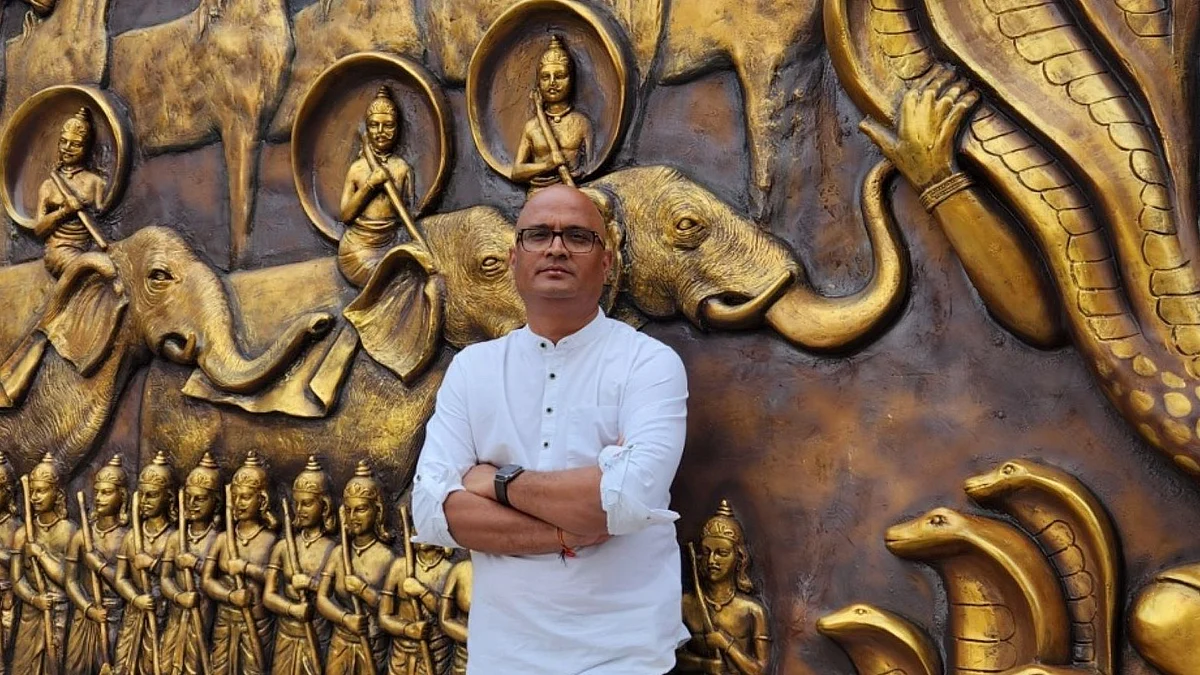
India's sculptors have long been custodians of the nation's rich history. Naresh Kumar Kumawat is carrying that tradition forward, both domestically and internationally. His medallions of Sardar Vallabhbhai Patel and Dr BR Ambedkar grace the new Parliament building. This year, Kumawat unveiled a statue of Swami Vivekananda in Seattle, US.
A monument, Kumawat explains, gives memory a physical presence. Approaching a sculpture, one experiences its scale, posture, expression, and relationship with its surroundings. This encounter can evoke an immediate emotional response, even before reading any accompanying inscription.
For the new Parliament, Kumawat's task was to create sculptures that complemented the architecture while embodying ideas central to India's history and collective identity. The challenge lay in capturing convincing likenesses in relief, maintaining expressions when viewed from various distances. Extensive research, preliminary studies, and model development were crucial before fabrication.
Kumawat's artistic journey began with his father, a sculptor who passed on his craft to him. He inherited a rich sculpting tradition, including the patience and discipline required for the craft. Kumawat developed his unique approach by exploring how these skills could be applied to larger spaces, contemporary materials, and new possibilities.
His sculptures are crafted from bronze, stone, marble, reinforced concrete, fibreglass, and stainless steel, depending on the project's requirements. Clay serves as the primary medium for initial modelling, allowing direct exploration of form. The choice of final material depends on various factors, including artistic intent, scale, location, climate, and budget.
Kumawat treats tradition as a foundation for growth, preserving the integrity of the craft while extending its possibilities through design, technology, and collaboration. His international installations include sculptures of Mahatma Gandhi in Oman, Gautama Buddha in Seoul, Lord Ram in Mississauga, and a bust of Rabindranath Tagore in Belgrade.
Installing sculptures abroad involves intricate coordination between artistic work, engineering, and logistics. Local regulations, climate, foundation conditions, transport restrictions, and installation access all influence these decisions. Cultural understanding is also vital, ensuring the sculpture retains its identity while forming a meaningful connection with the community that receives it.
Technology has expanded the possibilities in sculpture, with digital scanning, 3D modelling, CNC machining, and 3D printing aiding precision, coordination, and efficiency. However, artistic judgment remains essential in determining a sculpture's meaning, including its posture, emotional tone, symbolism, and relationship with its setting.
Written by urgent.news from Free Press Journal's reporting — not their text. Machine-written — may contain errors; check the original before relying on it.