Scientists simulate an Earth without life to help hunt for aliens and inhabited worlds
By modeling how a planet without life develops its atmosphere, astronomers hope to be able to better distinguish rocky planets without life from those that are inhabited.
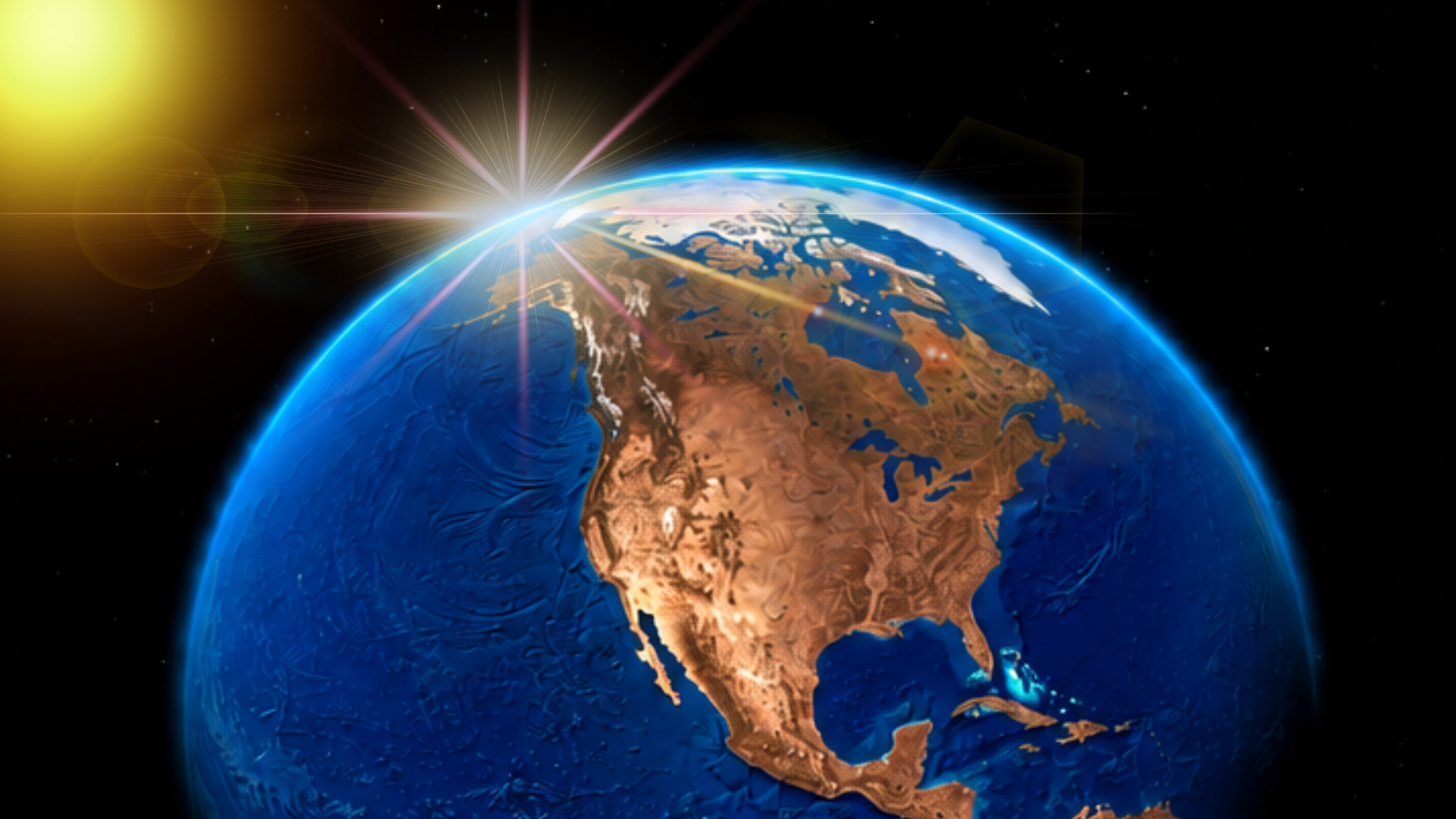
Researchers have developed a groundbreaking computer simulation that imagines Earth, or any rocky planet, devoid of life to aid in the search for extraterrestrial civilizations and habitable worlds. Life alters a planet's atmosphere by introducing a unique mix of biochemically created gases; however, distinguishing a life-bearing planet from a non-life one based solely on atmospheric gases can be challenging.
To address this issue, Samantha Gilbert-Janizek, a planetary scientist at the University of California, Riverside, created a model that simulates the evolution of a habitable, non-living planet. This model, which builds upon a previous work by Rory Barnes, incorporates the surface and atmosphere of the planet, in addition to the core, mantle, and crust, simulating 19 properties unrelated to life, such as stellar heat input, internal heat transfer, and gas outflow.
By simulating Earth's development without life, researchers can establish a baseline for comparison with exoplanets. The model, when run from Earth's formation 4.5 billion years ago to 500 million years into the future, produces a lifeless world with oceans and an atmosphere. This tool's plug-and-play nature allows researchers to plug in the bulk properties of any planet they are studying and let the simulation run.
If the simulated planet's atmosphere matches the observed data from space telescopes like the James Webb Space Telescope or future large ground-based telescopes, it indicates a likely lack of life. If not, the possibility of life on the planet cannot be ruled out. Dr. Gilbert-Janizek's work represents a significant step towards understanding the potential for life in the universe, and her model's accuracy in predicting Earth's properties provides confidence in future simulations of exoplanets.
Written by urgent.news from Space.com's reporting — not their text. Machine-written — may contain errors; check the original before relying on it.