Pronto’s Second Shift
Anjali Sardana and Pronto entered India’s domestic services market in 2025 to solve a familiar urban problem: finding reliable…
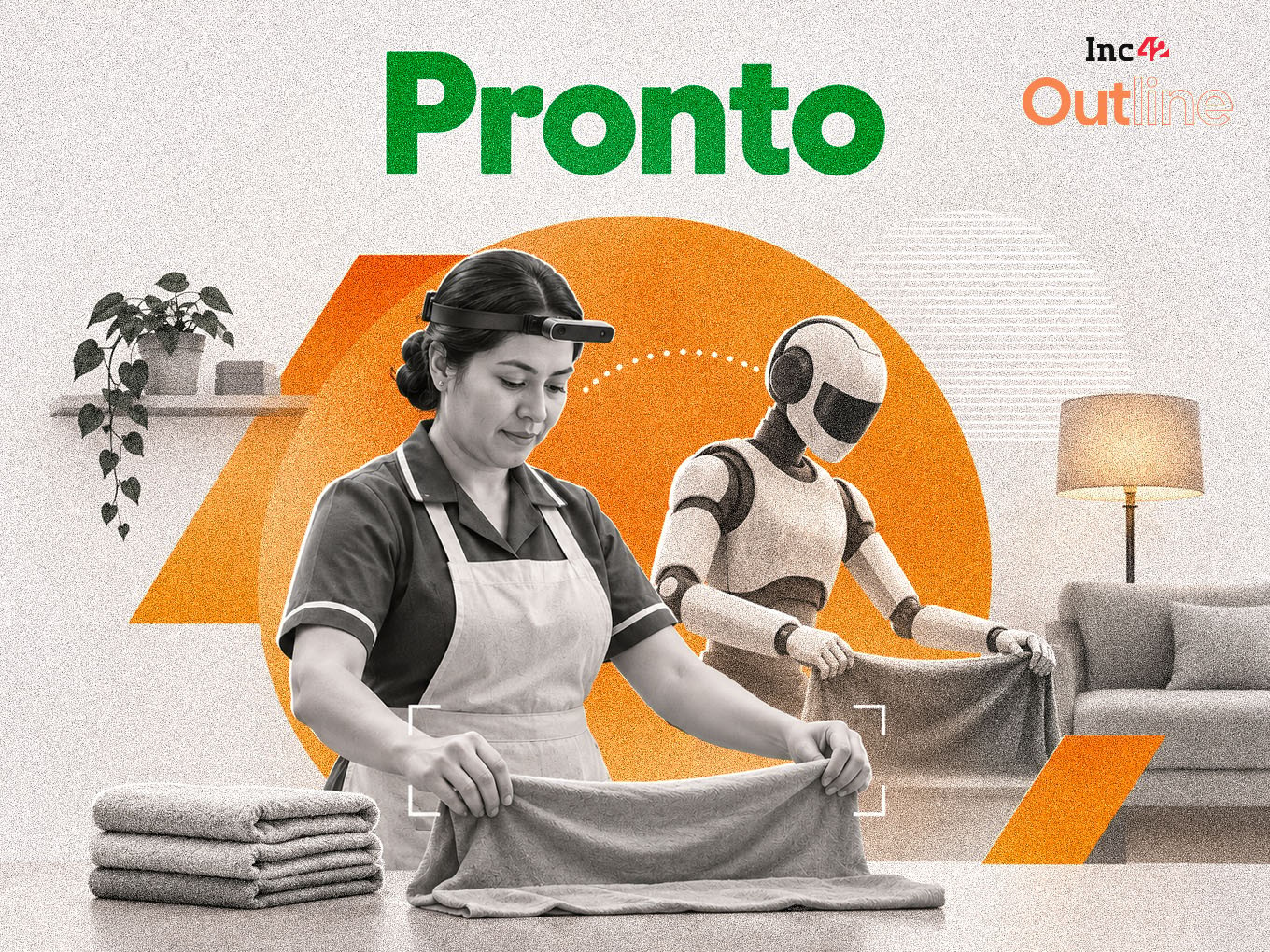
Pronto, an Indian home services platform, has entered India's domestic services market to address the challenge of finding reliable house help on demand. The company, which competes with Snabbit and Urban Company, has served over half a million households across 11 cities through technology-led recruitment, standardized training, and a hyper-local network of professionals.
However, Pronto's true ambition lies in Silicon Valley, where footage captured from household chores is being used to shape the next generation of robots. In May 2026, Pronto began exploring ways to generate physical AI training data using footage recorded during household tasks. This led to the creation of Verified, an opt-in premium service where housekeepers and cleaners wear head or body-mounted cameras during visits, starting in July 2026.
In October 2026, Pronto established Provision Labs, a physical AI venture in San Francisco, which will collect and train AI systems using real-world data. The company has acquired Mumbai-based Basilisk Industries, a startup focused on perception technologies, to work on its hardware efforts and in-house post-processing models. Basilisk's founder, Shourya Watwani, will lead Provision's hardware efforts and work on its in-house models.
The relationship between Pronto's household data collection and Provision Labs' operations remains unclear. Critics have raised concerns about privacy and surveillance of house help professionals, but Pronto claims that customers are informed about the terms before recording begins, and personally identifiable information is automatically blurred or removed. The raw footage is deleted immediately, and only anonymized, end-to-end encrypted recordings are used for AI training after a 48-hour window.
Physical AI systems require large volumes of real-world, multimodal data to understand how the real world works. This data is harder and more expensive to collect than internet-sourced text and images. A Goldman Sachs report estimates that general-purpose robots may need around 10 million hours of high-quality physical interaction data to reach production-level capabilities.
India is positioning itself as a hub for data collection for physical AI, with startups like Humyn Labs, EgoData, and Objectways deploying workers on the ground to collect footage in various environments, including households, manufacturing units, and industrial settings. Head-mounted or body-mounted cameras and sensor-equipped gloves have become common tools for data collection in this emerging field.
Written by urgent.news from Inc42's reporting — not their text. Machine-written — may contain errors; check the original before relying on it.