New Zealand set for weeks of political wrangling after knife-edge poll
New Zealand faced the prospect Sunday of weeks of political wrangling after a knife-edge election that produced no clear winner but saw record gains for minor parties.
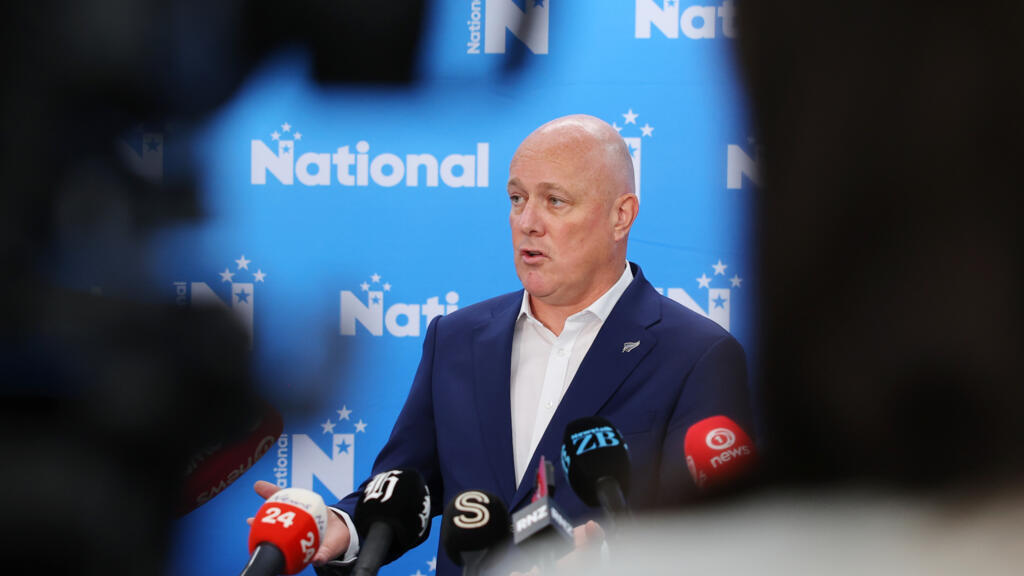
New Zealand prepared for weeks of political negotiations following a close election that produced no clear frontrunner, yet witnessed a surge in support for smaller parties. Prime Minister Christopher Luxon announced his right-wing coalition had a mandate to form the next government, yet assured results were still too close to predict with certainty.
Preliminary outcomes indicated New Zealand's National Party secured the most seats, yielding a razor-thin majority of just two if combined with their coalition partners, NZ First and ACT. Luxon assured journalists that his party had achieved a significant win, attributing it to the ongoing war in the Middle East and the subsequent global fuel crisis blamed for New Zealand's economic troubles.
Opposition Labour Party leader Chris Hipkins jestingly noted that while the nation had voiced its opinion, it might take some time to decipher exactly what had been communicated. The results suggest that his left-leaning group, comprising the Green Party and Te Pati Maori, has a limited path to power. Luxon will oversee a caretaker government until the final vote count on November 27, which will include nearly 400,000 special votes, like those cast overseas and by New Zealanders living outside their electorate.
Historically, special votes leaned left, potentially granting Labour or the Green party an extra one or two seats at the cost of the right-wing coalition.
The election drew significant attention to New Zealand's minor parties, notably the centrist Opportunity Party. According to the country's mixed-member proportional representation system, voters must select two options - a general party list and an individual member to represent their electorate. Opportunity won seven seats, potentially assuming a pivotal role in the next government.
With 100 percent of the preliminary count completed, Luxon's National Party is projected to hold 42 seats, Labour 36, the Green Party 16, ACT 13, and NZ First 12. Te Pati Maori has five seats.
Luxon indicated that while it was unlikely he would require the Opportunity Party to form a government, he was open to collaborating with their leader, Qiulae Wong, on shared issues. He also emphasized the need for deeper cross-party cooperation moving forward. Many New Zealanders expressed concerns over the rising cost of living and unemployment, which has been higher than in over a decade.
On the streets of Wellington, voters spoke to AFP, with Rahul Jain, a 33-year-old support worker, hoping for a reduction in the cost of living, while Mary Scott, a lending operations representative, urged politicians to prioritize ordinary New Zealanders and implement equitable policies.
Written by urgent.news from IOL's reporting — not their text. Machine-written — may contain errors; check the original before relying on it.
This story
This is one outlet's version. Read the fullest account.