NASA's destroyed Swift Observatory took one of the best-ever photos of bright Andromeda
NASA's Swift Observatory went out in a blaze of glory this week, but it left behind millions of images of the universe that could fuel discoveries for decades.
On November 4, NASA's Neil Gehrels Swift Observatory met its demise, disintegrating in the atmosphere above Sumatra. Despite its unfortunate end, the telescope's contributions to astronomy remain profound. Swift's primary function was to swiftly pivot towards space explosions, and it excelled at capturing fleeting and distant light sources across the electromagnetic spectrum.
One of its most notable discoveries was a gamma-ray burst, a highly luminous event often produced by a massive star's supernova and subsequent black hole formation. Swift's iconic image of the brightest gamma-ray burst ever detected resembles a speckled orange bullseye.
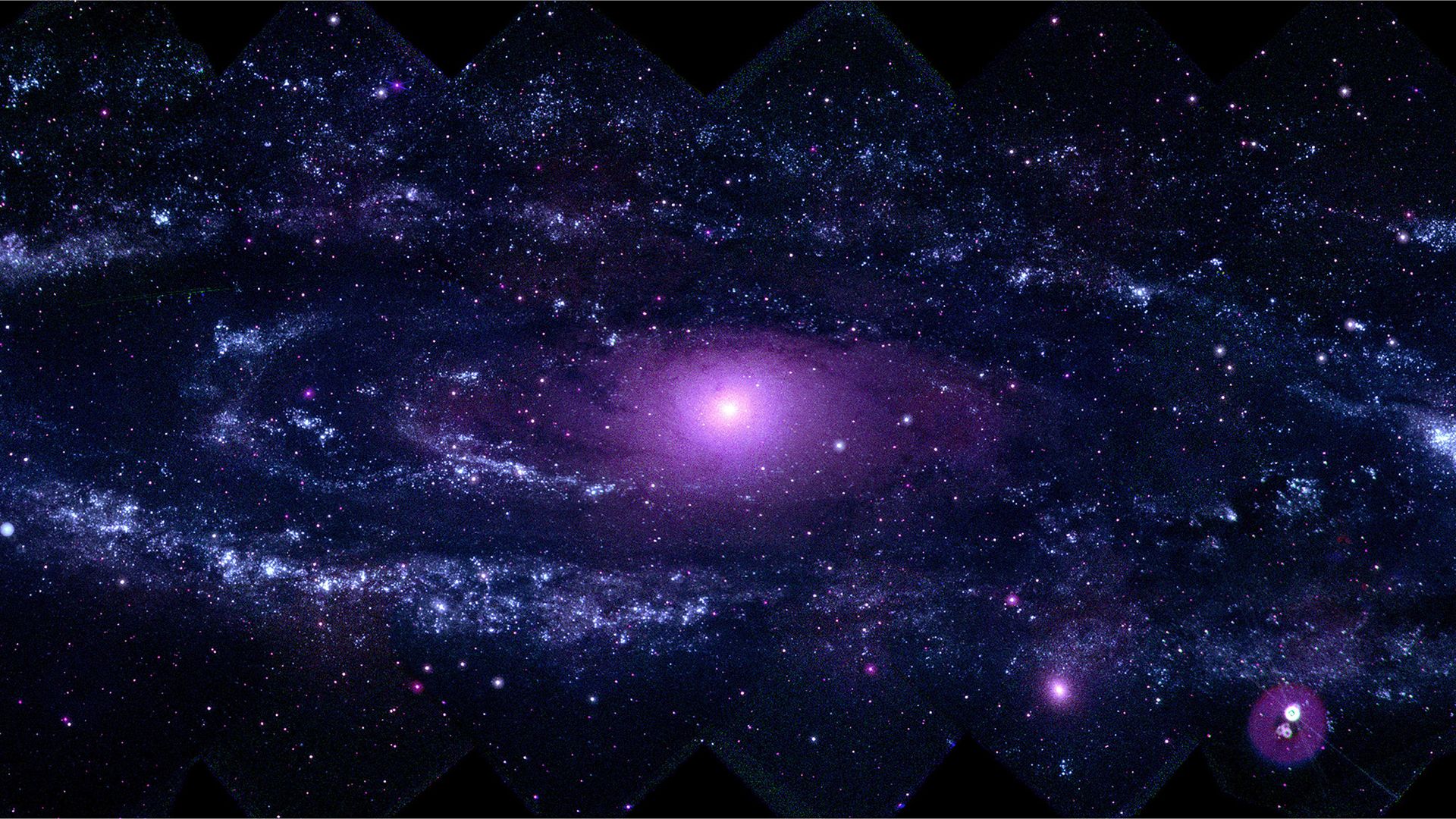
Beyond its contributions to studying extreme cosmic events, Swift also documented numerous observations of our local universe. Among its most striking images is a 24-hour exposure of the Andromeda galaxy, situated approximately 2.5 million light-years from Earth. This captivating image, taken with Swift's ultraviolet instrument over two months in 2008, reveals tens of thousands of stars in Andromeda, resembling sapphires in a shimmering ring.
Swift's perspective provides a unique view of the galaxy, unveiling a plethora of young, hot star clusters not as conspicuous in ground-based visible-light observations. As the closest major galaxy to the Milky Way, Andromeda may eventually collide with our galaxy, an event that would merge Andromeda's roughly 1 trillion stars into our cosmic neighborhood.
Written by urgent.news from Live Science's reporting — not their text. Machine-written — may contain errors; check the original before relying on it.
This story
This is one outlet's version. Read the fullest account.