NASA Confirms Two Spacecraft Will Fly Past Earth on Their Way to Mars
NASA‘s twin Escapade spacecraft will perform a rare powered flyby of Earth on Nov. 7 and 9, using the planet’s gravity and their engines to accelerate toward Mars. The historic maneuver could also offer a brief opportunity for skywatchers to spot the probes. NASA has confirmed that two unmanned spacecraft heading toward Mars will make […]
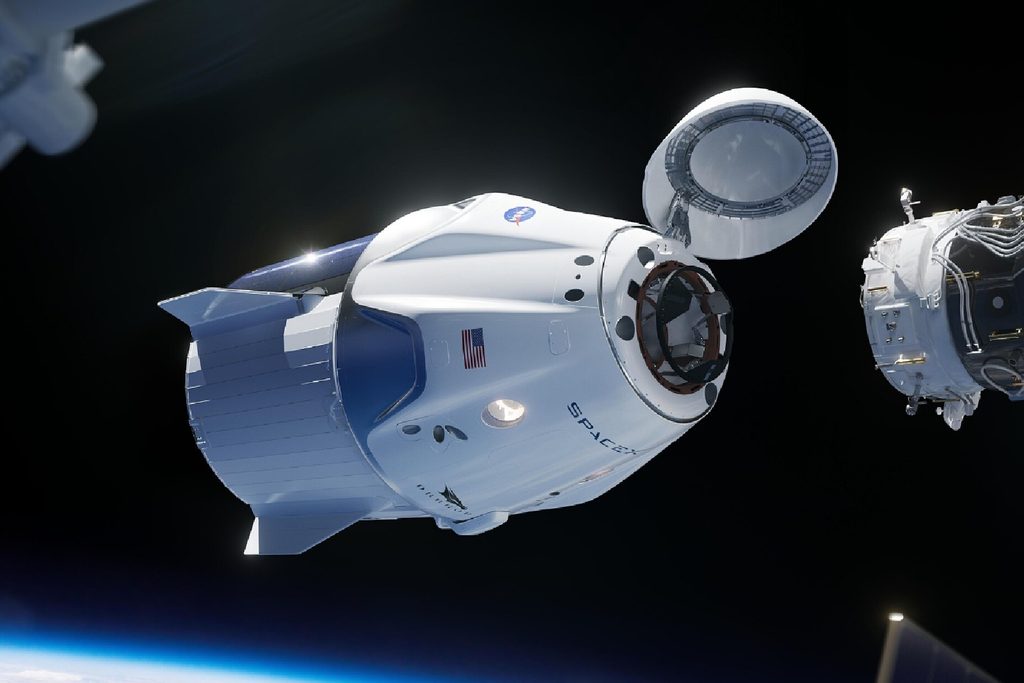
NASA has announced that two spacecraft will be making a rare flyby of Earth in November as they journey toward Mars. The twin Escapade probes will use Earth's gravity and their engines to speed up and adjust their paths toward the Red Planet. This maneuver is a first for a Mars-bound mission and is a crucial step in getting the spacecraft to Mars in September 2027.
The first spacecraft will fly past Earth on November 7, 2026, at around 5 a.m. EST, while the second will do so on November 9, 2026, at 6 a.m. EST. Both flybys will occur at distances of about 600 to 1,100 miles above Earth's surface. During the close approaches, the spacecraft will perform a trans-Mars injection burn, firing their engines for approximately nine minutes to increase their speed by over 1,000 miles per hour.
Skywatchers may have a chance to see the probes as they approach Earth, though spotting them will be challenging. They could appear as faint points of light moving slowly across the sky, requiring a telescope to distinguish them from background stars. The best viewing locations may be parts of southern Australia during the engine burns, and observers in the western United States may catch a glimpse in the hours leading up to the closest approach.
However, the spacecraft will not be visible from the United States at the moment of their closest approaches.
The Escapade mission, short for Escape and Plasma Acceleration and Dynamics Explorers, involves two small spacecraft studying the interaction between the solar wind and Mars' atmosphere. Launched in November 2025 aboard a Blue Origin New Glenn rocket from Cape Canaveral, Florida, the probes initially traveled towards Earth-Sun Lagrange Point 2 before entering an orbit that allowed them to wait for the Earth flybys.
These maneuvers in November 2026 will provide the final boost needed to place the probes on their interplanetary trajectory to Mars, where they are expected to arrive on September 7 and 9, 2027. Their primary mission is to investigate how the solar wind interacts with Mars, contributing to the planet's atmospheric loss. This mission represents a significant technological demonstration for future deep-space missions and helps scientists understand the evolution of Mars' atmosphere.
Written by urgent.news from Colombia One's reporting — not their text. Machine-written — may contain errors; check the original before relying on it.