My GTX 1080 Ti still runs everything I play, and these are the settings that keep it going in 2026
I think I can squeeze a couple more years out of it.
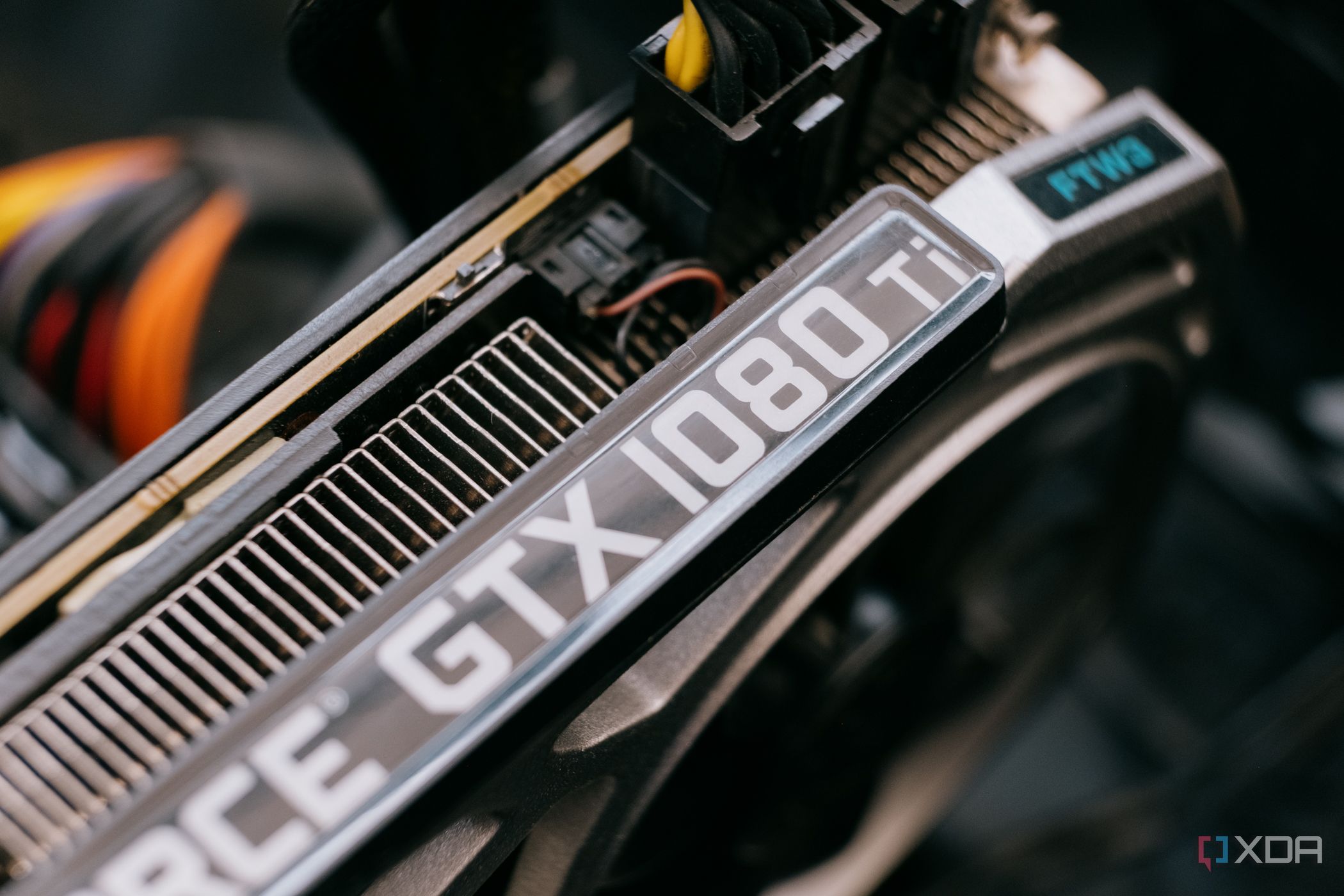
With the RTX 4090 residing in my primary gaming rig, it might seem odd to still rely on my trusty GTX 1080 Ti. Yet, this older graphics card still performs admirably in my occasional visits to my parents' place. I haven't experienced the need to replace it yet, and it handles the games I typically play without feeling like I'm missing out on much.
One tweak I made to my older build was swapping in the 9800X3D CPU, which improved my 1% lows when I moved my 5800X3D to the old PC. However, the GTX 1080 Ti lacks support for DLSS or hardware-accelerated ray tracing, so I must find ways to optimize its performance. While the card launched as a 4K-class GPU back in 2017, it struggles to maintain a consistent frame rate in newer titles, often reverting to 1080p for smooth gameplay.
I have found that inching up texture quality, keeping shadows, reflections, and volumetric effects at low settings, and focusing on CPU-heavy settings with my powerful 5800X3D processor, allows the GTX 1080 Ti to deliver a decent experience. I also utilize AMD's FSR 3.1 in compatible games to boost frame rates, though I prefer to avoid sacrificing image quality further by keeping a minimum of 720p.
In cases where games lack native support for upscaling solutions, I use Lossless Scaling as a last resort. Ultimately, I reserve the GTX 1080 Ti for multiplayer shooters and slower single-player games, targeting over 100FPS in 1080p when possible. While the GPU shows its age nine years after its launch, it still provides a commendable performance compared to the RTX 3060 12GB, making it a viable option for my current gaming needs.
Written by urgent.news from XDA Developers's reporting — not their text. Machine-written — may contain errors; check the original before relying on it.