Mess tins, modified badminton and mini-Hyrox: What PE lessons in Singapore schools look like today
CNA sits in on lessons at two schools to see how teachers balance skills, safety and play in today's physical education curriculum.
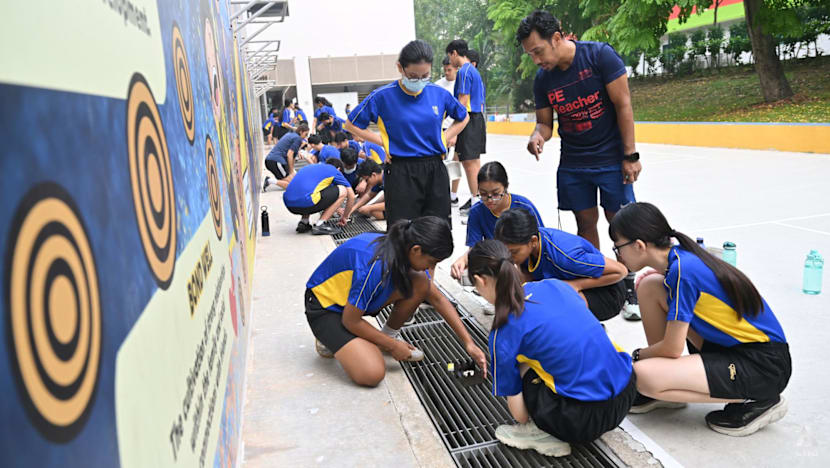
In Singapore's physical education (PE) lessons, teachers strive to balance skill development, safety, and play. At Yishun Town Secondary and Waterway Primary Schools, students engage in modified sports and outdoor education activities. PE teacher Karthikesan Kumar's class at Yishun Town Secondary involves using mess tins, matchsticks, and tommy cookers to teach risk assessment and fire management, as part of the outdoor education component of the Ministry of Education’s (MOE) PE syllabus.
The MOE develops the PE curriculum through collaboration with various institutions, aiming to create a syllabus that is evidence-informed, developmentally appropriate, current, and future-oriented. The curriculum is organized into three learning areas: physical activity, outdoor education, and physical health and safety. Schools can tailor lessons based on their resources and the students' needs.
At lower primary levels, the focus is on building fundamental motor skills and concepts through athletics, dance, gymnastics, and games. As students progress to secondary school, the curriculum shifts towards developing confident participants who can apply their skills and knowledge independently and with others. Primary school students also learn health practices such as personal hygiene, regular physical activity, and healthy eating.
PE teachers must emphasize that the syllabus outcome is for students to be physically active and healthy, with competition taking a backseat to learning environments. Teachers organize inter-class tournaments for sports, ensuring that authentic learning is achieved without creating a negative experience for students. The PE curriculum is reviewed every eight years to stay relevant to evolving student needs, educational research, and societal developments.
Written by urgent.news from Channel News Asia's reporting — not their text. Machine-written — may contain errors; check the original before relying on it.
This story
This is one outlet's version. Read the fullest account.