Knowledge Nugget | Mahabharata to Arthashastra: 3 Indian manuscripts earn UNESCO recognition
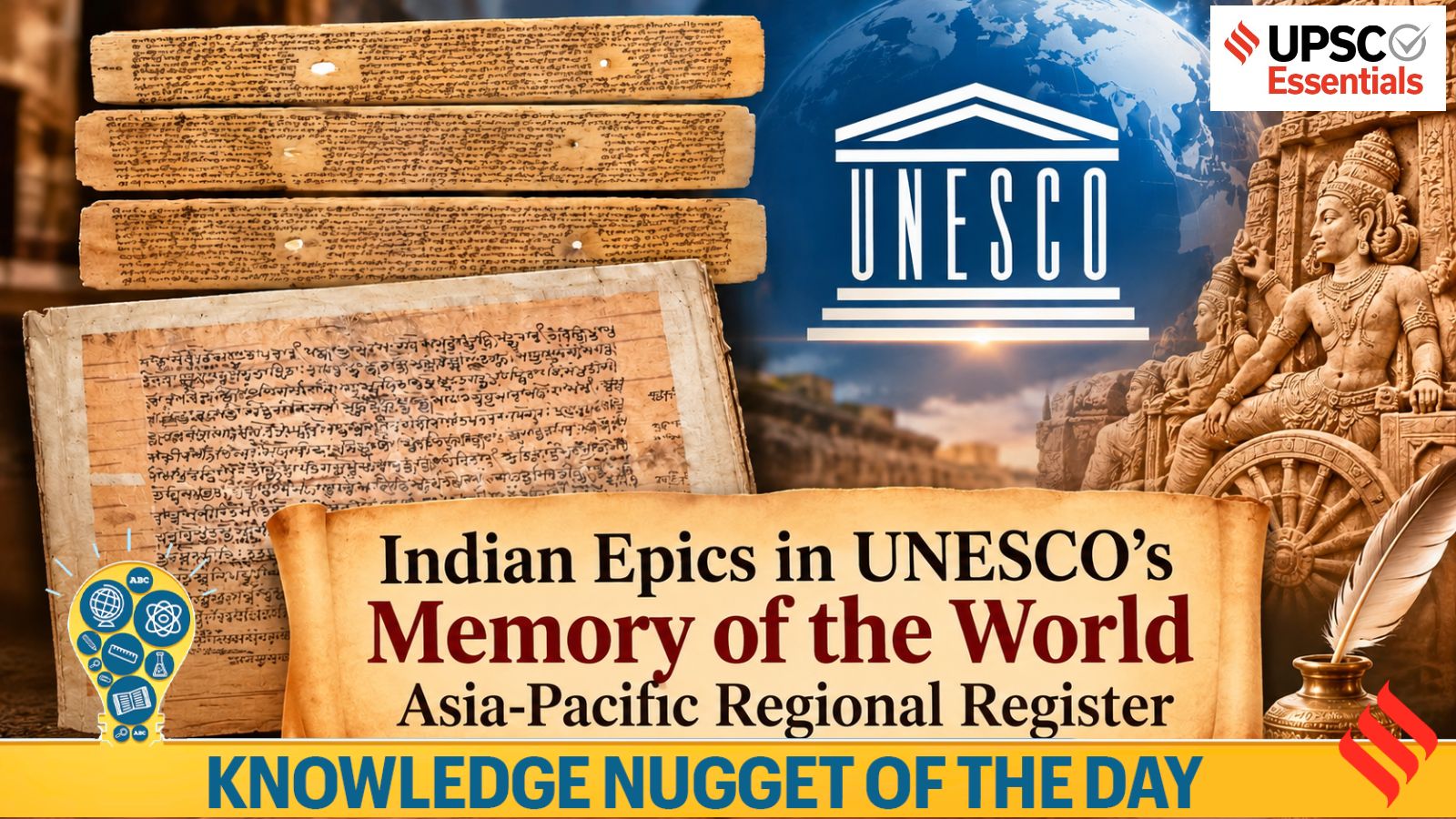
In a recent announcement, three significant Indian manuscripts have been recognized by UNESCO's Memory of the World Asia-Pacific Regional Register. The manuscripts include the Mahabharata, Arthashastra, and Rajatarangini.
The Mahabharata, attributed to sage Vyasa, is the world's longest epic and serves as a unique documentary heritage of humanity. Preserved at the Bhandarkar Oriental Research Institute, the manuscript is a 400-year-old birch-bark text written in the Sharada script. It explores themes of Dharma, Artha, Kama, Moksha, Kartavya, Rajadharma, Darsana, and Niyati, offering profound reflections on Indian civilizational values.
The Arthashastra, penned by Kautilya (Chanakya or Vishnugupta) for Chandragupta Maurya, is a foundational Sanskrit treatise on statecraft, economics, administration, diplomacy, law, and military strategy. Consisting of 15 adhikaranas, 150 adhyayas, and 180 prakaranas, the manuscript provides insights into judicial procedures, secret-agent systems, foreign policy formulations, and strategies for securing stability and prosperity.
Rediscovered in 1905, it remains a vital source for understanding ancient Indian polity and has influenced modern governance, business, and management.
The Rajatarangini, authored by Kalhaṇa in the 12th century, is a rare extant historical text that presents the history of Kashmir. Written in Sharada script on old Kashmiri paper, the manuscript documents royal genealogies, political events, and socio-cultural elements of the region. It showcases Kalhaṇa's critical method, innovative chronological framework, and ethical reflections, offering a unique perspective on Kashmir's cultural essence.
In addition to these manuscripts, three other Indian literary works—Ramcharitmanas by Goswami Tulsidas, Panchatantra attributed to Vishnu Sharma, and Sahṛdayaloka-Locana by 15th-century Kashmiri scholars Acharya Anandvardhan and Abhinavagupta—were also added to UNESCO's Memory of the World Asia-Pacific Regional Register in 2024.
Written by urgent.news from The Indian Express's reporting — not their text. Machine-written — may contain errors; check the original before relying on it.