Is AI empowering students or weakening independent thinking?
The growing use of artificial intelligence in classrooms is changing how students learn, complete assignments and approach academic challenges. While AI offers quicker access to information, personalised explanations and creative opportunities, educators warn that excessive dependence could weaken independent thinking. Drawing on survey findings and expert perspectives, the story examines how…
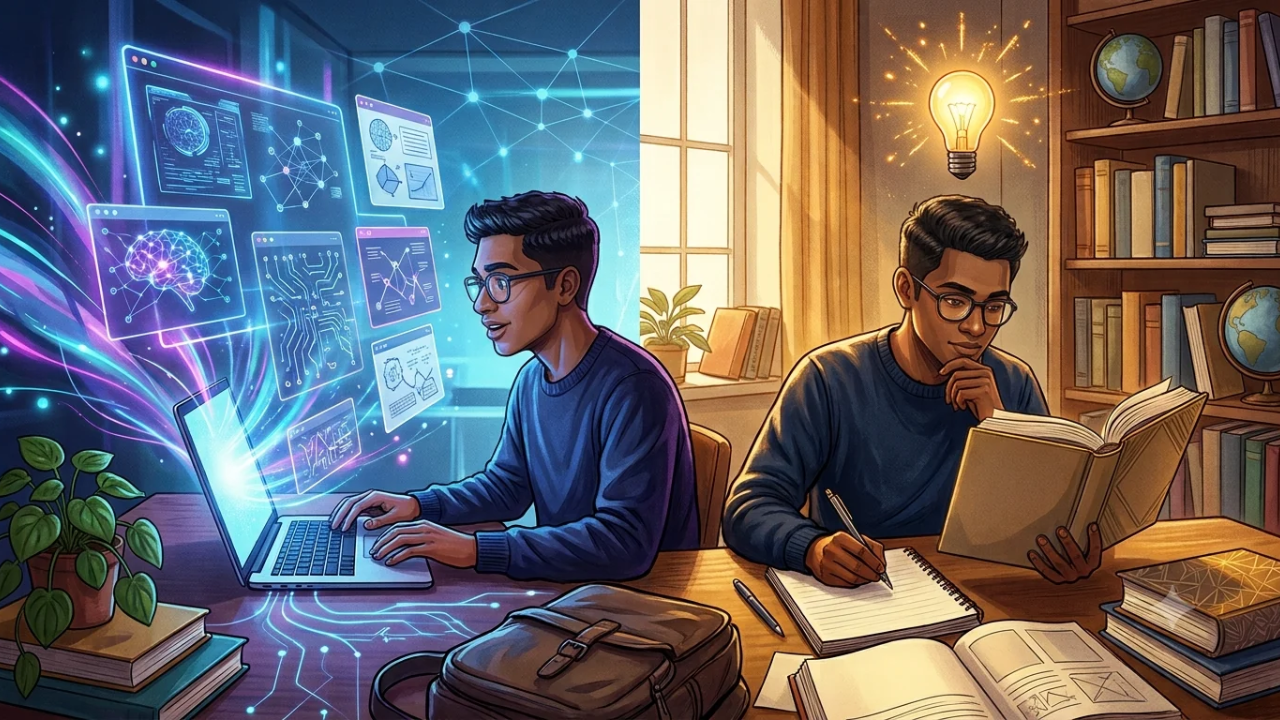
In 2016, the allure of a fictional robot named Doraemon, who could effortlessly solve problems and provide answers, captivated the imaginations of students. Decades later, in 2026, AI technology has materialized into a real tool accessible to students. While this advancement offers convenience, educators grapple with the question of whether AI empowers or undermines independent thinking among learners.
Recent surveys reveal that 95% of UK undergraduate students have utilized AI in some capacity, and 94% employed generative AI to assist with their coursework. The proportion of students incorporating AI-generated text in their submitted work surged to 12% in 2026, up from 8% in 2025 and 3% in 2024. Additionally, 65% of students acknowledged that assessment practices had significantly transformed due to AI.
On one hand, 49% of students reported that AI enhanced their academic experience by saving time, deepening understanding, and offering immediate assistance. However, concerns emerged regarding fairness, skill erosion, and social isolation. Moreover, while 68% considered AI skills crucial for thriving in the modern world, only 48% felt that their educators helped them acquire the necessary abilities for future careers.
The survey results signify a paradigm shift in education systems that cannot be ignored. The debate centers on whether AI serves as a valuable learning aid or a shortcut to answers. Preeti Khatri, a CBSE assistant professor, argues that AI should be viewed as an enabling tool rather than a threat to education. Like a knife, AI's impact hinges on how students employ it; its misuse does not condemn the technology itself.
Recognizing AI's relevance, the National Education Policy (NEP) 2020 emphasizes computational thinking and artificial intelligence. CBSE has introduced a curriculum on these subjects, providing curriculum materials and teacher training resources. However, merely integrating AI into the curriculum is insufficient; students must also learn to critically evaluate AI-generated information, identify its limitations, and discern when its application is appropriate.
Khatri emphasizes that educators must continue to play a pivotal role in fostering values, ethics, and responsible judgment. Assessment methods should evolve to emphasize application-based learning and open-book examinations, encouraging students to apply concepts rather than merely recall information. The essence of critical thinking remains unchanged; the nature of the exercise has evolved.
However, the effectiveness of this transformation hinges on students actively engaging with AI outputs, questioning their validity, and avoiding uncritical acceptance. Ultimately, the success of AI integration in education depends on students' ability to wield the technology as a learning aid without relinquishing their independent thought processes.
Written by urgent.news from Times of India's reporting — not their text. Machine-written — may contain errors; check the original before relying on it.