India’s electric vehicle boom finds its sweet spot in the humble rickshaw
HYDERABAD, Nov 9 — Every 90 seconds, an electric three-wheeler rolls off the production line at an Indian factory,...
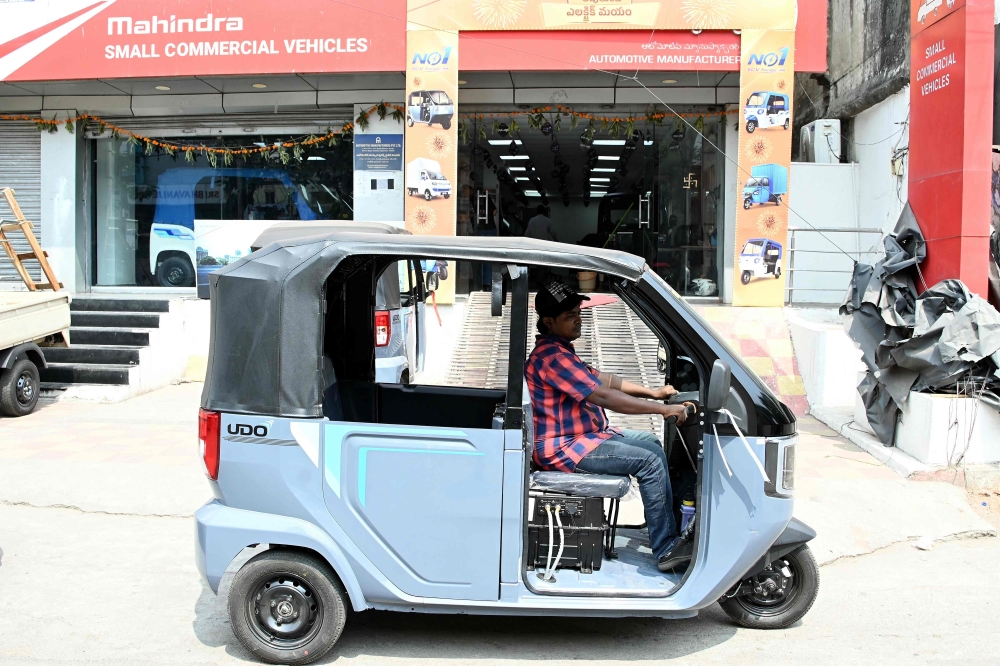
Every 90 seconds, an electric three-wheeler is produced at a factory in India, highlighting the country's emergence as the largest market for battery-powered auto rickshaws. At Mahindra Last Mile Mobility, a bustling plant assembles these vehicles, racing to meet demand for e-rickshaws that can navigate India's chaotic streets. In September, more than half of new three-wheelers sold in India were electric, compared to just 8.5% of cars and 11.6% of two-wheelers.
This surge in popularity is due to government subsidies, improved vehicle quality, and falling operating costs, making e-rickshaws an attractive option for drivers.
Initially appearing on the streets of New Delhi over a decade ago, e-rickshaws have since become a major industry, transforming the appearance of Indian cities by replacing the noise of traditional "tuk-tuks" with the quiet hum of electric motors. For many drivers, the financial benefits outweigh environmental concerns. Drivers like Afroz Alam, who switched from a gas-powered model to an EV, save several hundred rupees a day on fuel, helping repay the loan they took out to purchase the more expensive electric vehicle.
Analysts agree that economics is the primary driver of adoption, with falling battery costs and rising fuel prices significantly widening the advantage of e-vehicles. Indian think-tank CEEW estimates that petrol three-wheelers cost more than twice as much to operate per kilometer over their lifetime compared to electric vehicles.
E-rickshaws, which operate continuously throughout the day, accumulate fuel savings rapidly. Policymakers in India, which relies heavily on oil imports, have welcomed this trend as a way to manage energy costs amid the turmoil in the Middle East.
However, adoption remains uneven across the country due to challenges such as limited parking and charging infrastructure, particularly in cities like Mumbai. Supply chains also pose a problem, with China restricting exports of rare-earth magnets, an essential component in electric motors, forcing Indian automakers to cut or suspend production. In response, New Delhi has promoted domestic manufacturing, including battery cells, but most cells are still imported from China and South Korea.
The success of e-rickshaws could potentially be replicated in private cars and trucks, which consume far more fuel. CEEW's Bidisha Bhattacharya suggests that commercial fleets could help build charging networks and build consumer confidence. For drivers already making the switch, the argument is simple: "The battery will fail," as one driver put it, but after trying the vehicle for a day, they see the significant savings in daily fuel costs.
Written by urgent.news from Malay Mail's reporting — not their text. Machine-written — may contain errors; check the original before relying on it.