From Kali Puja To Bandi Chhor Diwas: India's Many Ways Of Celebrating Diwali
Diwali, or, as in some expressions, Deepavali, the festival of lights, is today more than just a religious observance. Its ethos has transcended the confines of any ritualistic definition. Like most festivals in this subcontinent, it has acquired a deep cultural and metaphysical significance, becoming an indelible part of everybody’s life. The celebration also heralds a season of autumnal bliss,…
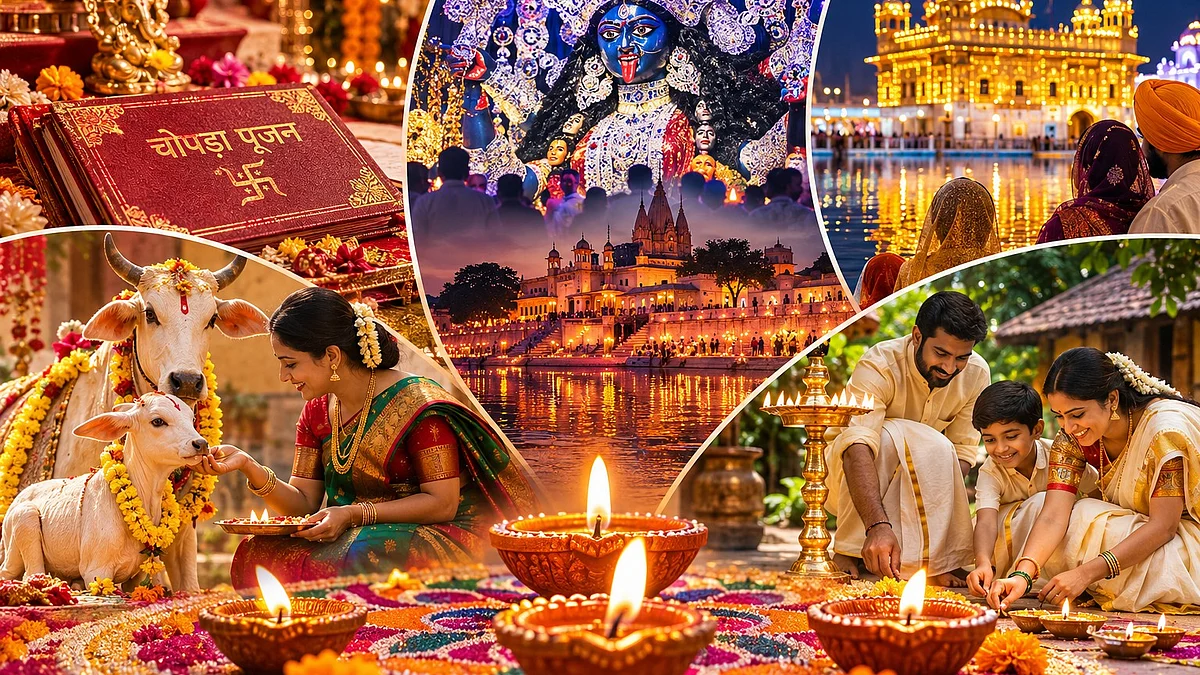
Diwali, also known as Deepavali, is a festival of lights that transcends religious boundaries in India. This celebration, deeply embedded in the culture and metaphysics of the subcontinent, heralds the arrival of autumn and is cherished throughout the country. While Diwali festivities vary by region, certain elements remain consistent, such as the sharing of sweets, family bonding, and the wearing of new clothes.
The origins of this festival remain a topic of debate, with various traditional accounts and stories associated with its observance.
In the western parts of India, Maharashtra and Gujarat are notable for their unique Diwali customs. In Maharashtra, 'Vasu Baras' or Govatsa Dwadashi holds significance, wherein the cow is revered as a divine gift and symbol of prosperity. Meanwhile, in Gujarat, businesses celebrate 'Chopda Pujan' by worshiping their account books, and the day following Diwali marks the beginning of the Gujarati New Year.
On the eastern seaboard, particularly in Bengal, Diwali coincides with Kali Puja, during which Goddess Kali is venerated. This event shares similarities with Durga Puja, featuring grand pandals, illuminations, and feasts. In Kolkata, residents often visit these pandals with family to appreciate the artistic creations. Additionally, Kali Puja incorporates unique customs like the 'Bhoot Chaturdashi' and 'Shyama Sangeet', a distinctive form of devotional music.
Moving north to Punjab, Diwali is celebrated as 'Bandi Chhor Diwas', commemorating the release of the sixth Sikh guru, Guru Hargobind, from Mughal captivity. This day is observed with recitations of the Guru Granth Sahib, lighting diyas, and other traditional practices. In the southern regions, particularly Tamil Nadu and Kerala, Diwali is linked to the story of Lord Krishna defeating the demon Narakasura.
Devotees start their day with early morning baths, seeking blessings from elders, and visiting temples before lighting lamps and engaging in other rituals.
Written by urgent.news from Free Press Journal's reporting — not their text. Machine-written — may contain errors; check the original before relying on it.