Diwali 2026: Do Firecrackers Affect Pets More Than You Think? Here's What Pet Parents Should Know
As Diwali lights up homes and neighbourhoods, the celebrations bring more than festive cheer. Firecrackers add smoke, dust and harmful particles to an atmosphere where air quality is already a concern. While the effects of pollution on human health are widely discussed, animals breathe the same air, often without any protection. From dogs and cats living in homes to birds and community animals on…
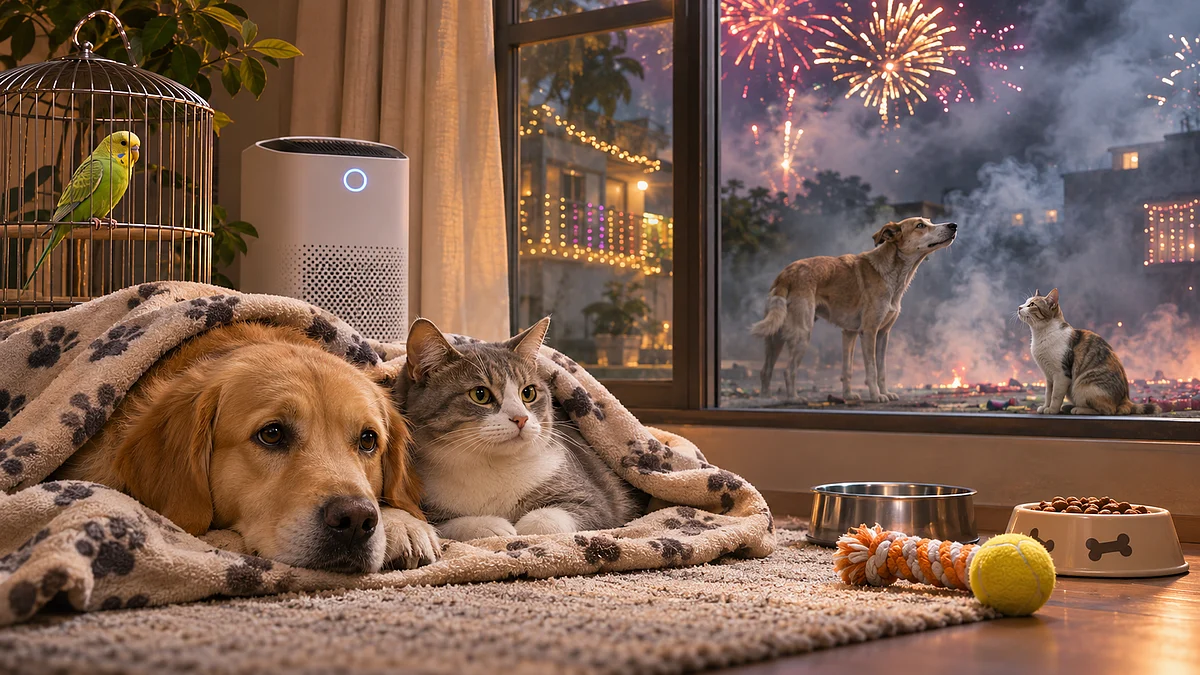
Diwali celebrations bring joy to many, but the festivities may have a darker side for pets. Firecrackers release smoke, dust, and harmful particles into the air, exacerbating already concerning air quality issues. While human health effects are widely discussed, the impact on animals is often overlooked.
For pets, breathing in polluted air can lead to coughing, sneezing, wheezing, watery eyes, and nasal irritation. In some cases, it may trigger respiratory inflammation, making breathing uncomfortable. Repeated exposure might worsen existing respiratory conditions, such as asthma in cats. Besides lungs, pollutants can irritate a pet's eyes and skin, causing redness, watering, itching, and discomfort. If pets lick their fur or paws while grooming, they may accidentally ingest harmful particles.
Pet parents must take extra precautions to keep their furry friends safe during Diwali. Aditi Limaye Kamat, a pet parent, suggests keeping pets indoors with windows closed, avoiding walks when air quality is poor, providing fresh water, creating a calm space, altering walk timings, and seeking veterinary care if breathing troubles persist.
Noise from fireworks can also distress pets, causing trembling, panting, barking, hiding, restlessness, or even attempting to run away. Noise phobias may develop with repeated exposure, leading to long-term anxiety. Veterinary surgeon Dipty Mahind explains that smoke and noise can irritate a pet's eyes, skin, and respiratory system, leading to coughing, sneezing, watery eyes, breathing difficulties, lethargy, and anxiety. Prolonged exposure may worsen existing conditions like asthma, bronchitis, and heart or lung issues.
Certain pets are more vulnerable to Diwali pollution. Puppies, kittens, senior pets, and those with pre-existing heart or lung conditions require special care. Flat-faced breeds like Pugs, Bulldogs, and Persian cats are particularly susceptible due to their restricted breathing passages. Birds, with their highly sensitive respiratory systems, are also at risk even when kept indoors.
Certain areas pose a higher risk for pets. Outdoor animals, such as community dogs and cats, may be exposed to smoke and pollutants near busy roads, construction sites, or locations where waste is burned. Indoor pets are not entirely safe either, as smoke and pollutants can enter homes through open windows, balconies, and ventilation systems.
Residents can help protect community animals by providing fresh water and food in protected areas away from firecracker activity. Animal rescuer Yael Enoch warns that the noise and disruption caused by Diwali celebrations can lead to displaced pets, collapsed community birds, and animals that stop eating or live in constant anxiety. To minimize stress, pet parents can soundproof their homes with foam tapes or ear-covering wraps for their pets.
Written by urgent.news from Free Press Journal's reporting — not their text. Machine-written — may contain errors; check the original before relying on it.