Diamond Foundry creates world's first 200mm single-crystal diamond wafer
This 200mm single-crystal diamond wafer is designed to efficiently remove heat and prevent hotspots from forming on AI processors.
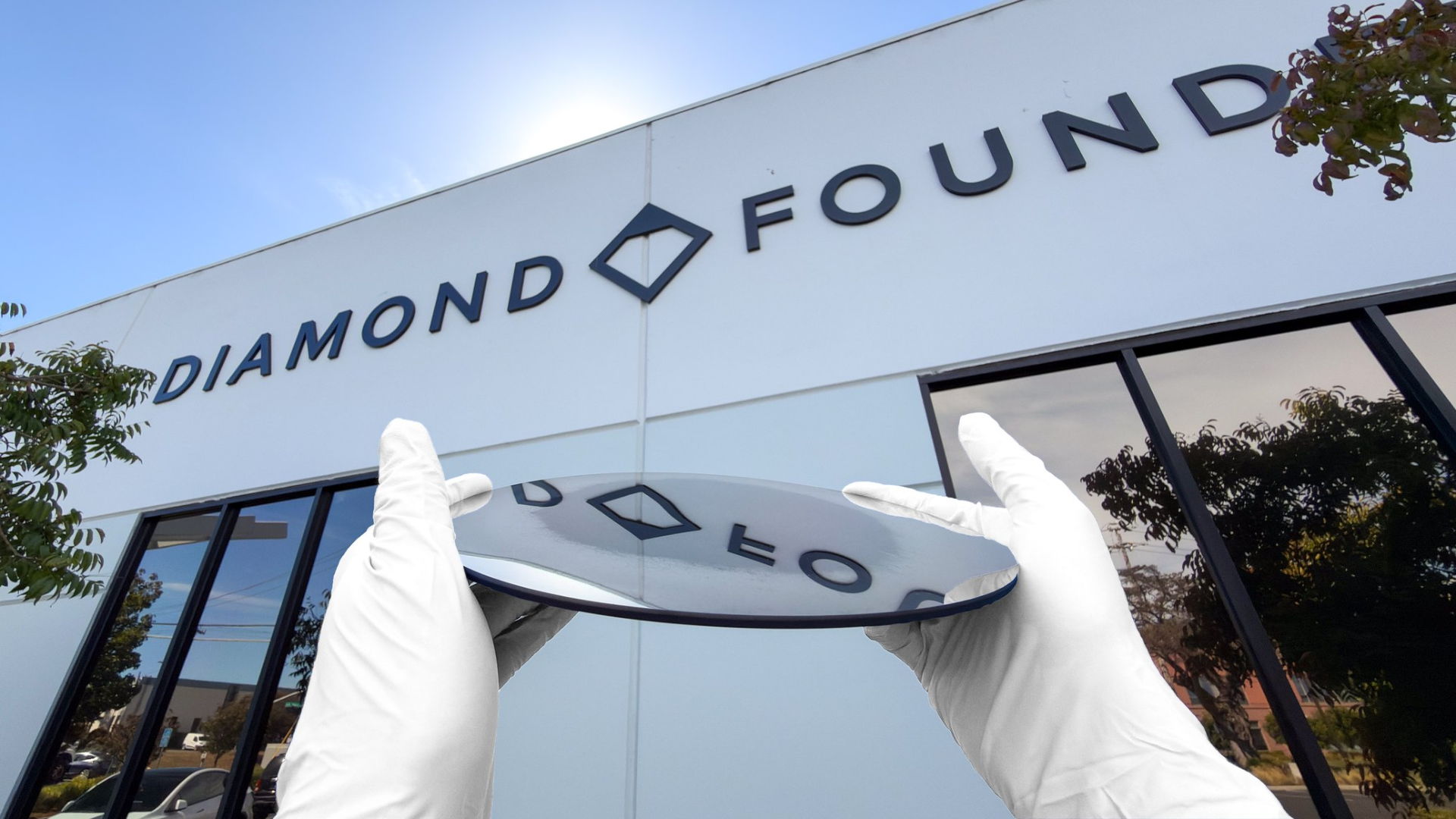
Diamond Foundry has announced the creation of the world's first 200mm single-crystal diamond (SCD) wafer. These diamonds possess exceptional cooling capabilities due to their superior thermal conductivity, estimated to be at least five times more conductive than copper. The 200mm SCD wafer is comparable in size to those used in semiconductor fabs for older processes, marking the "wafer-scale era" for single-crystal diamond.
The company emphasizes that this SCD wafer is distinct from other lab-grown diamonds because it's manufactured as a high-quality single-crystal piece, rather than a polycrystalline gem. This characteristic enables diamond to become an extremely efficient thermal conductor while maintaining its electrical insulating properties. This efficiency can help reduce hotspots, making SCDs an excellent solution for AI chip cooling.
Diamond Foundry's CEO, Martin Roscheisen, highlighted the perseverance of the team behind this achievement, stating that it's a milestone that seemed almost impossible. The company also revealed their ambition to create a D300 SCD wafer before 2030, which would match the size of wafers used in leading node processes. However, it's worth noting that the sample shown by the company is still unpolished and requires further processing to be suitable for chipmakers.
While Diamond Foundry is the first to announce this milestone, they are not alone in recognizing the potential of lab-grown diamonds for semiconductor cooling. Companies like Akash Systems and De Beers Group are also exploring this area, with Akash Systems securing funding for a cooling system using GaN fused with synthetic diamond, and De Beers Group building a copper-plated diamond composite material for improved cooling efficiency in AI and high-performance computing devices.
Written by urgent.news from Tom's Hardware's reporting — not their text. Machine-written — may contain errors; check the original before relying on it.