China’s Pudu Robotics, which makes 80% of its sales abroad, takes on Tesla in humanoids
Humanoid robots represent the next frontier for Pudu Robotics, according to founder and CEO Felix Zhang Tao, as the global commercial robotics leader takes on Elon Musk’s Tesla in the growing sector and explores manufacturing in Europe, its largest overseas market. “It’s definitely a competitor, but a long-term one,” Zhang told the South China Morning Post in a recent interview, adding that Tesla…
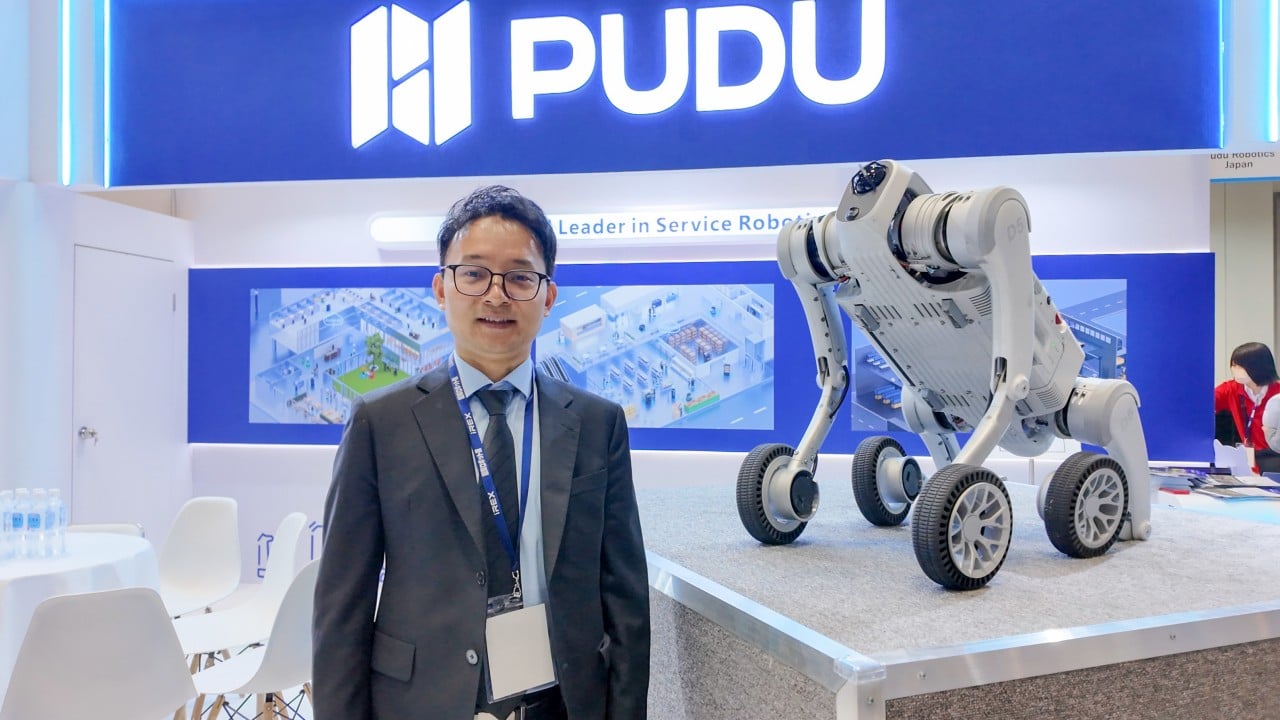
Pudu Robotics, a company that generates 80% of its revenue from international sales, is positioning itself against Tesla in the rapidly expanding humanoid robot market, according to its founder and CEO Felix Zhang Tao. In an interview with the South China Morning Post, Zhang stated that Tesla was a "very good" competitor whose high profile had driven innovation in the field.
The Shenzhen-based firm, which leads in shipments and revenues for commercial service robots globally, specializes in floor-cleaning robots, dishwashing machines for restaurants, and industrial equipment movers. Now, Pudu is turning its attention towards general-purpose humanoids and hybrid models that combine features of both. With 80% of its sales coming from international markets, Europe is a key hub for the company's growth.
Pudu recently opened its European headquarters in Germany, following the establishment of a US base in Dallas. Zhang indicated that local production in Europe could be a logical next step in the company's global expansion rather than a defensive measure against trade restrictions. However, geopolitical tensions pose a challenge for Chinese tech companies expanding in Western markets.
The European Union recently launched an anti-dumping investigation into Chinese robotic lawnmowers, and the US imposed measures in July to restrict imports of new Chinese robots, citing national security and supply chain concerns. To cope with these challenges, Pudu is adopting a "glocal" strategy that balances global reach with local operations.
Zhang emphasized that a truly global company must be prepared for the complexities of geopolitics. Competition in the humanoid robot sector is intensifying, with rivals such as Tesla, Apptronik, Unitree Robotics, AgiBot, Xpeng, and Xiaomi vying for market share. Zhang asserted that Pudu's hardware expertise, extensive customer base, and strong brand reputation differentiate it from other entrants in the field.
Developing humanoid robots is not enough, Zhang cautioned, as the technology is exceedingly intricate. The company's decade-long investment in research and development, a substantial portfolio of over 1,900 patents, and nine international design awards showcase its technical proficiency. Critical components like robotic arm joint modules, proprietary navigation systems, and data from operational fleets give Pudu an advantage over its competitors.
Zhang acknowledged the apprehension surrounding the potential for humanoids to replace workers, arguing that these machines would instead address labor shortages caused by aging populations in developed countries. The ultimate objective, according to Zhang, is to liberate humans from monotonous tasks, enabling them to pursue their passions or simply enjoy life.
Nevertheless, significant disruption is still years away, with widespread adoption requiring an additional 5 to 10 years of technological maturation.
Written by urgent.news from South China Morning Post's reporting — not their text. Machine-written — may contain errors; check the original before relying on it.
This story
This is one outlet's version. Read the fullest account.