Cairn 'Belongs' Next to Death Stranding in ‘History of Grand Adventure Games'
Cairn is the latest game from The Game Bakers, and though it looks like a sports game, it really has the spirit of an action-adventure game.
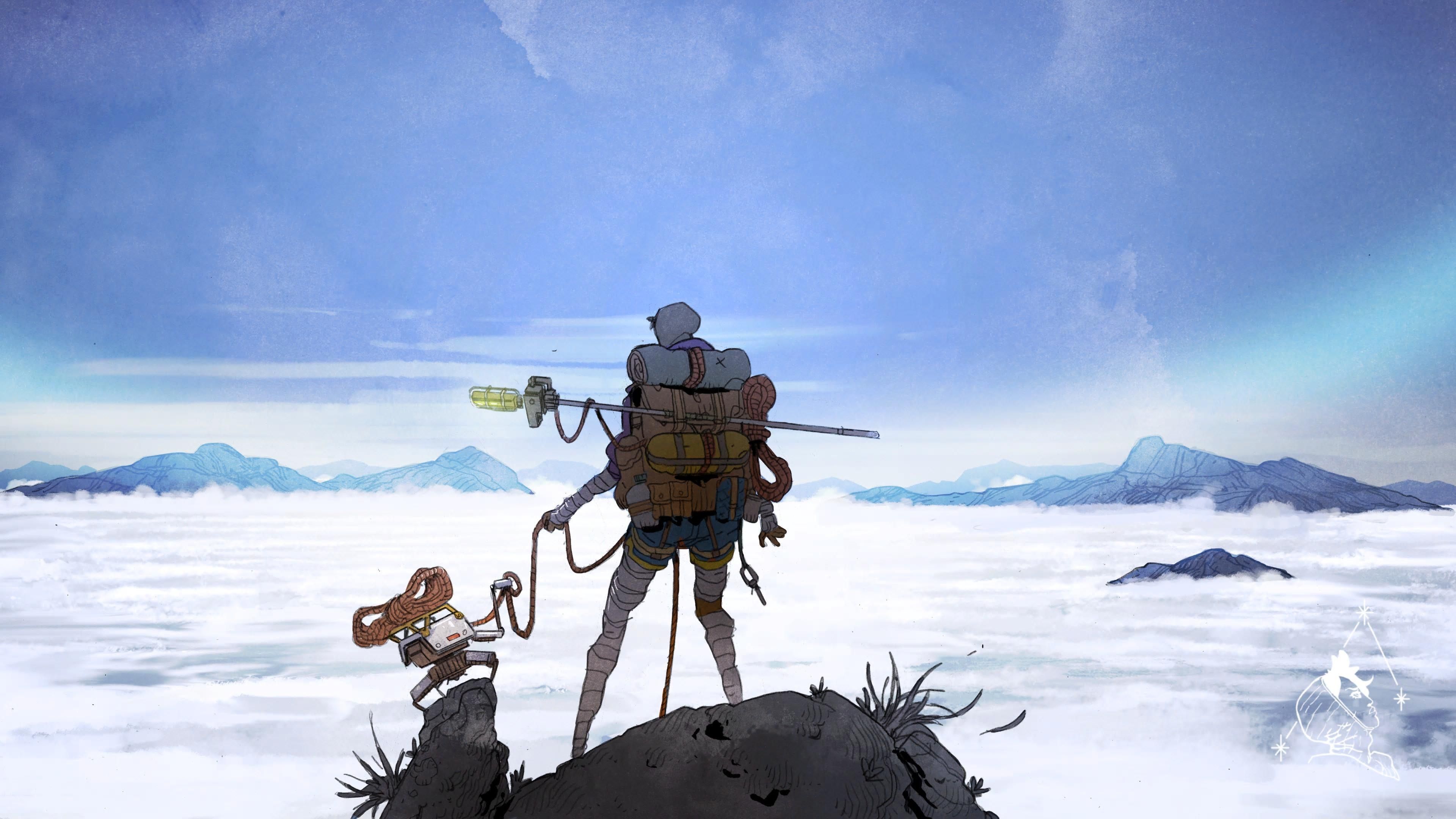
Cairn, the latest creation from French studio The Game Bakers, finds itself drawn into a comparison with Death Stranding when discussing its place in the history of grand adventure games. Rendered in a visually unique style and equipped with intricate climbing mechanics, the game presents the tale of a climber named Aava on her quest to reach Mount Kami, a seemingly impossible feat.
While the initial impression may be that of a simplistic or sporty experience, those who persevere past the initial challenges and obstacles are rewarded with a deeper exploration of psychology and physicality.
Game Bakers co-founder and Cairn producer Audrey Leprince didn't set out to create a game that simulated climbing. Rather, her vision was to craft an action-adventure game centered around survival, obsession, sacrifice, and the drive to accomplish the seemingly impossible. This philosophy was further solidified with the release of the game's DLC, "On the Trail: Deep Water."
When asked about the initial goals in developing Cairn, Leprince explained that the primary objective was to create a game about climbing a mountain. This meant offering players a "lonely ascent of an impossible mountain," with no additional distractions or diversions. The game's creator, Emeric Thoa, had an intuition that a gameplay-focused climbing game, following the success of their previous title "Haven," could be a strong addition to the genre.
The team worked tirelessly on refining the gameplay mechanics and ensuring they were both deep and enjoyable enough to sustain an entire game.
As Leprince spoke to Polygon, she revealed that there are other games with similar climbing mechanics, such as Breath of the Wild. However, these games focus on the mechanics rather than the overall experience, which is why they may not be seen as equivalent to Cairn. The difficulty in creating a realistic physics-based climbing game is a significant factor, with many other climbing games opting for "goofy" mechanics to compensate for the challenges encountered during development.
Additionally, the rarity of a game solely focused on climbing is another reason for Cairn's uniqueness in the genre.
Leprince emphasized that Cairn was never intended to be a realistic simulation of climbing. Instead, the team aimed to capture the fantasy and imaginary aspects of climbing a mountain. To achieve this, they developed a physics system that was realistic enough to support the experience, while also allowing for creative liberties in design.
This included the introduction of the climbot, a robot that assists the player by carrying pitons and guiding them through the mountain. This creative decision was made to enhance the overall experience without straying too far from realism.
The story in Cairn was an afterthought, initially born out of the desire to create a game with a rich and immersive experience. The team realized that simply focusing on climbing mechanics would not suffice, and they needed to incorporate an epic tale that resonated with players as they climbed. With this in mind, they developed a narrative that encapsulated the emotions, sacrifices, discipline, and determination required to climb a high-altitude mountain.
This story seamlessly intertwined with the gameplay, providing a well-rounded experience that goes beyond a simple "climbing game."
In comparison to Death Stranding, Cairn is described as an action-adventure game that transcends the boundaries of a straightforward climbing experience. While climbing remains a central element, the game also delves into storytelling, exploration, and survival, making it a worthy addition to the history of grand adventure games.
Written by urgent.news from Polygon's reporting — not their text. Machine-written — may contain errors; check the original before relying on it.