As the Colorado River shrinks, calls to drain Lake Powell grow
Groups are pushing to drain the lake entirely to reveal its long-submerged rock arches and spires and allow wildlife along the Colorado River to recover.
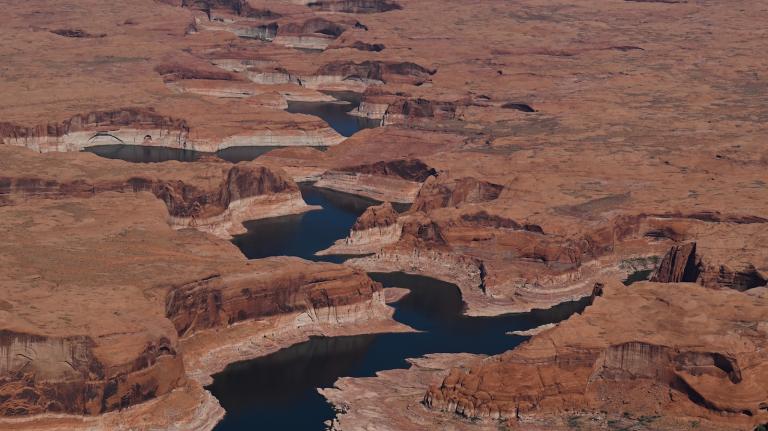
The ongoing 27-year drought in the Southwestern U.S. has severely impacted the Colorado River's flow due to a combination of factors such as reduced snowpack in Colorado's Rocky Mountains, higher temperatures, and increased evaporation from the river's reservoirs, including lakes Powell and Mead. A record low water level was recorded at Lake Powell, barely 150 feet above dead pool, which restricts water flow through the Glen Canyon Dam's bypass tubes to Lake Mead.
This situation has led to reduced hydropower generation, challenges in managing riverine ecosystems, and decreased water deliveries to the Lower Basin states of Arizona, California, and Nevada. Farmers have left fields fallow, developers have paused housing construction, and the Bureau of Reclamation has reduced environmental flows, threatening fish habitats and sandbars in the Grand Canyon.
As the crisis escalates, the federal and state governments are exploring various solutions, including draining Lake Powell entirely through new diversion tunnels. This approach, known as Fill Mead First, aims to restore Glen Canyon's red rock formations, Indigenous burial sites, and wildlife habitats while improving water delivery to downstream areas.
Experts argue that draining Lake Powell could potentially replace lost hydropower with solar energy, making it a viable and environmentally friendly solution.
Written by urgent.news from Grist's reporting — not their text. Machine-written — may contain errors; check the original before relying on it.