Wool trade shortage sees producers, shearers become wool classers
After four weeks of study in a classroom that is anything but typical, a motley crew of outback students has learnt how to class wool.
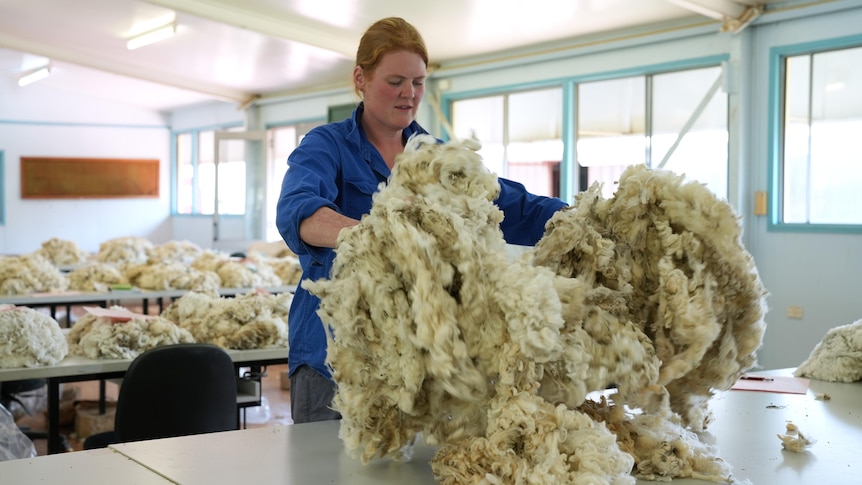
In Queensland, the wool trade shortage has led to shearing contractors and wool producers upskilling as wool classers. For over ten years, there were no pathways for these professionals to gain the necessary training in Queensland. An interstate effort has now brought wool classing back to the region. Over four weeks of intensive study, a diverse group of outback students, including shearers, stock agents, wool handlers, and wool producers, have learned to categorize wool based on colour, strand, fineness, texture, and style. Today, they are set to take their final exam.
Anna Ingold, a wool classing teacher from TAFE NSW, explained that the students receive a 3-kilogram bag of wool to sort by uniformity in micron length and strength, identifying any faults within the wool. Australia produces 25% of the world's wool, which is sold at auctions in Sydney, Melbourne, and Fremantle before being mostly shipped overseas for processing. Different qualities of wool can fetch different prices, making a classer's role essential in categorizing the shorn wool.
Skye Agar, a wool producer whose family won the champion flock fleece at the Brisbane Ekka, attended the training in Longreach. She found the knowledge about wool processing and pricing enlightening, emphasizing its importance for wool growers. David Grant, a Queensland shearer, highlighted that wool classing is non-negotiable for the wool trade, as a shortage of classers can halt the wool-selling process.
Mike Pratt, a Longreach grazier and chair of the Queensland Wool Technical Advisory Group, organized the training to address the wool trade shortage, noting that Queensland has not had a wool classing pathway since 2013. The industry currently operates with minimal resources, as a classer's absence can make the job impossible to continue.
Queensland needs around ten more classers, currently having only twelve operating shearing contractors, down from a hundred when wool was more prominent. Wool is currently fetching a good price, averaging $3,000 per bale, potentially double what it was five years ago. However, wool has faced competition from synthetics and cotton, particularly as the industry has historically marketed merino to high-end fashion markets overseas.
Despite a recent decline in wool prices by $2 per kilogram since the new financial year, wool producer Skye Agar remains optimistic about the fibre's potential, praising its versatility and versatility for extreme activewear due to its antibacterial properties and natural warmth and coolness. The 15 graduates will need to secure accreditation with the Australian Wool Exchange before applying their new skills in shearing sheds nationwide.
Written by urgent.news from ABC News AU's reporting — not their text. Machine-written — may contain errors; check the original before relying on it.