Triumph, tragedy and Alan Jones's drive to survive F1's deadliest era
As tributes flood in for F1 world champion Alan Jones and reflections are written on his tremendous career, his death has highlighted the dangerous and deadly period he raced in.
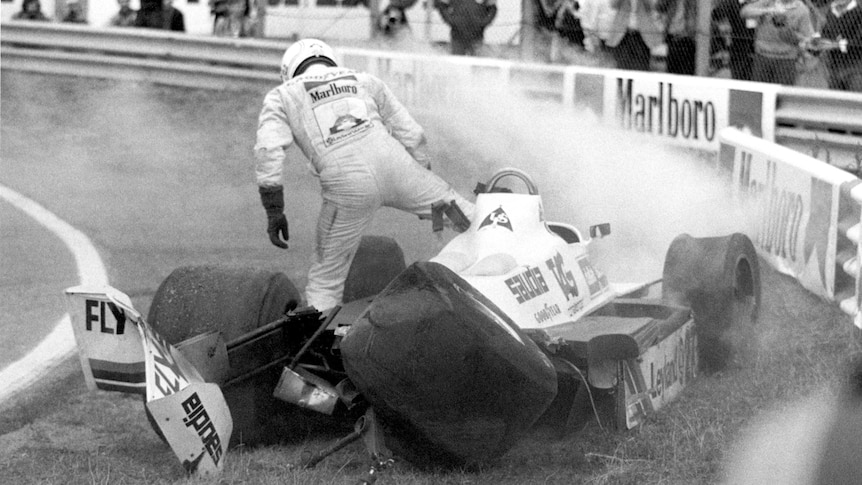
Alan Jones, the 1980 Formula 1 world champion, passed away at the age of 80, leaving behind a lasting legacy on and off the track. His career took place during a dangerous era of motorsport, where safety was not prioritized, resulting in numerous tragedies. Jones made his F1 debut at the controversial 1975 Spanish Grand Prix, where he retired early after a collision due to concerns about the circuit's barriers.
This marked the beginning of a series of unfortunate events in his career. In 1977, a fatal accident in South Africa claimed the lives of Welsh marshal Tom Pryce and a track marshal, an incident that highlighted the lack of safety measures at the time. Jones was called back to F1 following this tragedy, eventually winning the 1980 world championship with Williams.
However, his life was again cut short by tragedy, as he died in retirement. Over the course of Jones' career, five drivers lost their lives in F1 grand prix weekends, along with two drivers killed during F1 tests and Australian Brian McGuire, who was killed while testing an F1 car. Despite the horrific era he competed in, safety measures have significantly improved since Jones' retirement in 1986, with the introduction of the Halo device.
Written by urgent.news from ABC News AU's reporting — not their text. Machine-written — may contain errors; check the original before relying on it.
This story
This is one outlet's version. Read the fullest account.
- Triumph, tragedy and Alan Jones's drive to survive F1's deadliest era abc.net.au
- Piastri pays tribute to late Alan Jones theage.com.au
- Piastri pays tribute to late Alan Jones smh.com.au