Tierseuche: Vogelgrippe breitet sich aus – FLI erhöht Risikostufen
Binnen weniger Tage gab es mehrere Meldungen von Vogelgrippe in norddeutschen Betrieben. Das Infektionsgeschehen nimmt zu. Das zuständige Forschungsinstitut nennt Gründe und setzt Risikostufen hoch.
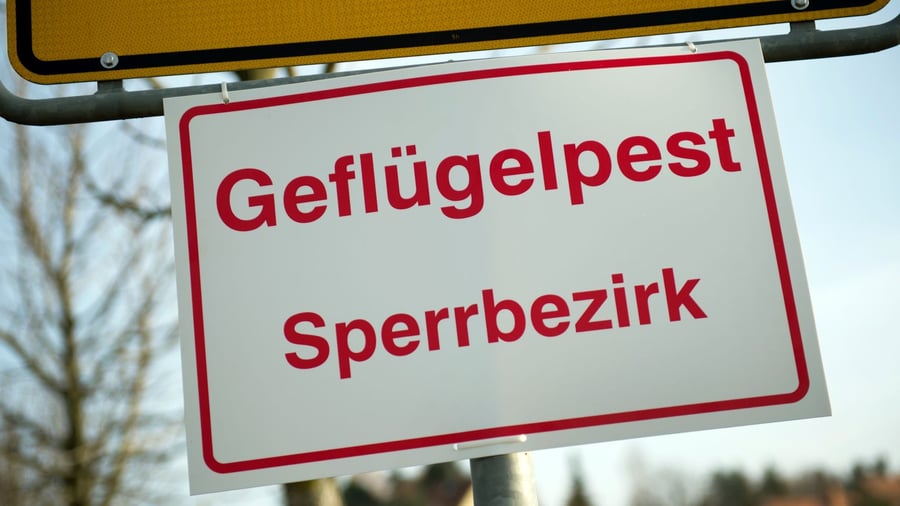
As temperatures drop and the arrival of the bird flu season begins, the number of infections is rising again, according to a spokesperson for the Friedrich-Loeffler Institute (FLI) in Greifswald. The situation is not exclusive to Germany, but is present throughout Europe. The Federal Research Institute, responsible for animal health, has raised several risk assessments by one level, considering the risk of spread between wild birds in Germany as high, as well as the risk of entry into German farms through direct and indirect contact with wild birds (previously moderate).
Other risks, such as the transfer between farms within the EU and Germany, are now assessed as moderate (previously low). Recent findings have been made in northern German farms. In early October, the virus was detected in a duck flock with 6,000 birds in the Lower Saxony district of Aurich. The animals were culled. Also last week, a case was reported in a farm in the Schleswig-Holstein district of Segeberg.
In that district, a farm had been affected as late as October. Finally, the first case of the season was announced in a farm in Mecklenburg-Vorpommern on Friday. Six thousand laying hens were affected in the Rostock district. The killing of the entire flock and the establishment of protective or monitoring zones typically follow a case confirmation.
Cold weather plays a role in the virus's actions. The FLI confirmed that primarily northern Germany is currently affected. It is believed that the increased movement of animals during the bird migration and their gathering around rest stops play a role. "October in particular is a very active month in terms of the wild bird migration," the spokesperson explained.
"What is now adding is that the temperatures have dropped significantly after a mild early autumn." The colder and wetter the conditions, the longer the virus remains active in the environment. "If cold snaps occur, we can expect increased movement in wild bird populations migrating to warmer regions, which will foster the transmission of the virus."
Predicting the situation is difficult. Though as dramatic as the situation was last autumn, with cranes among the affected species, it is not as severe at present. "The situation remains moderate compared to the very strong one last year," the experts stated. "However, due to the current weather conditions in conjunction with possible wild bird movements, further cases can be expected."
Predicting how severe the infection situation will be this season is not possible, and it depends on numerous factors. Evidence of the bird flu, especially in wild birds, has been found throughout the year in Germany. The disease, which is common in many bird and poultry species and often has a lethal course, can theoretically also be transmitted to humans if the viral dose is high. According to the Robert Koch Institute, no human cases have been reported in Germany.
Written by urgent.news from Handelsblatt's reporting — not their text. Machine-written — may contain errors; check the original before relying on it.