New Zealand preliminary vote leaves unclear who will govern
Neither current Prime Minister Christopher Luxon nor opposition leader Chris Hipkins claimed victory in their speeches following the election.
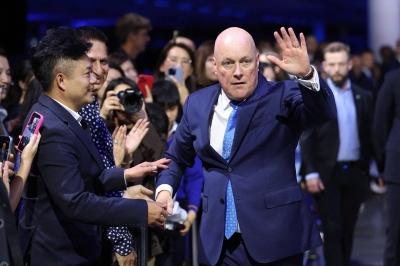
New Zealanders may yet learn on November 27 who will lead the nation for the next three years, as preliminary vote counts left the National-led coalition with a narrow majority, reports <source>. Currently, the coalition holds 67 of the projected 131 seats in parliament, with 66 required for a majority. However, approximately 14 percent of votes, including special votes from overseas New Zealanders and those cast outside their electorate, remain to be counted.
These votes have historically leaned left. As a result, the incumbent coalition will continue to govern as a caretaker government until the final count is completed. Neither Prime Minister Christopher Luxon nor Opposition leader Chris Hipkins claimed victory, as the election campaign centered on the economy and cost of living concerns.
National Party lawmaker and campaign chair Simeon Brown stated that his party felt confident in forming a government with their coalition partners. However, if the coalition fails to secure a majority, either the National-led coalition or a left-leaning coalition would need the support of the centrist Opportunity Party, which may be entering parliament for the first time.
While New Prime Minister Luxon has dismissed the possibility of working with Opportunity, Brown did not rule out discussions with the centrist party. Political science lecturer Mona Krewel from Victoria University of Wellington suggested that the two parties could potentially collaborate. The country transitioned to a mixed-member proportional system in 1996, meaning voters choose both a party and a local candidate.
Due to tactical voting, the National Party and minor Te Pati Maori party won a disproportionate number of constituency seats relative to their popular support, reshaping the parliament's balance and sparking debate about the electoral system. The combined support for National and Labour is at its lowest since the introduction of MMP, with both parties' popular votes sitting below 30 percent.
As a result, National may lose several senior lawmakers in the upcoming parliament, including Finance Minister Nicola Willis. Brown acknowledged that the result was bittersweet for the party, as they had lost some significant figures.
Written by urgent.news from New Straits Times's reporting — not their text. Machine-written — may contain errors; check the original before relying on it.
This story
This is one outlet's version. Read the fullest account.