N Ram on his interview with Sonia Gandhi
In an interview with The Hindu by N. Ram, former Congress President Sonia Gandhi reflects on her upcoming memoir, Belonging: A Journey of Love. She discusses the impact of twelve years of BJP-RSS rule on Indian democracy, defends the Congress party’s fight for a level playing field, and shares how her love story with Rajiv Gandhi evolved into a lifelong commitment to India.
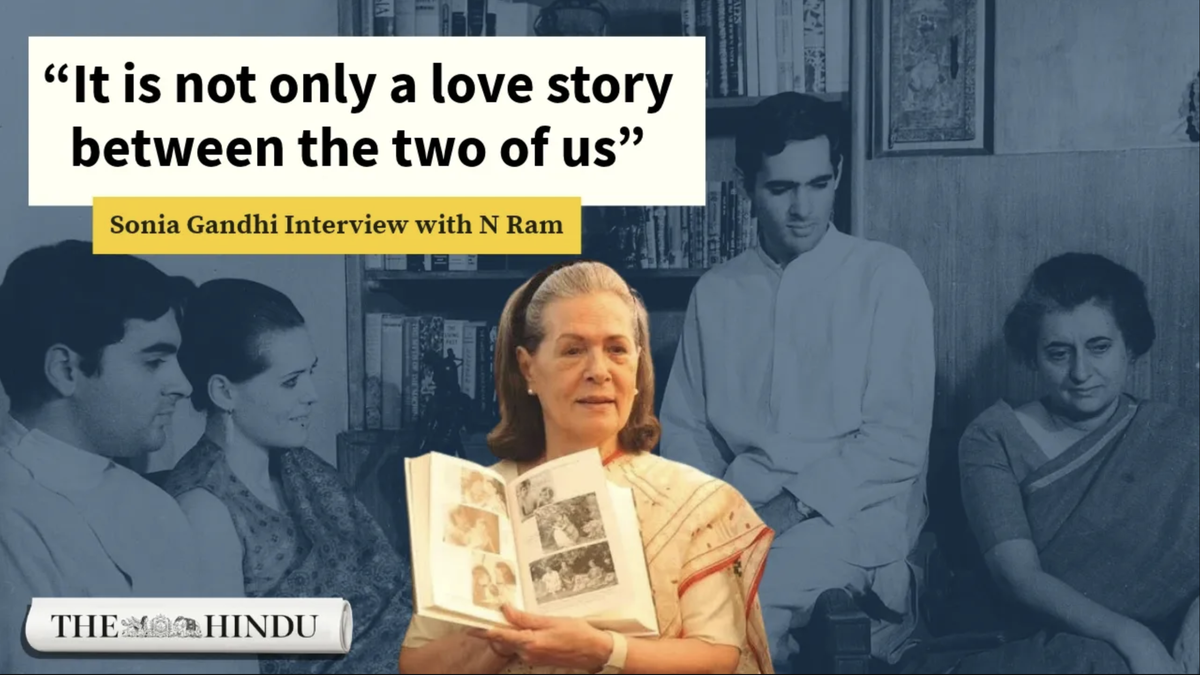
Sonia Gandhi's memoir "Belonging: A Journey of Love" chronicles her transformation from a private life to one of public prominence within India's political landscape. After her husband, Rajiv Gandhi, was assassinated, Sonia found herself grappling with her own vulnerability during public appearances, often wrestling with fear and the temptation to break down in tears in front of audiences.
Over time, however, she discovered solace in the tasks centered around Rajiv's memory, finding a sense of belonging in the work of various memorial trusts she headed.
During this period, Sonia's children Rahul and Priyanka also made notable achievements. Rahul received his master's degree in philosophy from Trinity College in 1995, while Priyanka completed her psychology degree from Jesus and Mary College in 1993. The family attended Rahul's graduation ceremony, where they were moved by the experience, reminiscing about their shared past and the tribulations Rajiv had faced alongside them.
As Sonia gradually emerged from her secluded life, she began to witness the growing turmoil within the Congress Party. Various factions, including Arjun Singh, N.D. Tiwari, and Mohsina Kidwai, as well as Tamil leaders G.K. Moopanar, P. Chidambaram, and Madhavrao Scindia, had broken away to form their own parties. The party faced splits, factional disputes, and disappointing electoral results in 1996, leading to the Congress Party's inability to form a government on its own.
Sonia, despite her initial reluctance towards politics, found herself increasingly drawn to the party's affairs and felt compelled to take an active role in its leadership. This internal conflict, fueled by guilt and a sense of duty towards her husband, mother-in-law, and the nation, ultimately led her to confront her own deep-seated fears about the direction of Indian politics and the potential damage to its pluralistic ethos.
Written by urgent.news from The Hindu's reporting — not their text. Machine-written — may contain errors; check the original before relying on it.
This story
This is one outlet's version. Read the fullest account.