Japan Archaeologists Uncover 1,500-Year-Old Statue of Possible Priestess
Archaeologists in Japan have recovered a clay statue of a woman who may have served as a priestess about 1,500 years ago. The discovery offers a rare glimpse into how ancient Japanese communities honored their dead. The figure, called a haniwa (a hollow clay sculpture placed on or around burial mounds), was unearthed this year […]
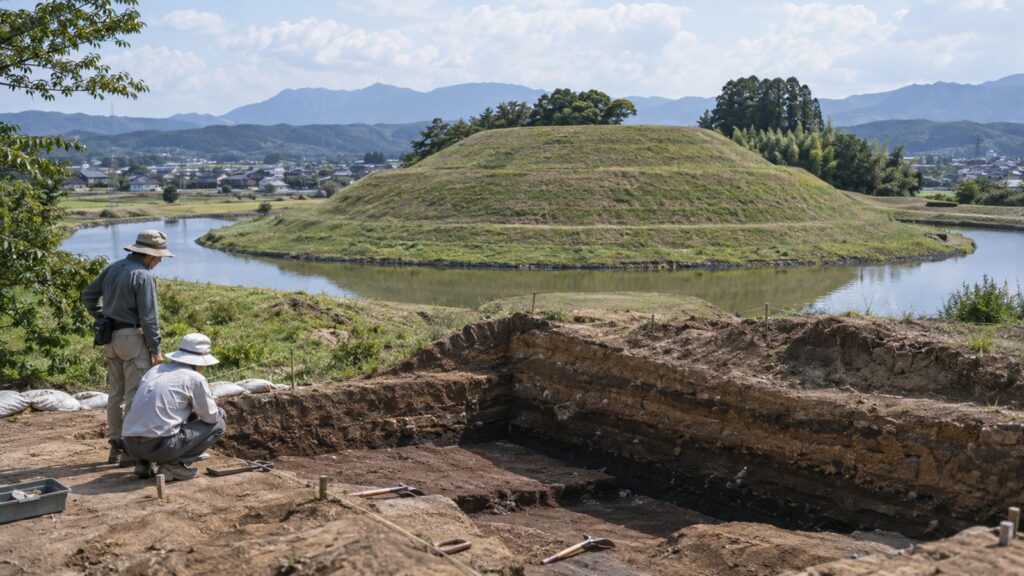
In Japan's Gunma Prefecture, archaeologists have uncovered a 1,500-year-old clay statue that may depict a priestess, offering insights into ancient burial rituals. Discovered in Nishikaminomiya, near Isesaki, the figure stands 40 centimeters tall and measures around 45 meters in diameter for the associated tomb. This haniwa, or hollow clay sculpture, was found within the moat of the largest burial mound, believed to have originally stood near a boat-shaped sarcophagus within the tomb.
The miko, or shrine maiden, was a woman who served as a link between human and spirit worlds in Shinto tradition. The statue's hairstyle, topknot, bracelets, red sash, and ritual tool suggest it was a woman participating in ceremonies. The figure's careful detailing implies the community highly valued the statue. The discovery sheds light on women's religious roles during the Kofun period, when powerful families built massive burial mounds and placed haniwa as offerings.
The statue is currently on public display at either the Shibukawa Excavation Museum or the Gunma Prefectural Museum of History, depending on the source.
Written by urgent.news from Colombia One's reporting — not their text. Machine-written — may contain errors; check the original before relying on it.