How China is tightening its grip on critical minerals with $16 billion mining push in Africa amid US rivalry
China is expanding its footprint in Africa’s critical minerals sector, with $16.3 billion invested in processing and manufacturing projects. As the US steps up efforts to secure mineral supplies, Beijing is seeking greater control across the supply chain.
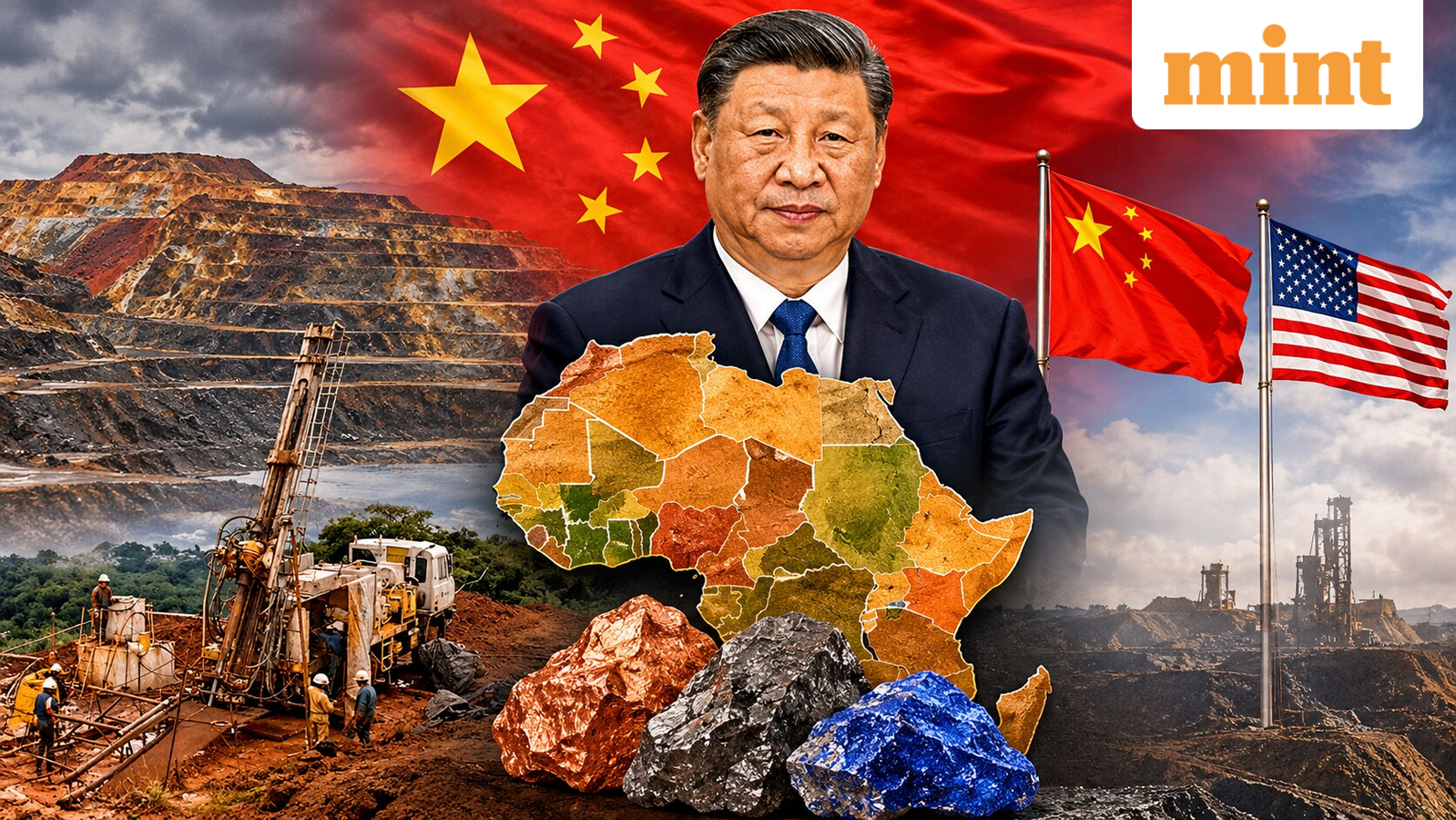
China is ramping up its investments in Africa's critical minerals sector, committing over $16 billion to projects in mining, processing and manufacturing. This effort is driven by Beijing's desire to strengthen its influence over vital resources like copper, cobalt, iron ore and rare earths, which are key to global industries and defense.
A report from the consultancy Development Reimagined revealed that Chinese investments in African mining, exploration and development projects have surged to $41.2 billion across 32 initiatives in 15 African nations as of June 2026. Of these, 19 projects focus on adding value to minerals through processing or manufacturing, attracting $16.3 billion in investments.
While this development could benefit African countries by fostering local industries and creating jobs, it also risks solidifying China's grip on the supply chain of these essential resources. African nations, which are major suppliers of minerals such as copper, cobalt and iron ore, have recently taken steps to encourage domestic processing and manufacturing by imposing export restrictions or bans on certain raw materials.
However, the report highlights a disparity between investment in raw material extraction and commitments to local value addition. For instance, the $23 billion Simandou iron ore project in Guinea, touted as the world's largest of its kind, underscores China's deep involvement in Africa's mining sector. Yet, the success of these large investments in generating lasting industrial benefits for host countries remains uncertain.
This surge in Chinese presence aligns with the United States' efforts to diversify its critical mineral supply chains and gain access to alternative sources. In December 2025, the US secured preferential access to mining assets in the Democratic Republic of Congo for American companies. US-linked bidders are also vying for development rights at Kenya's Mrima Hill, which houses significant rare earths and niobium deposits.
The competition among the US and China for African mineral resources has positioned these resources at the forefront of a broader strategic rivalry between the two powers, both of which seek to secure materials that underpin industrial competitiveness, technological advancement and military capabilities. Chinese President Xi Jinping has framed China's growing engagement as support for African countries in developing their own industries, emphasizing that Africa's resources are African.
This stance aims to counteract Washington's attempts to expand its access to African mineral assets. The intensifying competition could empower African governments to negotiate better mining agreements, attract investment and secure technology transfers. While China's $16.3 billion investment push could be seen as an opportunity for industrialization in Africa, the ultimate outcome remains whether Africa will gain greater control over its mineral wealth or become more deeply entrenched in a supply chain shaped by Chinese interests.
Written by urgent.news from Live Mint's reporting — not their text. Machine-written — may contain errors; check the original before relying on it.