Explainer-Can Gadi Eisenkot break Israel’s political deadlock?
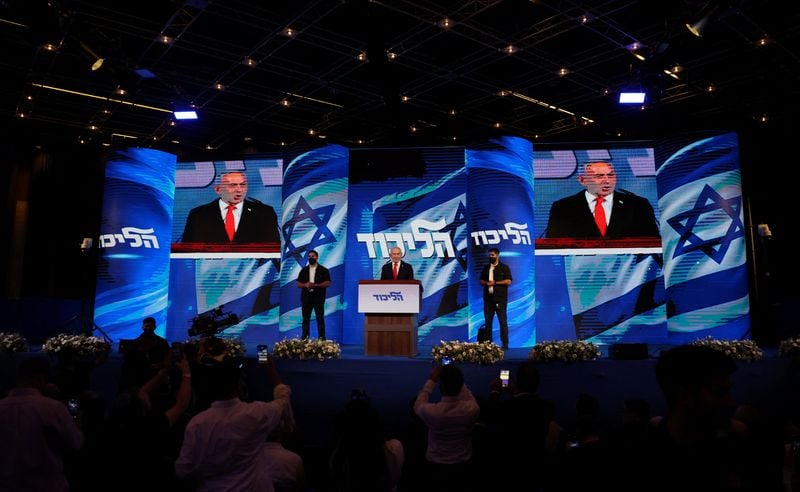
Former Israeli military chief Gadi Eisenkot has been offered the chance to form a government following last month's inconclusive election that failed to remove Prime Minister Benjamin Netanyahu. However, Eisenkot's coalition lacks a majority in the 120-seat parliament, making it challenging for him to become Prime Minister.
Eisenkot could attempt to create a minority government with his Yashar party's natural allies, Together, The Democrats, and Israel Our Home, backed by Israel's two Arab parties, Ra'am and the Joint List. This would give his coalition 48 seats, with the Arab parties adding 19 more, totaling a 67-seat group capable of overcoming no-confidence motions. However, accepting Arab parties into the government could be a difficult sell, as attitudes toward Israel's Arab minority have hardened since the October 7, 2023, Hamas attack.
Alternatively, Eisenkot could seek a deal with Israel's two ultra-Orthodox parties, which together have 13 seats. This would enable his bloc to reach a 61-seat majority, but they would need to compromise on military service exemptions for ultra-Orthodox seminary students, an issue Eisenkot and his partners have previously criticized.
Another possibility is a unity government with Netanyahu's Likud party, which emerged as the largest in parliament following the recent vote. This grouping would secure 67 seats, a majority in the parliament. However, this option seems unlikely, as both Eisenkot's partners would have to abandon their pledge to unseat Netanyahu and Netanyahu would likely have to remove his far-right and ultra-Orthodox Jewish parties from his coalition.
If neither Eisenkot nor Netanyahu can form a government within 42 days, President Isaac Herzog is likely to nominate Netanyahu for the role. Netanyahu's coalition has dwindled from its original 64 seats to 53, but he could still attempt to form a government by attracting defectors from other parties. If both fail, another candidate could be nominated, with a 100-day deadline for a resolution. Failure to form a government by then would result in another election.
Written by urgent.news from Investing.com's reporting — not their text. Machine-written — may contain errors; check the original before relying on it.