Explained: What is the ethanol issue in Karnataka and why have OMCs rejected the state govt's excess blending claims?
State-run OMCs have rejected Karnataka's claims that petrol at some outlets contained up to 31.2% ethanol, questioning the sampling and testing methods. They say E20 supplies meet BIS standards and have sought independent testing of the disputed samples.
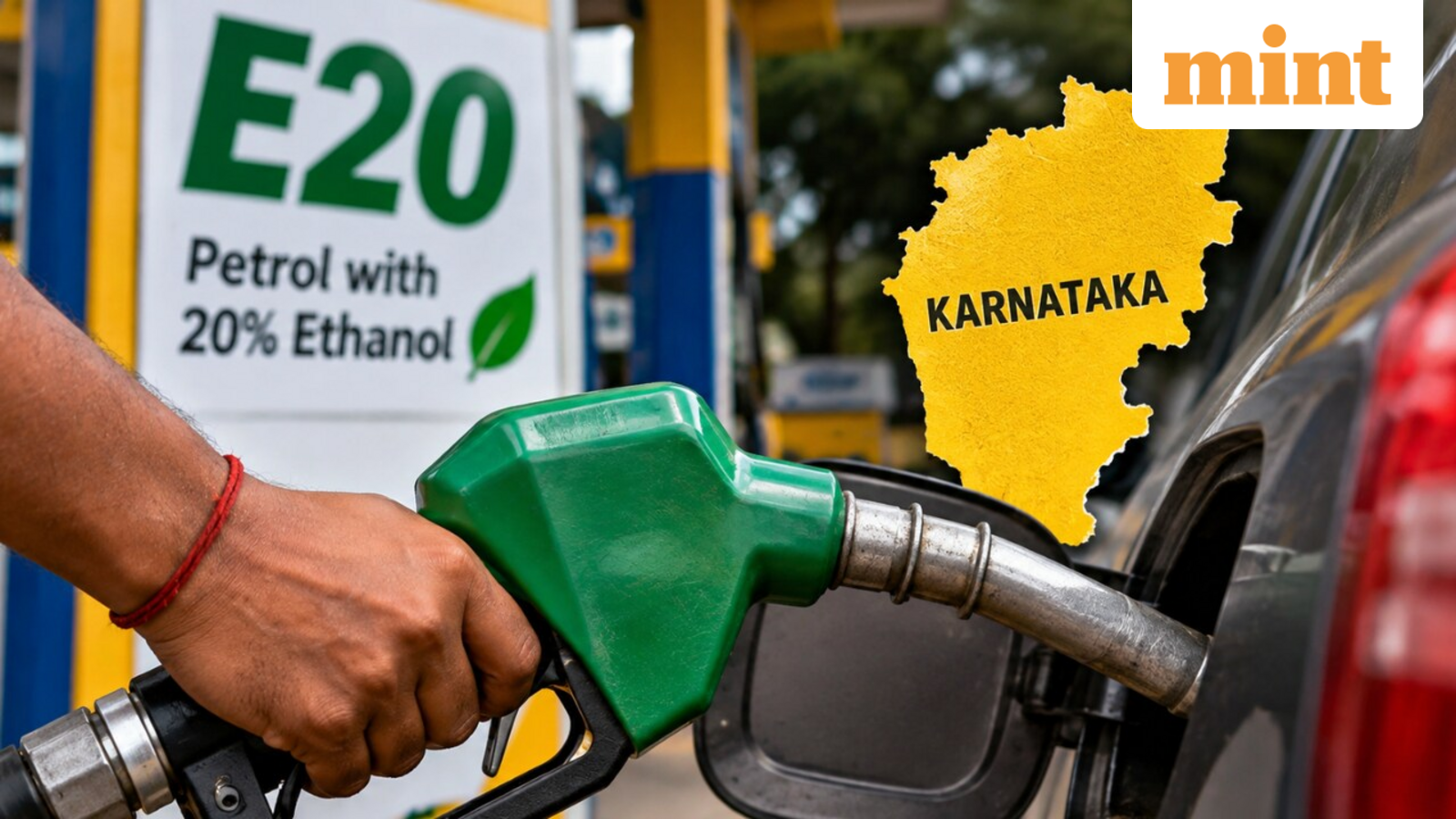
Three state-run oil companies in India - Indian Oil Corporation Ltd (IOCL), Bharat Petroleum Corporation Ltd (BPCL) and Hindustan Petroleum Corporation Ltd (HPCL) - have denied Karnataka's claims that petrol sold at some outlets in the state contains ethanol levels above the allowed 20%. The companies questioned the state government's sampling and testing methods, stating their findings couldn't be independently verified.
The OMCs said the reports of petrol containing 26-31% ethanol were not supported by tests conducted according to statutory and technical procedures. They maintained that the E20 petrol they supply across India, including Karnataka, complies with Bureau of Indian Standards (BIS) specification IS 17021. The dispute arose after the Karnataka government claimed tests of petrol samples from seven districts found ethanol concentrations exceeding the E20 limit.
Eleven out of 14 samples tested by the state exceeded the 20% threshold, with the highest at 31.2% from an IOCL outlet. The oil companies said the October sampling exercises didn't follow the prescribed procedures, alleging samples were collected without their representatives and they didn't receive necessary retention samples and lab reports.
The companies cited the Motor Spirit and High Speed Diesel (Regulation of Supply, Distribution and Prevention of Malpractices) Order, 2005, and Marketing Discipline Guidelines (MDG) 2024 as the proper procedures, which require six one-litre samples to be collected, with specific details recorded and test results communicated. The OMCs also questioned the laboratory certificates used by the state, saying they lacked crucial technical details to validate the reported ethanol concentrations.
They argued that the samples could not be independently validated against the prescribed methodology due to the missing information. The three companies also pointed out that their ethanol blending process is controlled and calibrated, with no reports of widespread vehicle issues despite running over 30 crore two-wheelers and 4 crore four-wheelers on E20 fuel for over three years.
The Karnataka government raised concerns about potential impacts on vehicle performance and fuel efficiency, estimating potential losses of ₹62,000 crore from reduced mileage and ₹39,000 crore in repair costs. However, the OMCs rejected these estimates, saying a blanket assumption of 10% mileage loss across all vehicles is not scientifically supported and the repair-cost claim needs documented evidence.
Written by urgent.news from Live Mint's reporting — not their text. Machine-written — may contain errors; check the original before relying on it.
This story
This is one outlet's version. Read the fullest account.