Earth’s Rocks Have a Missing Layer Spanning Up to a Billion Years
Now we finally know where it went The post Earth’s Rocks Have a Missing Layer Spanning Up to a Billion Years appeared first on Nautilus .
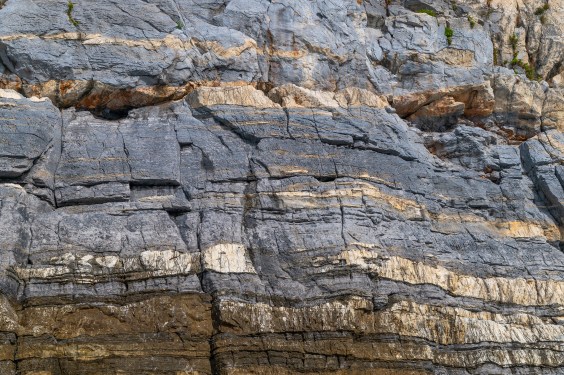
For 150 years, the cause of a gap in Earth's rock records has remained a mystery to geologists. Known as the Great Unconformity, this missing layer spans up to a billion years and is found in various locations, such as the Grand Canyon in North America and northern Europe. Traditionally, rock layers are arranged in chronological order, with older layers at the bottom and younger ones at the top.
However, in certain areas, a flat layer of sedimentary rock dating back 540 million years or less rests directly on top of a crystalline "basement" ranging from 1 to 2 billion years old, leaving a significant portion of Earth's history unaccounted for. This phenomenon first came to light in the 1870s when geologists observed the disrupted sequence of rock formations.
Recent research published in Nature provides an explanation for the Great Unconformity, attributing it to deep processes occurring within the Earth's mantle. The mantle, a 2,900-kilometre thick layer of solid rock, experiences a slow, convection-like movement over millions of years, causing it to either rise or sink. This movement can elevate or depress continents by hundreds of meters, with continents placed atop the mantle.
Using the Australian supercomputer Gadi, researchers modeled the impact of mantle convection on ancient continents over the past billion years. Their findings reveal that during this period, continents like Laurentia, Baltica, and North China were gradually lifted up from around a billion years ago to 540 million years ago, while other continents experienced minimal uplift and subsidence.
When these continental blocks were raised, the crystalline basement layer was exposed, and the sedimentary layers above were eroded. As the blocks subsequently sank, new sedimentary layers formed and were preserved in the rock record. The researchers note that the uplift observed in Laurentia, Baltica, and North China aligns with the Snowball Earth period, characterized by massive ice sheets that significantly eroded continents.
Consequently, the Great Unconformity may be a result of the interplay between mantle convection and glaciation, leaving an indelible mark on Earth's geological history and setting the stage for the evolution of complex life.
Written by urgent.news from Nautilus's reporting — not their text. Machine-written — may contain errors; check the original before relying on it.
This story
This is one outlet's version. Read the fullest account.