Diwali Special! 1,500-Year-Old Goddess Laxmi Sculptures, Rare Gold Coins And Ancient Temple Treasures Showcase MP's Rich Heritage At Bhopal State Museum
Bhopal (Madhya Pradesh): Depictions of Goddess Laxmi, revered as the deity of wealth and prosperity and worshipped during Diwali, can be found on centuries-old gold coins and sandstone sculptures discovered across Madhya Pradesh. Her sandstone sculptures - both stand-alone and alongside her consort Narayan (Vishnu) - as well as gold coins featuring her image, collected from various parts of the…
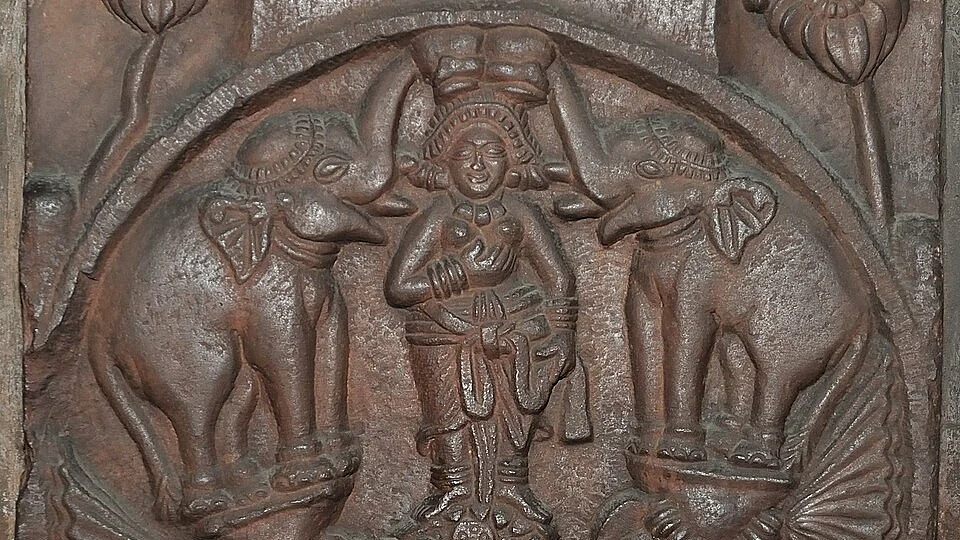
The Bhopal State Museum has unveiled a collection of historically significant artifacts, showcasing Madhya Pradesh's rich heritage. These artifacts include depictions of Goddess Laxmi, who is worshipped during Diwali as the deity of wealth and prosperity. The exhibits span from the 5th to the 13th centuries and include both standalone and duo sculptures featuring Goddess Laxmi alongside her consort, Narayan (Vishnu).
Among the gold coins on display, there are ten issued by Chandel and Kalachuri rulers, who ruled central India from 900 CE to 1200 CE. These coins bear the names of the kings in Devanagari script on one side and an image of Goddess Laxmi on the reverse, with the goddess depicted seated with two arms and a halo around her head. The coins weigh between 61-63 grains, with each grain equivalent to one gram.
Additionally, 16 gold coins from the Parmar dynasty (10th-13th centuries) are on display. These coins feature King Narvarman's name on the obverse and an image of Goddess Laxmi on the reverse, with the goddess wearing a necklace and two dots near her belly. The coins weigh 80 grains each.
Other notable exhibits include a Gajlaxmi sculpture from Jabalpur, dating back to the 11th century and found during excavations. The four-armed sculpture depicts Goddess Laxmi holding lotuses in both upper hands, a rosary in her lower right hand, and a kalash in her lower left hand, with a lion atop. Another exhibit is Kamala, a Tantric depiction of Goddess Laxmi from the 5th century CE, found in Gwalior.
This sculpture showcases Goddess Laxmi with four arms and various adornments, standing on a pedestal and accompanied by two female attendants.
Written by urgent.news from Free Press Journal's reporting — not their text. Machine-written — may contain errors; check the original before relying on it.