Designing your own 3D printer parts is far easier than it looks, and it fixes problems downloads never will
It's worth a shot if you like getting to the bottom of things.
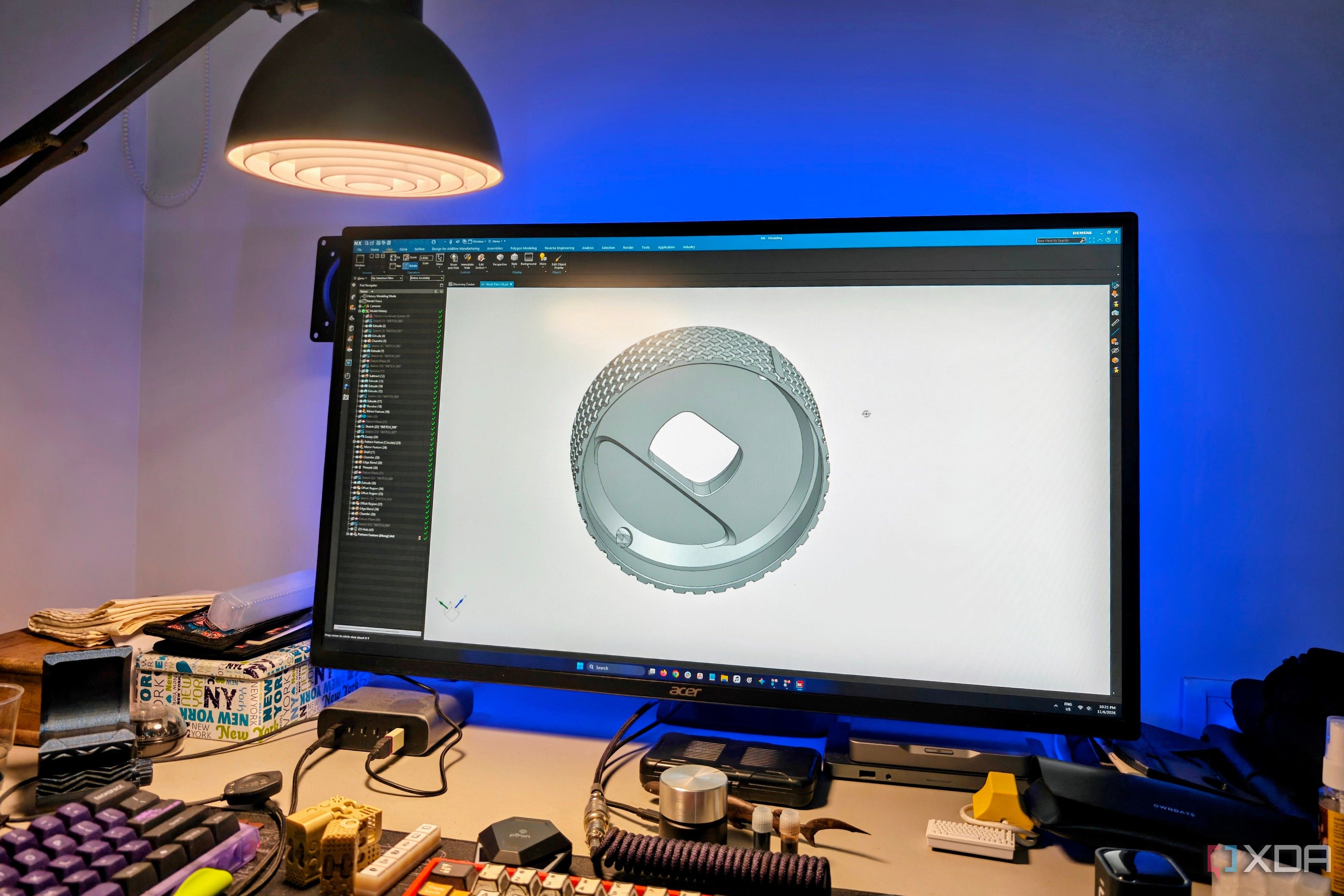
Creating custom 3D printer parts is simpler than it appears, often being less daunting than people believe. Many designs you discover online tend to end up bookmarked or saved to your device, eventually being printed after enough time passes. While this method has its merits, designing your own models offers a more fulfilling experience.
The initial excitement of holding an item you found online after a short print session wanes, much like the novelty of receiving mail. However, the process of designing your own prints is accessible and often perceived as more challenging than it is.
Even with a background in mechanical design engineering, I acknowledge that it may seem intimidating, but anyone can embark on this journey. The key to starting is visualizing complex objects from various angles in sufficient detail. While not everyone needs a super-complex first project, honing your design skills through iterative practice will undoubtedly improve. My initial creation was a simple calibration cube with rounded edges, which I found immensely gratifying.
Designing your own models empowers you to troubleshoot issues that may arise with downloaded models, such as mismatched thread pitches or incorrect tolerances. By addressing these problems during the design phase, you avoid the hassle of sanding away defects in the printed object. This approach aligns with the concept of iterative design, where even a test print of a small component can reveal critical insights and inform subsequent iterations.
The choice of modeling tools is crucial in the digital CAD environment. Broadly, CAD modeling can be categorized as parametric or non-parametric. Tools like Blender and Rhinoceros 3D, which are non-parametric, are akin to sculpting, whereas parametric tools like Autodesk's Fusion 360 facilitate iterative design changes by adjusting upstream dimensions and automatically updating subsequent operations and features.
When selecting a CAD tool, it's essential to consider licensing and tooling restrictions. Fusion 360, while not entirely free, offers a permissive license that covers essential features like parametric modeling and customizable STL exports, making it an ideal choice for beginners. With the appropriate tool and visualization skills, designing your own 3D printer parts becomes an achievable and gratifying endeavor.
Incorporating design guidelines specific to your printer bed can further optimize your models, ensuring a successful print. Ultimately, designing your own parts is a rewarding aspect of 3D printing that expands the possibilities of what you can create.
Written by urgent.news from XDA Developers's reporting — not their text. Machine-written — may contain errors; check the original before relying on it.