China-Switzerland trade partnership offers a model amid fraught EU ties
China has framed its relationship with Switzerland as a model of practical, mutually beneficial cooperation at a time when its broader ties with the European Union remain more complicated and politically charged. Just before Swiss President Guy Parmelin’s recent visit to Beijing, a Chinese foreign ministry spokesman noted that 2026 marks the 10th anniversary of the China-Switzerland innovative…
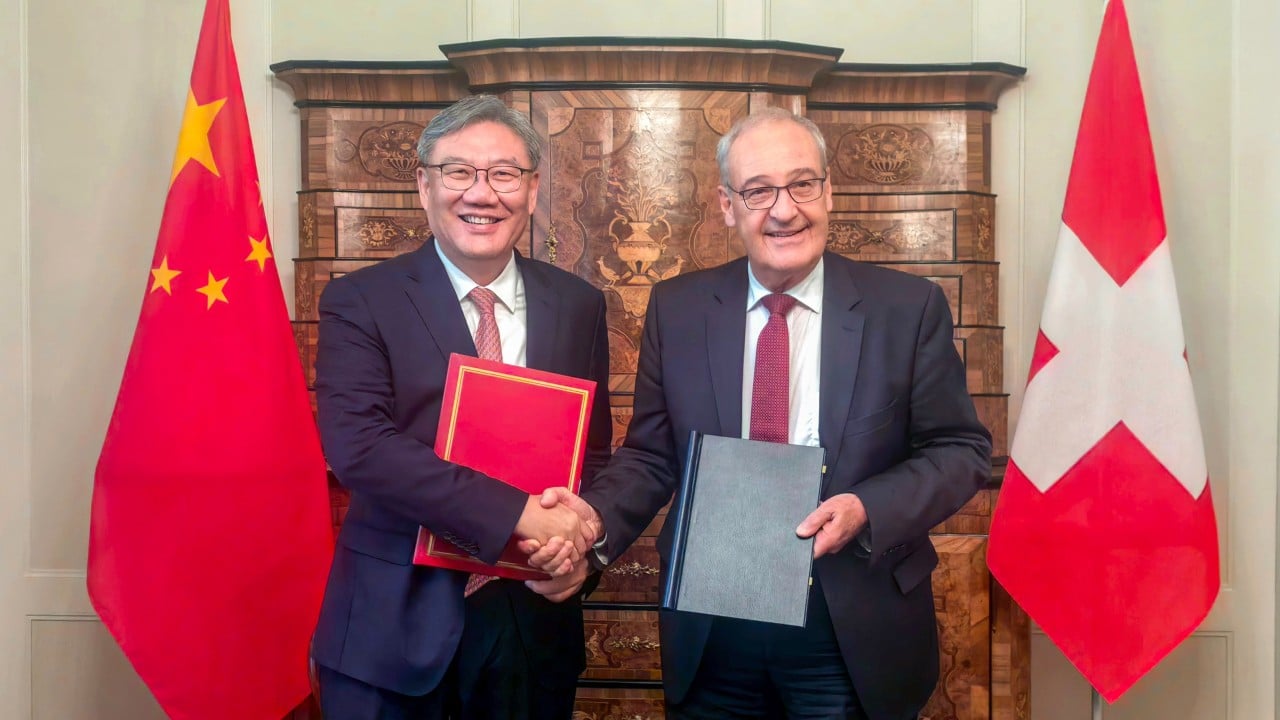
China is highlighting its relationship with Switzerland as a model of practical cooperation during a period of strained ties with the European Union. This partnership, which marks its 10th anniversary in 2026, focuses on free trade and mutual benefits. Switzerland was the first European country to sign a free-trade agreement with China, which has contributed to the flow of business exchanges.
Swiss companies have long invested in China, with major players like Schindler, Nestlé, Roche, Novartis, and ABB establishing operations there. Chinese companies, in turn, have invested in Switzerland, with notable examples including China National Chemical Corp's acquisition of Syngenta for US$43 billion. Swiss firms plan to increase their investments in China's pharmaceutical and machinery sectors following President Guy Parmelin's visit to Beijing.
This relationship stands in contrast to the more complex and politically charged EU-China ties, which involve security concerns, human rights issues, industrial policy competition, and transatlantic pressures. The EU relationship lacks the clear, tangible deliverables that the China-Switzerland partnership demonstrates. China's President Xi Jinping emphasized the need to build confidence and certainty in China-Europe trade relations, positioning the Switzerland agreement as a rebuttal to protectionism and unilateralism.
While the Swiss example may not directly translate to a breakthrough in China-EU ties, it serves as a reference point showcasing that reduced barriers, regulatory cooperation, and political engagement can yield results.
Written by urgent.news from South China Morning Post's reporting — not their text. Machine-written — may contain errors; check the original before relying on it.