You can see another galaxy with the naked eye — here's how to find it
The Andromeda galaxy is one of the most distant things you can see with the naked eye. The difficult part isn't finding it. It's believing that faint smudge really is another galaxy.
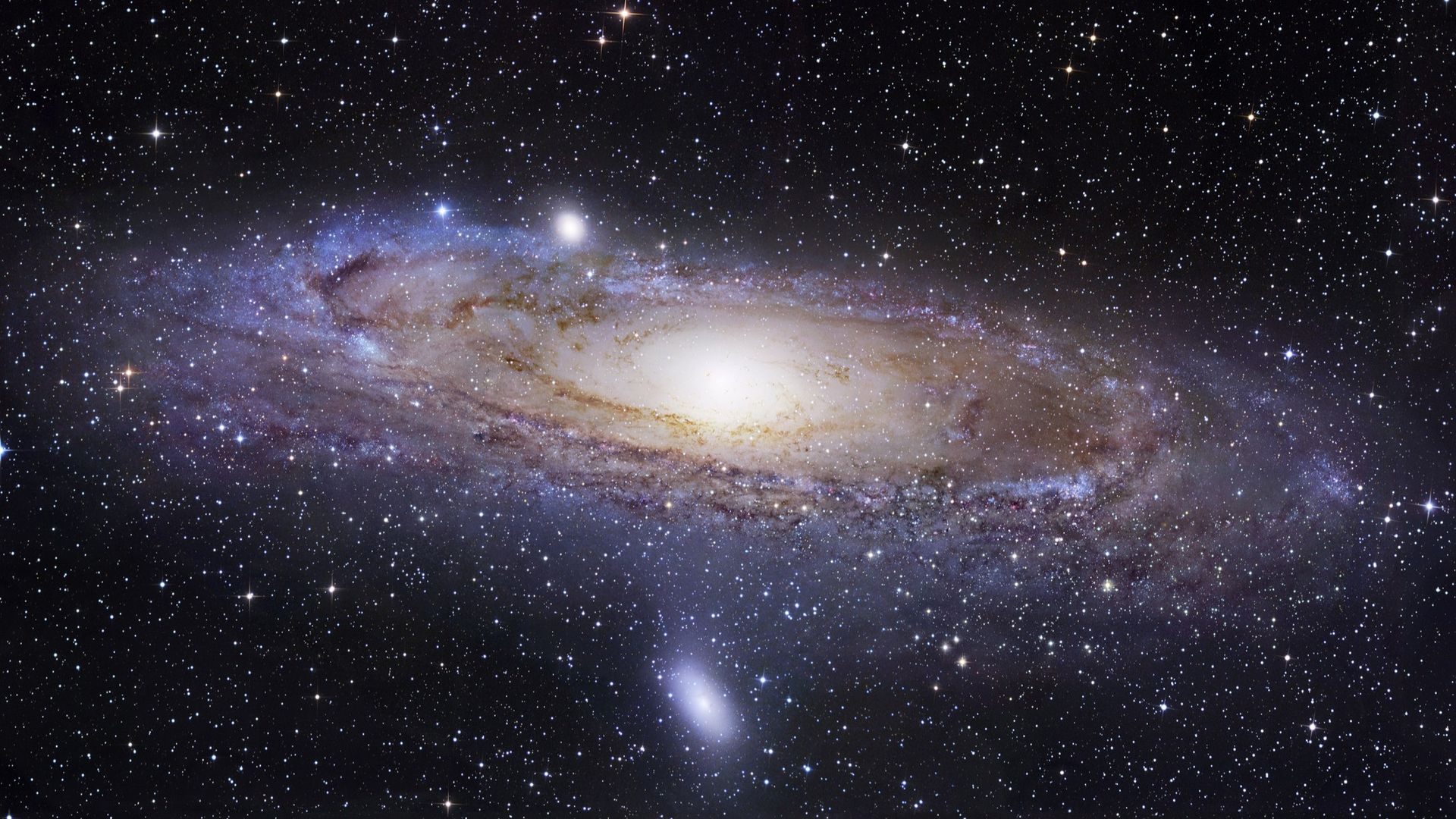
The Andromeda galaxy, also known as M31, is the closest giant galaxy to our own Milky Way. This spiral galaxy is so far away that the light we see from it has been traveling through space for approximately 2.5 million years. Although it can be difficult to spot with the naked eye due to its faint appearance, it can be found using various methods.
One way to locate the Andromeda galaxy is by using the star Alpheratz, which is one of the corner stars of the Great Square of Pegasus. From there, you can move two stars to the left and two stars up to arrive at M31. Another method involves starting in Cassiopeia, the W-shaped constellation, whose second V-shape can guide you straight to the galaxy.
Despite its size, the Andromeda galaxy is not as compact as it appears in photographs. Instead, it presents as a faint, elongated patch with a slightly brighter middle. This is due to the limitations of human vision and the fact that our eyes typically pick up only the brighter central region.
To enhance visibility, try using averted vision, which involves looking slightly beside the galaxy rather than directly at it. This technique takes advantage of the light-sensitive parts of the retina away from the center of our vision, making faint objects easier to detect. Additionally, binoculars can be useful in making the galaxy's bright central region more prominent.
The best time to observe the Andromeda galaxy is during the early November months in the Northern Hemisphere. The moon is relatively cooperative during this time, offering little or no moonlight to wash out faint deep-sky objects. By following the star-hop method or using Cassiopeia as a guide, you can locate the galaxy and marvel at the light that has traveled across intergalactic space for thousands of years.
Written by urgent.news from Space.com's reporting — not their text. Machine-written — may contain errors; check the original before relying on it.