Russia steps up attacks on Izium, likely seeking to disrupt Ukrainian logistics along two front-line directions, ISW says
Russian forces attacked Izium at least seven times over a seven-day period between 29 October and 4 November.
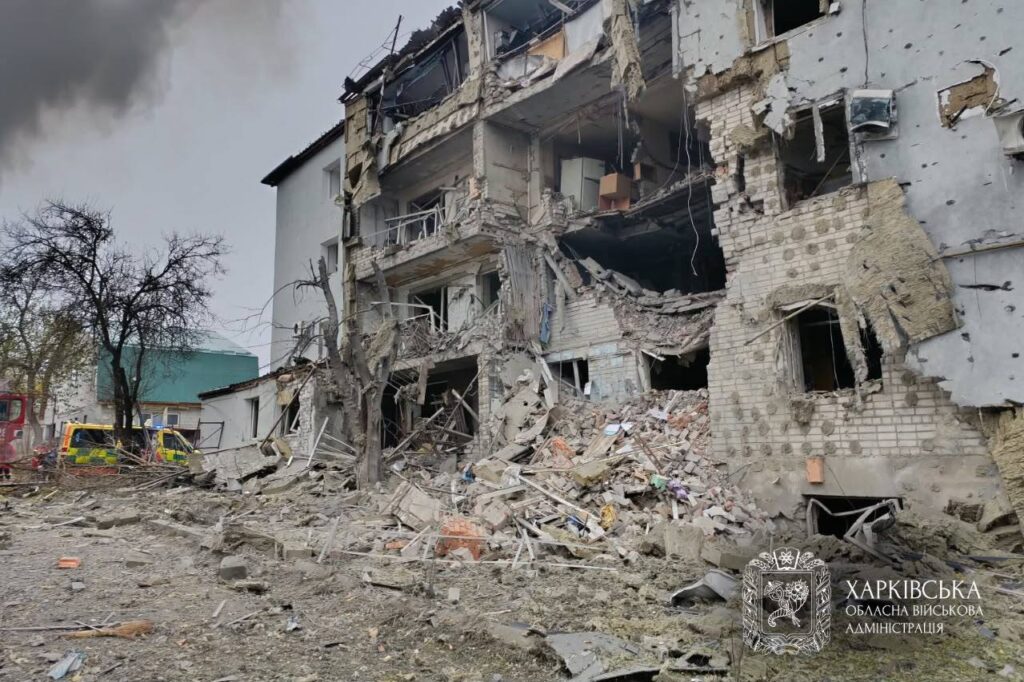
Russian military assaults on Izium, located in Kharkiv Oblast, have intensified in recent months, according to the Institute for the Study of War (ISW). Since late June 2026, Russia has been targeting the city daily, marking the heaviest strikes since its recapture four years prior, as reported by Serhii Fedchenko, head of the Izium City Military Administration.
The primary objective of these attacks appears to be disrupting Ukrainian logistics, as supplies for Ukrainian troops defending the northern approaches to Donetsk Oblast pass through Izium. On 2 November, Russian forces struck the city with four FAB-500 500-kilogram bombs equipped with UMPK glide kits, resulting in the death of one individual and injuring 34, including two young girls and eight others suffering from acute stress reactions.
The attack also caused significant damage to apartment buildings, private residences, and high-voltage power lines, leaving the entire city without electricity.
Izium Deputy Mayor Volodymyr Matsokin stated that the 2 November strikes were among the largest since the start of Russia's full-scale invasion. He noted that Russian forces have employed various attack methods, including guided aerial bombs, strike UAVs, and multiple launch rocket systems (MLRS), rather than solely relying on guided aerial bombs. Attacks on Izium have not been limited to nighttime or evening hours; the recent massive strike occurred early in the day.
Matsokin emphasized that these relentless assaults are intended to weaken Ukrainian defenses and reduce the presence of Ukrainian troops in the Donbas region. As Russia continues its efforts to encircle Donetsk Oblast's Fortress Belt of fortified cities, the attacks on Izium serve as a critical component of its overall strategy in the region.
Written by urgent.news from Euromaidan Press's reporting — not their text. Machine-written — may contain errors; check the original before relying on it.