Policy Correction Or Political Compulsion: Why Is BJP Rethinking Controversial Decisions?
New Delhi: Is the BJP-led government becoming more flexible in its decision-making, or is growing political pressure forcing it to reconsider controversial policies? Recent developments involving electoral roll revisions, the Agnipath recruitment scheme and University Grants Commission (UGC) regulations have brought this question into focus. While the government maintains that policy changes…
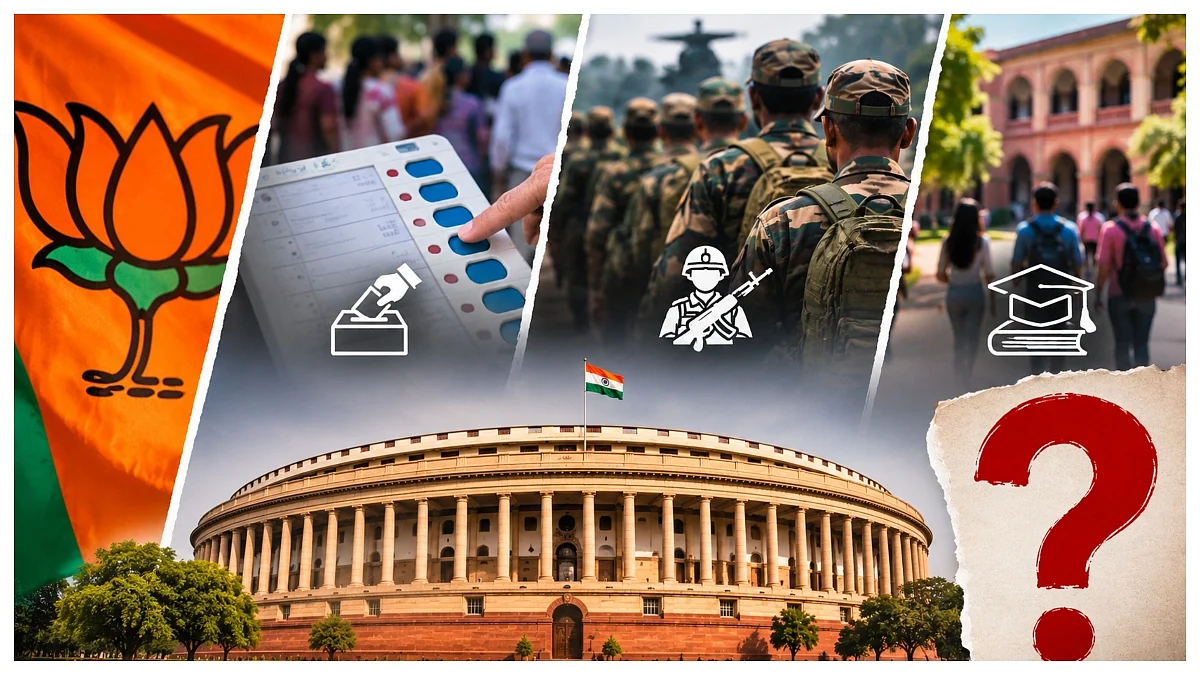
The BJP-led government is grappling with a dilemma: is it demonstrating flexibility in its decision-making, or is external political pressure compelling it to reevaluate its policies? Recent moves to revise electoral rolls, extend the Agnipath recruitment scheme, and modify UGC regulations have sparked debate over the government's motivations and the political implications of such decisions.
The Election Commission's Special Intensive Revision (SIR) process has come under fire due to changes made to voter lists, documentation demands, and procedural adjustments. Though the Commission withdrew a controversial declaration and offered additional enrolment measures, opposition parties argue that their concerns were valid.
The controversy has fueled the political tension between the ruling party and the opposition. The BJP's decision to extend the Agniveers' tenure by two years highlights another instance of policy revision. The government claims that the changes were a result of feedback from the armed forces, but critics question whether the modifications sufficiently address concerns over employment security.
The UGC's 2026 equity regulations, initially introduced to combat discrimination in higher education, were temporarily halted by the Supreme Court. The government now plans to establish a review committee, but it faces opposition from various quarters - some advocating for stronger safeguards against caste discrimination, while others challenge the fairness of the proposed regulations.
These policy shifts suggest a willingness to reconsider contentious decisions, but they also raise doubts about initial consultations, policy design, and responsiveness to public concerns. For the BJP, these revisions present both opportunities and challenges. On one hand, they may showcase the government's accountability; on the other, they could reveal weaknesses in policy formulation.
Additionally, the BJP must navigate differing social constituencies as it prepares for crucial state elections. Ultimately, it remains uncertain whether these policy adjustments will yield a political advantage or merely reflect a desire for evidence-based improvements. In the end, the BJP's political fate will hinge less on altering its decisions and more on providing convincing explanations for the necessity of these changes.
Written by urgent.news from Free Press Journal's reporting — not their text. Machine-written — may contain errors; check the original before relying on it.