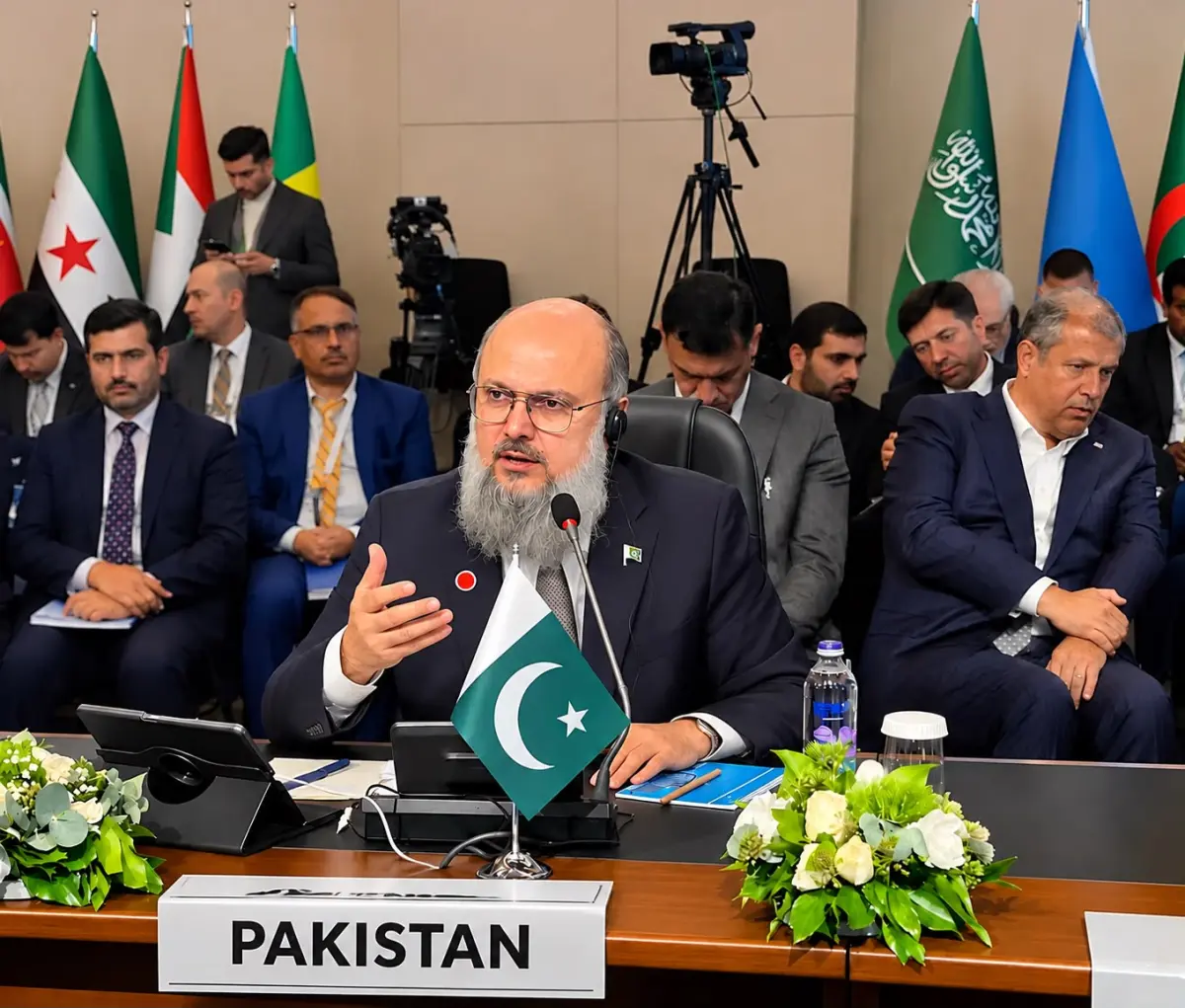
Pakistan urges OIC to boost intra-bloc trade, ease SME financing
Federal Minister for Commerce Jam Kamal Khan, speaking on behalf of the member states of the Organization of Islamic Cooperation (OIC), called for stronger economic solidarity, improved access to trade financing and coordinated efforts to enhance intra-OIC trade while addressing the closing session of the 42nd Ministerial Session of the Standing Committee for Economic and Commercial Cooperation…
ISLAMABAD: The International Monetary Fund (IMF) has called upon Pakistan to expedite structural reforms, widen its limited tax base, and distribute the tax burden fairly, highlighting that low tax-to-GDP ratio and under-exploited revenue potential in agriculture, real estate, and provincial services are limiting the government's ability to fund development and public services.
Dr Mahir Binici, the IMF's Resident Representative in Pakistan, stated that Pakistan is at a critical juncture, where the emphasis should transition from macroeconomic stabilization to economic transformation through accelerated reforms, robust institutions, and equitable distribution of their costs and benefits. The IMF representative emphasized the urgency of reform implementation as the window of opportunity may close in a volatile domestic and international context.
Binici outlined three key elements for sustaining the reform process: quick implementation, institution strengthening, and equitable burden-sharing to ensure vulnerable households are protected and benefits are visible to the public. While Pakistan has made strides in stabilizing its macroeconomy, the focus now is on maintaining these gains and fostering stronger investment, productivity, exports, and employment generation.
The IMF representative stressed that Pakistan required a revenue mobilization of at least 15% of GDP to bolster its capacity to deliver public services and enhance living standards, which the country currently falls short of. Binici advocated for a more comprehensive, straightforward, fair, and predictable tax system, emphasizing that revenue generation should not be an end in itself but should generate fiscal space for investments in human capital, infrastructure, and productive sectors.
He highlighted the importance of harmonizing the General Sales Tax (GST) on services across provinces as a crucial area for provincial governments to generate additional revenue. Noting that provinces receive a share of federal tax collections, Binici stressed the need for provinces to bolster their revenue efforts. Agriculture and property taxation, particularly in the real estate sector, were identified as significant untapped sources of provincial revenue, with considerable potential to expand the tax base in these areas.
The IMF representative also stressed the importance of better monitoring, spending efficiency, and allocation of limited resources, particularly at the provincial level, emphasizing that every rupee of available fiscal space should be directed towards high-impact areas. Improved governance, a national tariff policy, and a better business environment were deemed critical to unlocking Pakistan's growth potential.
Binici also called for directing public spending towards high-return infrastructure, healthcare, education, and targeted social protection, while ensuring private-sector credit and capital flow towards productive businesses. He noted that increasing health and education expenditure as a share of GDP and strengthening social protection were among the program's key objectives.
Despite a moderate increase in combined health and education spending to around 2.8 to 3% of GDP in the current fiscal year, allocations still lag behind those in peer economies. On the cost of doing business, Binici pointed out that high energy costs, multiple layers of taxes, and inefficiencies were deterring businesses from maintaining investments, undertaking new projects, and attracting foreign direct investment.
He supported ongoing energy sector reforms, including tariff adjustments, improved distribution company governance, and increased private-sector participation through privatization to enhance efficiency, service delivery, and energy security. Binici urged Pakistan to capitalize on the current opportunity through faster implementation of structural reforms, reinforced institutional capacity, and protection of vulnerable segments of society to achieve durable and inclusive economic growth.
Written by urgent.news from Business Recorder's reporting — not their text. Machine-written — may contain errors; check the original before relying on it.
This story
This is one outlet's version. Read the fullest account.
- IMF urges Pakistan to widen tax base, accelerate reforms brecorder.com