Migration: Why are more and more Germans emigrating to Poland?
Our Eastern European neighbour is attracting as many Germans as it has not done for a long time. What is the reason for this? And what can Germany learn from Poland?
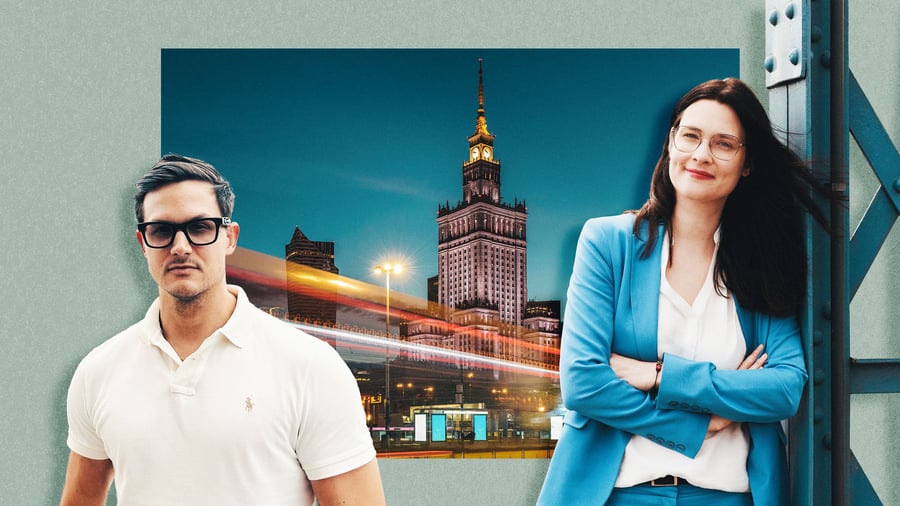
Warsaw. A blue Porsche maneuvers through evening rush hour traffic, its techno soundtrack echoing off construction sites. Kevin Wörner points out a former brewery site now filled with office space, "now everything is full of offices." A new glass tower is under construction a few streets away, resembling Frankfurt's financial district.
Wörner enters a six-story building's underground garage. The 33-year-old recently started "Channel Craft" here, a company that creates social media content for mid-sized enterprises in the USA and Germany. Until last year, Wörner lived in Berlin. But his ex-girlfriend kept him spending time in Warsaw. Over the months, the idea of completely relocating here took root.
In 2025, the trend isn't just Wörner's: 4,941 other Germans have followed suit, making Poland the 4th most popular destination after the UK, Italy, and the Netherlands. While the pandemic saw fewer Germans moving east, only 1,720 have returned, resulting in a "migration deficit" according to the German Federal Statistical Office.
Why are more Germans crossing the Oder? What is working better economically in Poland compared to Germany? And what lessons can we learn from our eastern neighbor to prevent losing skilled workers permanently?
Written by urgent.news from Handelsblatt's reporting — not their text. Machine-written — may contain errors; check the original before relying on it.
This story
This is one outlet's version. Read the fullest account.