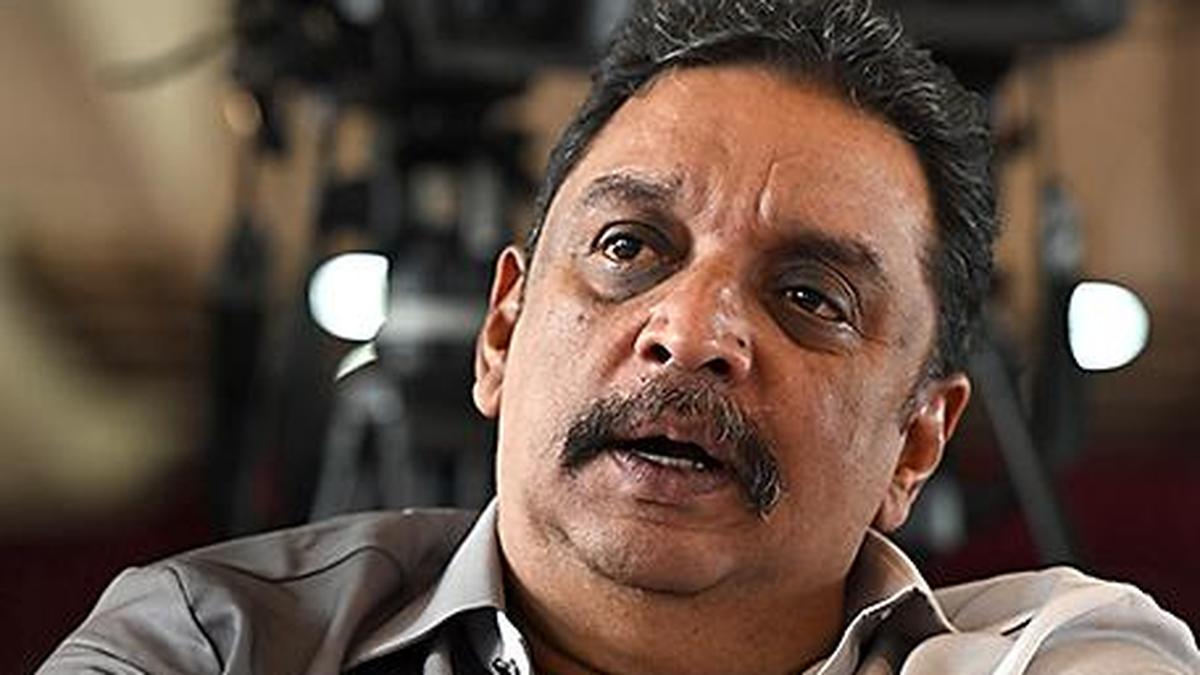
Mélenchon squares up to Brussels in election manifesto
The far-left leader's plan for France will "require a confrontation with European institutions," according to his presidential platform.
French left-wing presidential candidate Jean-Luc Mélenchon plans to radically overhaul EU rules, setting him on a direct confrontation with Brussels, according to his election manifesto unveiled on Friday. Mélenchon, who has gained popularity in recent polls ahead of the 2027 election, unveiled a series of measures to fundamentally rethink the EU's agenda.
As part of his "new deal" for Europe, Mélenchon aims to rewrite the treaties, eliminate core parts of the EU's rulebook, including debt and deficit limits, suspend competition rules for public services like energy, transport, and telecommunications, and loosen state aid laws. In an interview, Mélenchon stated that if elected, he would disobey current EU rules and implement his program at the national level, leading to potential clashes with European institutions.
This approach would likely face significant opposition from France's partners in the European Council, which is currently led by more conservative leaders. The manifesto also proposed placing the European Central Bank under democratic control and utilizing it to fund the ecological and social transition.
Mélenchon's proposals come as a response to France's fiscal situation, which is burdened with a public debt of 117.5% of GDP and a public deficit exceeding 5%. With voters concerned about a cost-of-living crisis, Mélenchon's radical ideas on EU rules and the ECB have sparked debate in France. Other presidential candidates, such as Marine Le Pen and Edouard Philippe, are pursuing different strategies, with Le Pen emphasizing fiscal responsibility and Philippe presenting a centrist, pragmatic approach.
Written by urgent.news from Politico EU's reporting — not their text. Machine-written — may contain errors; check the original before relying on it.