How Israel's President will try to break the country's elections deadlock
When Shabbat ends on Saturday evening, Israel will brace itself for the next step in the fraught path to forming its next government after last month’s elections were inconclusive. The next step gives Israeli President Isaac Herzog an unusually significant and potentially very controversial task: to choose which politician has the first opportunity to form a government. Expectations are that it…
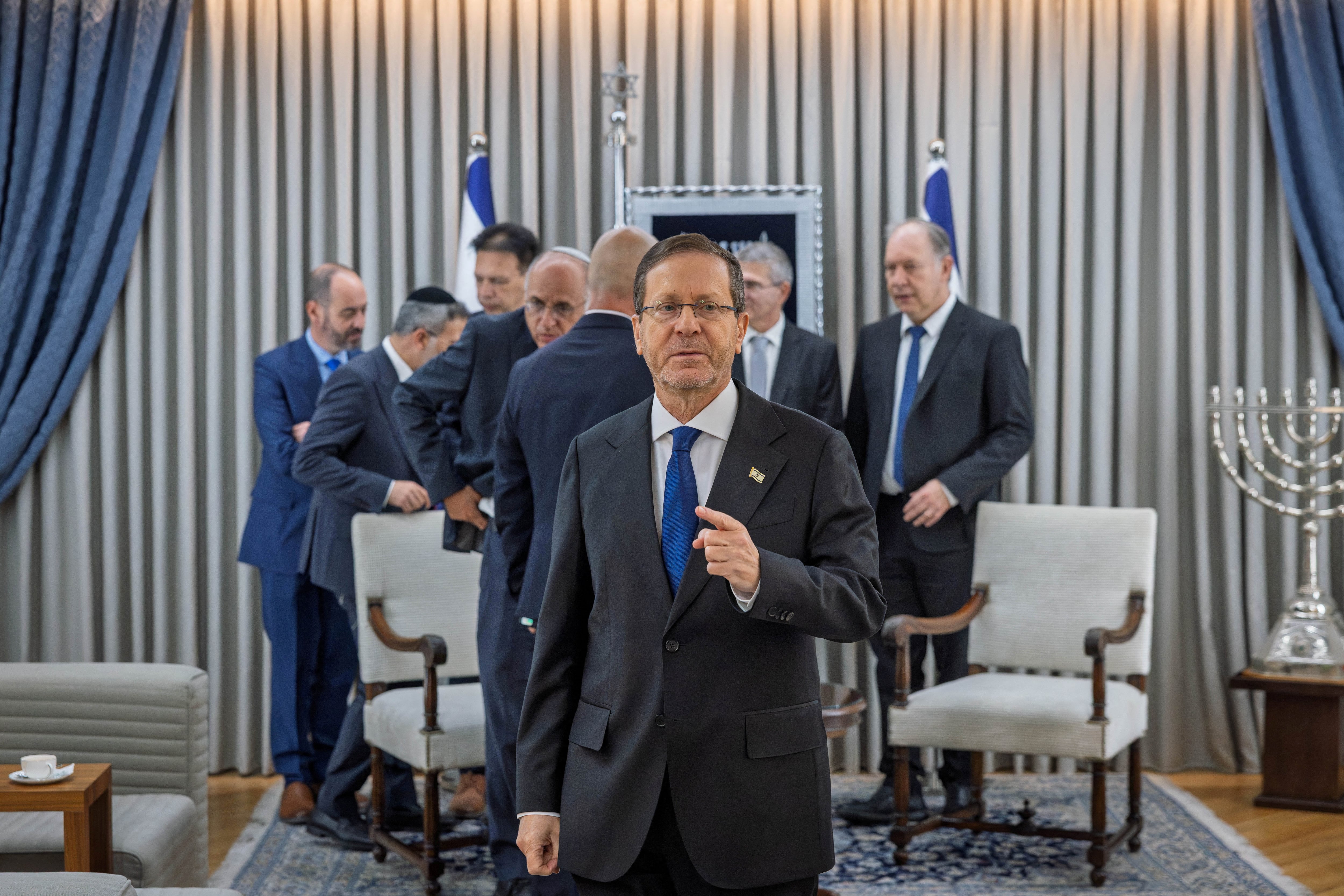
As Shabbat concludes on Saturday evening, Israel braces for the next crucial phase in its path to forming a new government, following last month's inconclusive elections. Israeli President Isaac Herzog holds a uniquely significant and controversial role: to determine which politician has the first chance to form a government. Anticipations point towards Gadi Eisenkot, who garnered 67 out of 120 Knesset recommendations after a week-long consultation session with factions in the newly formed Knesset.
However, the final decision rests with President Herzog, who is expected to announce his choice on Sunday.
This momentous decision holds immense importance and could lead to substantial consequences for Israel's future. If Mr. Eisenkot receives the opportunity, his actions and the reactions of his fierce opponents can have historic implications. All Israelis agree on the high stakes involved in the elections.
Opposition members in Israel express their urgency in saving the nation's image through an "emergency" coalition, allowing them to rebuild their international reputation. Achieving a majority will require them to compromise on their campaign promises, specifically on the ultra-Orthodox United Torah Judaism party's exemptions from military service and significant government benefits.
Additionally, forming an alliance with Arab parties is a potentially contentious decision, given the community's high representation in the Knesset (19 seats) and their reputation for high levels of controversy. Israel's opposition, in particular, views these politicians as untrustworthy and even traitorous, rather than partners in a democratic government.
As President Herzog contemplates these scenarios over Shabbat, his primary goal is unity after four years of unprecedented division under the Netanyahu coalition. The decision-making process could drag on for months, potentially leading to new elections if no progress is made within the 28-day coalition formation period. President Herzog may grant an additional 14-day extension if needed, and ultimately, he could call for new elections if no viable government is formed.
Written by urgent.news from The National Business's reporting — not their text. Machine-written — may contain errors; check the original before relying on it.
Also reported by 1 other outlet
- How Israel's President will try to break the country's elections deadlock thenationalnews.com