Home is where politics are
Non-racialism cannot be a slogan we recite while we practice regionalism in the voting booth.
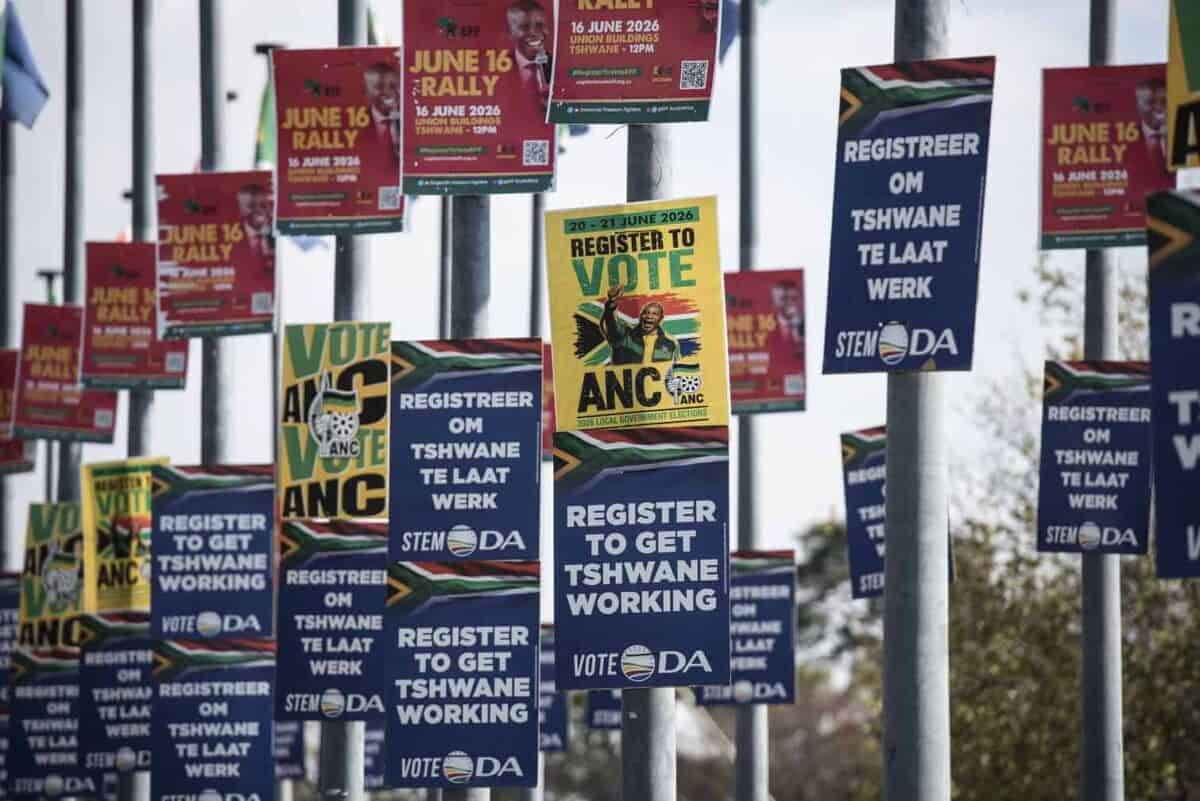
As South Africans prepare for local government elections, the reality is that politics are not truly non-racial. The ballot box often reflects deep-seated ethno-regional allegiances. In Soweto, voters do not simply choose candidates based on their tribal identity. Instead, they gravitate to those they perceive as speaking to their local experiences and concerns.
In KwaZulu-Natal, the Inkatha Freedom Party (IFP) and the uMkhonto weSizwe (MK) party dominate due to their direct appeals to Zulu identity. The IFP was founded on the Ingonyama Trust and the Zulu monarchy, while MK's resurgence in 2024 was fueled by Jacob Zuma's return, who was once ostracized by many in KZN for his perceived exclusion by the amaXhosa-dominated ANC.
The Eastern Cape is perceived as an ANC stronghold, but unofficially, it is still perceived as a party that caters primarily to the amaXhosa. Despite the ANC's official stance, the party's appeal to many voters is rooted in the memories of Nelson Mandela, Oliver Tambo, and Walter Sisulu. In this province, older voters often feel a sense of loyalty and attachment to the ANC as the party representing their struggle for freedom.
Limpopo stands out as a province with a multitude of parties, reflecting the diverse political landscape there. This complexity is largely due to the province's heavy reliance on the platinum industry, which has generated little tangible benefit for the local populace. Consequently, Limpopo sees a surge of parties promising to champion the cause of its residents, reflecting a collective frustration with perceived neglect.
The Western Cape, home to a significant coloured population, has also seen political shifts. Fadiel Adams' National Coloured Congress gained traction due to the electorate's discontent with the perceived dominance of the DA and ANC in their communities. Patricia de Lille's Independent Democrats and de Lille's predecessor, the Labour Party, also tapped into this sentiment in their respective eras.
Gauteng, however, exemplifies the exception where ethnic diversity coexists within the same urban fabric. This diversity allows for a more fluid political landscape, where voters can choose based on immediate needs such as infrastructure and services, rather than tribal or ethnic loyalties. The collapse of the ANC in Gauteng signifies a shift towards more localized political engagement and governance.
The article concludes with a cautionary note. While non-racialism is a noble ideal, it is not enough if it remains a mere slogan without translation into concrete local governance. The article urges voters to focus on local issues—such as basic services and infrastructure—rather than grand political narratives. The hope is that this election will not be dominated by the personalities of Cyril Ramaphosa, Jacob Zuma, or Julius Malema, but rather by the performance and accountability of local councillors.
The ultimate goal is to move beyond the legacy of apartheid, where ethnicity might once have been a significant determinant of political allegiance, to a system where competence and responsiveness at the local level take center stage.
Written by urgent.news from The Citizen's reporting — not their text. Machine-written — may contain errors; check the original before relying on it.