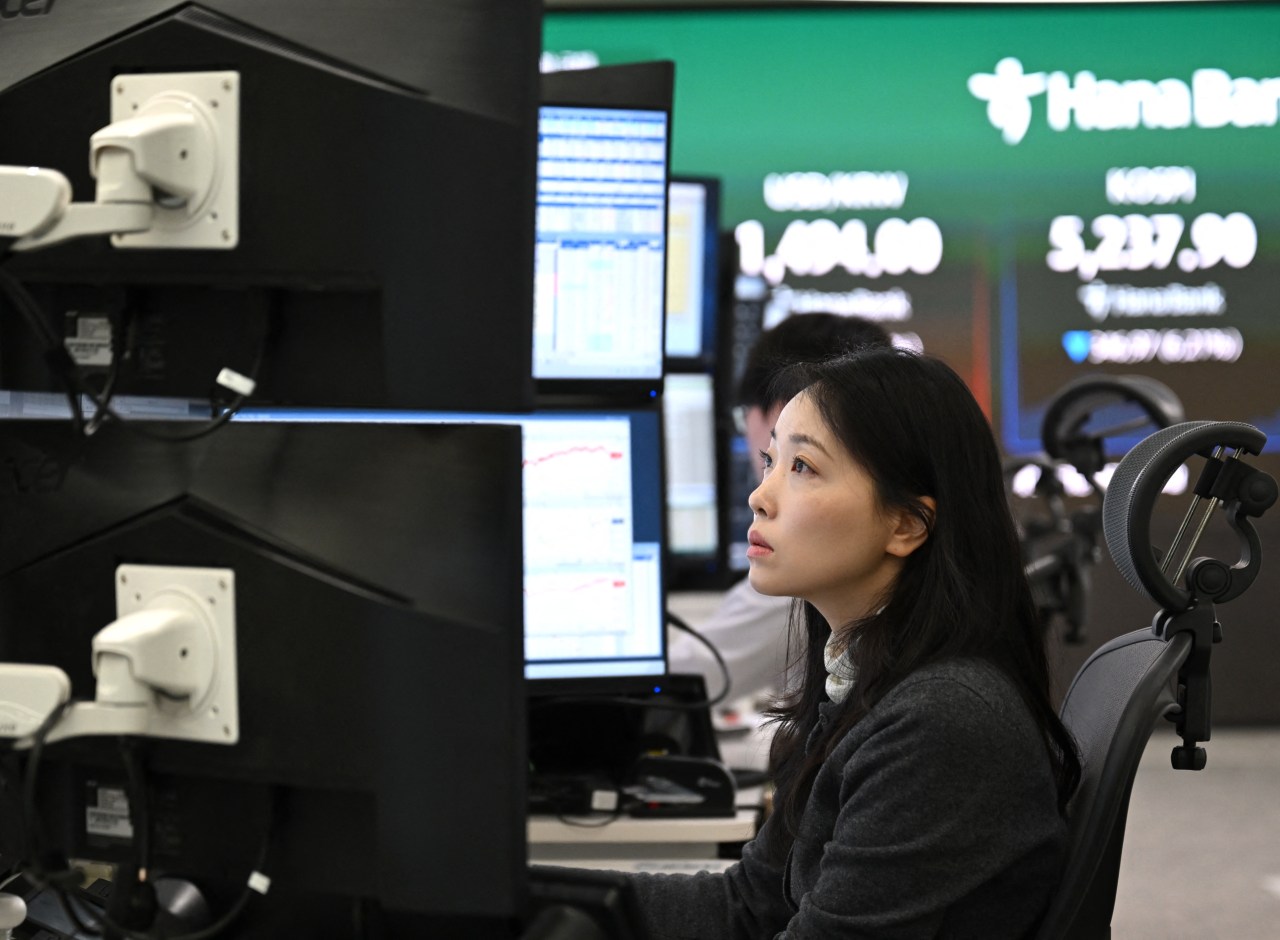
Global stocks plunge amid AI slowdown fears after Democrats’ midterm triumph
Asian and European markets follow Wall Street with sharp fall as FTSE down 1.5% Business live – latest updates European stock markets have fallen sharply as a rout in US tech stocks spread across the Atlantic, after the Democrats’ midterms victory sparked fears of a slowdown in the AI industry. A sell-off on Wall Street on Thursday was followed by sharp falls in Asian stocks markets on Friday…
Asian and European stock markets mirrored the sharp decline on Wall Street after the Democrats' midterm victories raised concerns about a potential slowdown in the artificial intelligence sector. The sell-off on U.S. markets on Thursday triggered a cascade of sharp falls in Asian markets early Friday. The FTSE 100 index, which tracks top-performing blue-chip shares listed in London, dropped 1.5% or 166 points at the beginning of trading, settling at 10,615.
Pharmaceutical giant AstraZeneca suffered the steepest decline, falling 2.8%, while IAG, the owner of British Airways and Iberia, dropped 1.5% following a miss of profit forecasts in its trading update. Additionally, miners Antofagasta and Anglo American also experienced substantial losses. Germany's Dax index opened 1.5% lower, France's Cac 40 fell by 1.2%, and Spain's Ibex decreased by 1.1%.
Susannah Streeter, chief investment strategist at Wealth Club, expressed concern, stating that the tech sell-off has intensified, with the impact of the severe sell-off on Wall Street traveling through to Asia and adversely affecting sentiment in Europe. She highlighted the growing worries surrounding the potential slowdown in datacenter development, which could undermine the spending boom that underpins current market conditions, coinciding with heightened investor anxiety over returns on substantial investments.
On Thursday, the Nasdaq share index experienced its worst day in 19 months, plummeting 5.5%. Chip stocks, particularly SanDisk, which dropped 22%, and Western Digital, which fell 17%, were among the top contributors to this downturn. The "fear index," the Vix, surged by 61% to its highest levels since early weeks of the Iran war, indicating heightened market volatility.
Despite these global market downturns, most indices have still managed to remain up for the year. For instance, the Nasdaq Composite index is still up 4.6% since the beginning of January, even though it is more than 10% below its peak. Similarly, the FTSE 100 has gained nearly 6.9% in 2026 but is now more than 300 points below its record high set in July.
Written by urgent.news from Guardian Technology's reporting — not their text. Machine-written — may contain errors; check the original before relying on it.
This story
This is one outlet's version. Read the fullest account.