Gebrauchtwagen-Check: Businessgleiter und Dauerlutscher: Der BMW 5er bei der HU
Luxus und Lapsus, passt das zusammen? Beim Modell der oberen Mittelklasse aus München schon. Er zeigt Mängel bei der HU, die sich aber gut begründen lassen. Und die Preise sind trotzdem stattlich.
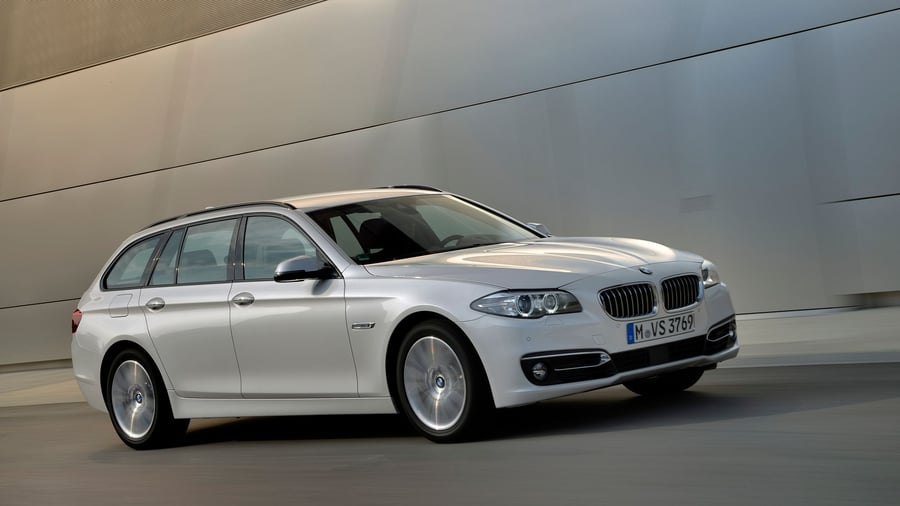
The BMW 5er, often seen as a business vehicle, demonstrates its age through high mileage and poor Kfz-Hauptuntersuchung (HU) reports. According to the "Auto Bild TÜV-Report 2026," many vehicles show significant defects. Despite this, the 5er remains a sought-after used car, driving up prices. This analysis focuses on generations six and seven, introduced in 2010 and 2017, respectively.
The sixth generation received a model refresh in 2013, which included design changes and new safety assistants. The seventh generation saw improvements in 2020, with exterior modifications and changes to the engine lineup. The eighth generation replaced the seventh in 2024. Both generations were built as three-door limousines and BMW Tourings, and some were produced as plug-in hybrids.
The most powerful variant is the M5 CS xDrive with 467 kW/635 PS. Dimensions: sixth generation - 4.90 m to 4.91 m in length, 1.86 m to 1.47 m in width, 1.46 m to 1.47 m in height; cargo volume: 520 l (limousine); 375 l (hybrid); 560 to 1,670 l (combo). Seventh generation - 4.94 m to 4.97 m in length, 1.87 m to 1.90 m in width, 1.47 m to 1.50 m in height; cargo volume: 530 l (limousine); 410 l (hybrid); 570 to 1,700 l (combo).
Strengths: Rare issues with the suspension in younger 5ers; steering remains solid even in older models. Rust is almost non-existent. Brake components, especially brake hoses, are nearly problem-free throughout the years. Reliability: Brake fluids have been fault-free across all model years. Weaknesses: Starting in the fourth HU at nine years old, issues related to wear and tear become more common: excessive complaints about trailing arms and shock absorbers.
The same applies to CV joints. Starting from the fifth check, there is an increasing number of problems with front lighting. Occasional oil leaks are a concern, particularly after the eleventh year. The 5er does not pass the exhaust gas test (AU) regardless of age. Puncture behavior: The ADAC reports only moderate puncture rates for vehicles first registered in 2010.
The rest are either "reliable" or "very reliable," according to ADAC puncture statistics. However, there are some weak points. Puncture hotspots cited by the ADAC include generators and drive belt shafts (both for 2010 models), cooling or heating hoses for models first registered in 2012, 2013, and 2015. The "general engine" is a frequent cause of punctures for 5ers from 2011, while the engine cooling system is a problem for those registered in 2012.
Engine-related issues: Sixth generation - gasoline (four-, six-, and eight-cylinder, rear and all-wheel drive): 135 kW/184 PS to 441 kW/600 PS; diesel (four-cylinder, rear and all-wheel drive): 105 kW/143 PS to 160 kW/218 PS; hybrid (six-cylinder and electric motor, rear drive): 250 kW/340 PS (system power). Seventh generation - gasoline (four-, six-, and eight-cylinder, rear and all-wheel drive): 125 kW/170 PS to 467 kW/635 PS; diesel (four-cylinder, rear and all-wheel drive): 105 kW/143 PS to 160 kW/218 PS; hybrid (four-cylinder or six-cylinder and electric motor, rear and all-wheel drive): 150 kW/204 PS to 290 kW/394 PS (system power).
Dealer resale values according to the German Automobile Trust Fund (DAT), with statistical assumptions for kilometers - three price examples: 528i XDrive (6/2016); 180 kW/245 PS (four-cylinder); 160,000 kilometers; €15,346. 518d Touring (6/2015); 110 kW/150 PS (four-cylinder); 207,000 kilometers; €9,503. 530e xDrive Luxury Line Touring (6/2020; Facelift); 215 kW/292 PS (plug-in hybrid); 109,000 kilometers; €25,252.
Written by urgent.news from Handelsblatt's reporting — not their text. Machine-written — may contain errors; check the original before relying on it.