From fallen leaves to factory floors: How Releaf is making alternative paper commercially viable
Ukrainian-founded, Paris-based Releaf is developing an alternative to conventional wood-based paper by transforming urban fallen leaves into fibres for packaging, paper and other materials. The compan...
Ukrainian-founded Paris-based Releaf is pioneering an alternative to traditional wood-based paper by converting urban fallen leaves into fibres for packaging and paper products. This approach benefits the circular economy and enables established paper producers to seamlessly incorporate Releaf's materials into their existing industrial processes without the need for a completely new manufacturing setup. To understand more about this innovative process, I spoke with Valentyn Frechka, Releaf's founder and CEO.
While many startups have proven the technical feasibility of alternative materials, commercializing these innovations poses a significant challenge, according to Frechka. Success hinges on two key factors: positioning and proximity to raw materials and customers. Directly competing with major corporations by positioning oneself as a breakthrough company is often counterproductive, as these established businesses possess extensive infrastructure and supply chains.
Geographical considerations, logistics, and supply chain resilience also play crucial roles. For instance, European customers may prefer products manufactured locally, especially in times of geopolitical instability that could disrupt supply chains.
Initially, Releaf aimed to sell fibres directly to customers. However, they discovered that customers further down the supply chain were more interested in finished products rather than the source of their raw materials. Consequently, Releaf shifted its focus towards producing paper for converters, who manufacture final packaging items.
One challenge Releaf faces is the competition for virgin wood fibres due to the growing demand for paper. Trees typically require five to ten years, sometimes even longer, to mature, whereas the resulting paper may only be used for a short period, such as for a shopping bag. Releaf addresses this issue by producing a material with similar properties to conventional paper at a comparable price, utilizing an alternative raw material that is less vulnerable to supply chain disruptions.
Releaf operates as an engineering and materials company, developing technologies to transform fallen urban leaves into components for paper, packaging, and other applications. They employ two technological processes: a dry mechanical process that produces a filler material compatible with existing paper manufacturing machinery, and a chemical and thermal treatment method to extract short fibres resembling cellulose fibres derived from trees.
This flexibility allows Releaf to manufacture a wide range of materials that match the performance of conventional paper.
Municipalities already collect fallen leaves as part of their regular maintenance routines. Leaves left on streets can rot and create hazardous conditions, while collected leaves are typically composted or incinerated. Composting leaves yields low economic value, and composting operations may rely on public subsidies. Incineration, on the other hand, can damage boilers due to the presence of sand and minerals in leaves.
Releaf sees an opportunity to convert this existing waste stream into an industrial resource. In Germany, the company is collaborating with a partner in Dortmund to explore this model. Paris alone could potentially provide tens of thousands of tonnes of leaves for processing, depending on the collection area.
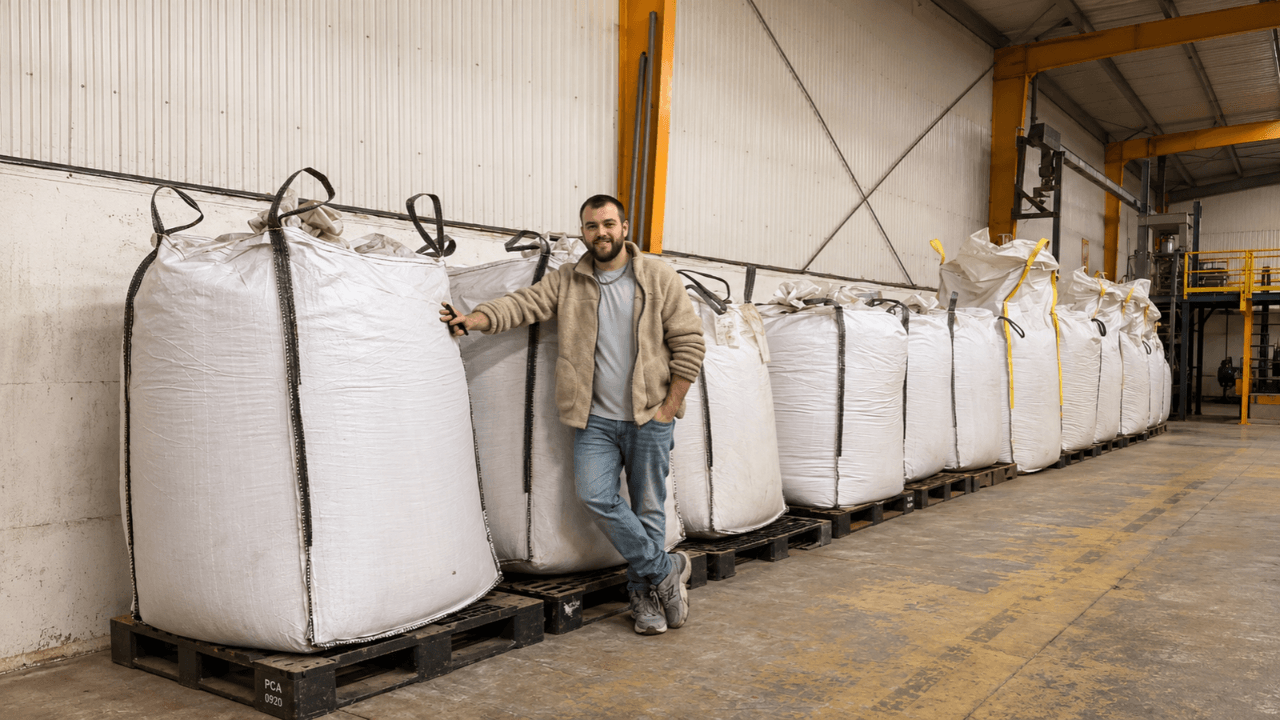
Managing and preserving large volumes of biomass is crucial for Releaf's operations. Their preparation line removes waste and contaminants from the leaves, compacting them into bales and preserving them to prevent degradation. This allows the company to store approximately 400 kilograms of leaves in one cubic metre. Currently, Releaf processes about 1,000 tonnes of material annually on its pilot line, with plans to handle roughly twice that volume in the upcoming season.
Releaf keeps its core technology in-house while partnering with established industrial manufacturers to produce finished materials, avoiding the substantial capital expenditure required to build and operate paper mills.
Written by urgent.news from Tech.eu's reporting — not their text. Machine-written — may contain errors; check the original before relying on it.