College tuition just hit a surprising milestone. It’s not what you’d expect
Here’s something that might seem unbelievable: The cost of attending college has actually become cheaper in the past decade. Between the 2016-2017 and 2026-2027 academic years, the average tuition and fees declined 8.3% for in-state students at public four-year colleges and universities after adjusting for inflation , according to a new report from the College Board . The decline was even starker…
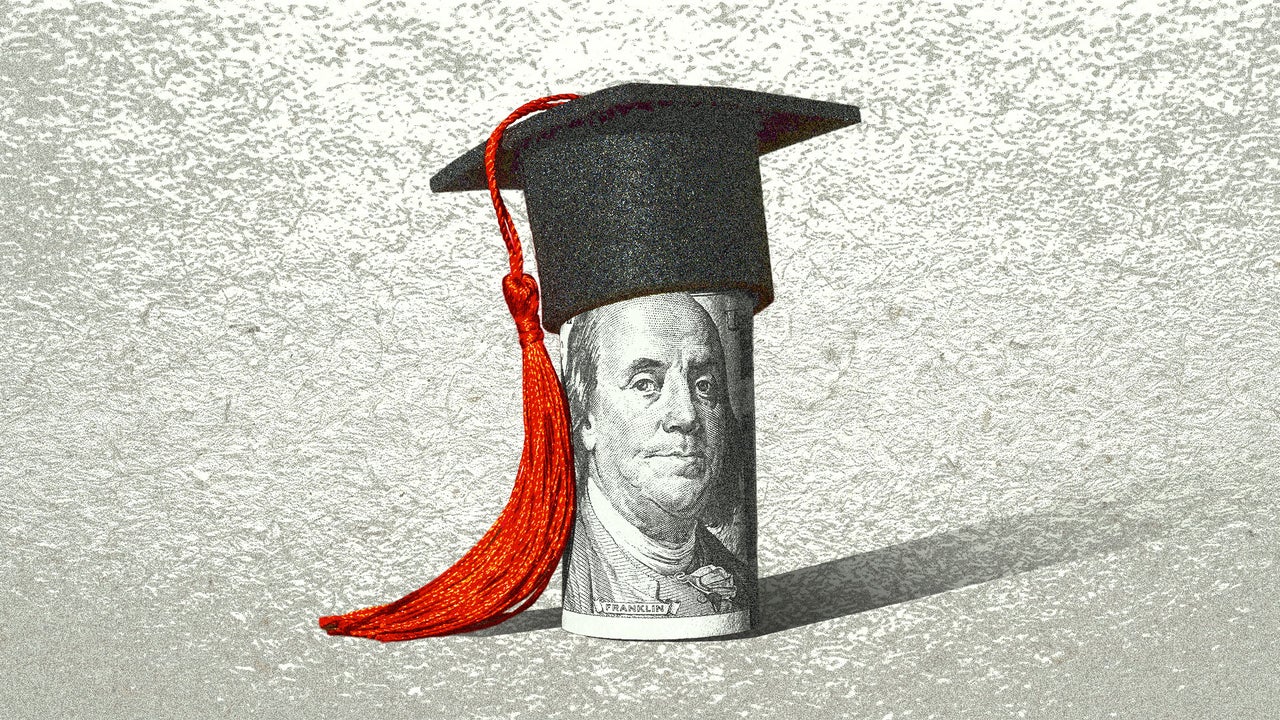
A surprising trend has emerged in the world of higher education – college tuition costs have actually dropped in the past decade. According to a recent report from the College Board, the average tuition and fees for in-state students at public four-year institutions declined by 8.3% between the 2016-2017 and 2026-2027 academic years, after adjusting for inflation. Even more striking, the average tuition and fees at public community colleges decreased by 12%.
While the tuition increases for the current academic year have been relatively modest, ranging from 2.4% for public two-year college students to 3.7% for private nonprofit four-year college students, these increases are not adjusted for inflation. In fact, the consumer price index rose at an annual rate of 3.7% in September, according to the U.S. Bureau of Labor Statistics.
As a result, the total cost of attending college—including tuition, fees, housing, books, and transportation—has topped $100,000 at 16 different institutions, such as Harvey Mudd College, the University of Chicago, and the University of Southern California.
Despite the increasing costs, financial aid plays a significant role in reducing the actual cost of attending college. According to the College Board, about 70% of full-time undergraduate students receive grant aid, which helps offset the total expenses. Additionally, many students are finding creative ways to manage their expenses, as some private colleges are even reducing tuition prices or finding alternative ways to curb costs.
However, college students are still grappling with an affordability crisis, as living expenses can often surpass the cost of tuition and fees. For example, students commuting to community colleges may face living expenses averaging nearly $18,000, while those living on-campus at private nonprofit four-year colleges could have living expenses exceeding $21,000.
This affordability crisis has led many institutions to establish on-campus food pantries to support students, as many are struggling with food insecurity. A 2024 report from the Government Accountability Office found that nearly 23% of college students experienced food insecurity in 2020.
Despite the financial challenges, there is a positive trend in the amount of student debt accumulated. According to the College Board report, there has been a decline in the amount families have borrowed to cover college costs, along with a decrease in the average cumulative debt among bachelor’s degree recipients. This means that even though the sticker shock of tuition prices can be overwhelming, students and parents are better managing the overall costs of attending college.
As Howell, vice president of research at the College Board, points out, it is crucial for families to understand the actual cost of attending college, including grants, scholarships, and other forms of financial aid, early in the college application process.
Written by urgent.news from Fast Company's reporting — not their text. Machine-written — may contain errors; check the original before relying on it.