Canada budget charts ‘economic independence’ in decisive shift from US
Canada unveiled a budget on Thursday that calls for “economic independence” and says that while reducing its reliance on the United States will take time, “the shift is under way”. Prime Minister Mark Carney’s second budget since taking office last year was presented to parliament just two days after President Donald Trump suffered a sweeping midterm election rebuke. While Democrats, who will…
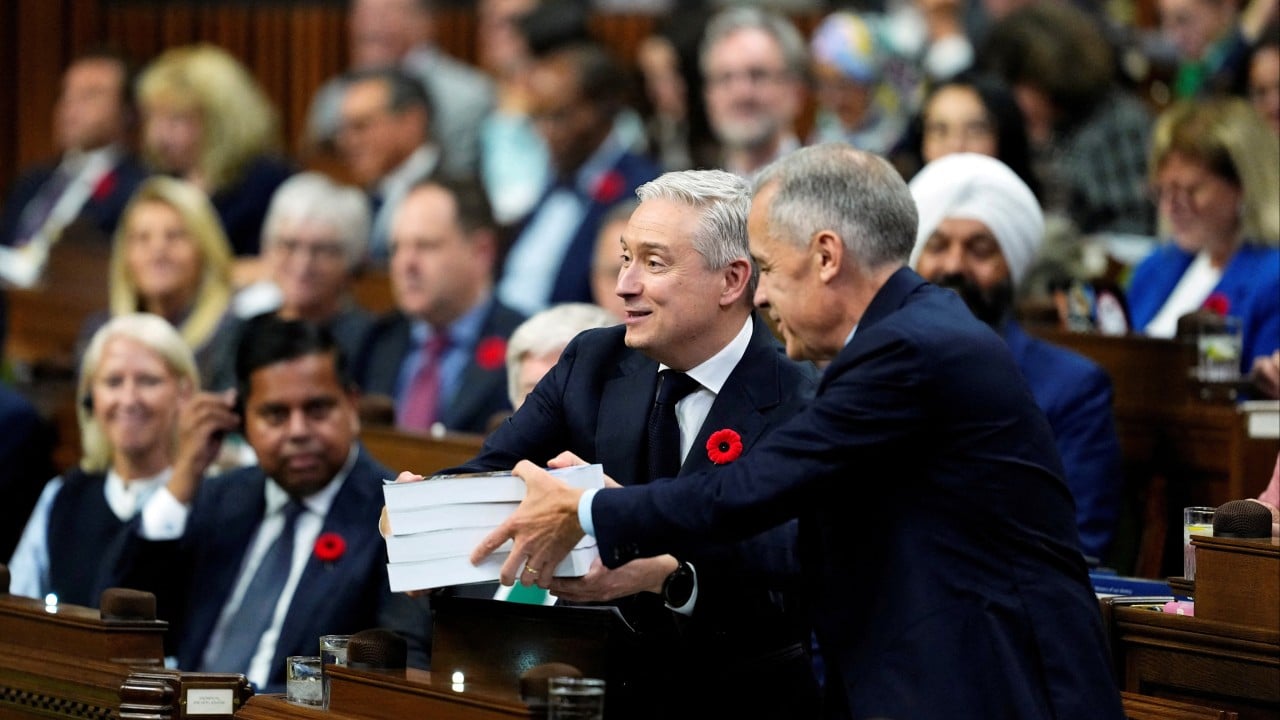
On Thursday, Canada unveiled its budget, which emphasizes "economic independence" and acknowledges that while reducing its reliance on the United States will take time, the shift is already underway. The budget, titled "Masters of our Destiny," was presented to parliament two days after President Donald Trump's party suffered a significant loss in midterms.
Prime Minister Mark Carney, in his second budget since taking office, states that Canada and the US will not revert to their previous relationship, emphasizing that pre-Trump tariff-free North American trade is not forthcoming.
The budget highlights Canada's first-ever sovereign wealth fund, the C$25 billion (US$18.3 billion) Canada Strong Fund, which will invest in major national projects. Ottawa hopes that a government stake in these projects will attract private capital. Finance Minister Francois-Philippe Champagne details plans for the fund, recognizing that diversification will take time due to Canada's deep economic ties with the US. However, the budget affirms that the shift towards independence is underway.
Carney highlights that his government inherited an economy plagued by weak productivity growth and excessive dependence on the United States. He states that the budget marks a decisive break from his predecessor Justin Trudeau's economic management. Speaking earlier, Carney mentioned that political developments in the US are important and that bilateral relations will evolve, but his priority remains independence. He stresses that the focus remains on addressing the same issues as before the midterms.
The budget also outlines a tax incentive introduced by Carney, known as the "Productivity Mega Deduction." This incentive allows businesses to deduct the costs of new investments, making Canada a more attractive investment destination compared to the US. According to the budget, companies would pay approximately 60% less tax on the returns from investments made in Canada compared to the same investments in the US.
The budget acknowledges the adverse effects of Trump's tariffs on industries such as automaking, steel, aluminum, and timber. It states that C$44 billion has been allocated to businesses and workers impacted by these tariffs. Of this amount, nearly C$13 billion is intended to provide liquidity for larger businesses facing cash flow disruptions due to tariff disruptions, while C$20.6 billion will help businesses adapt to the tariffs. Champagne reassures that Canada is in a strong fiscal position and has room for maneuvering.
Opposition leader Pierre Poilievre of the Conservative Party criticized the budget, calling it a "credit card budget" that ordinary Canadians will ultimately have to pay for through debts owed to banks and bondholders. Carney had to rely on opposition support and abstentions to survive last year, but his Liberal government has since secured a parliamentary majority.
Written by urgent.news from South China Morning Post's reporting — not their text. Machine-written — may contain errors; check the original before relying on it.